

4 Way Shuttle System: Advanced Automation Guide
Share on
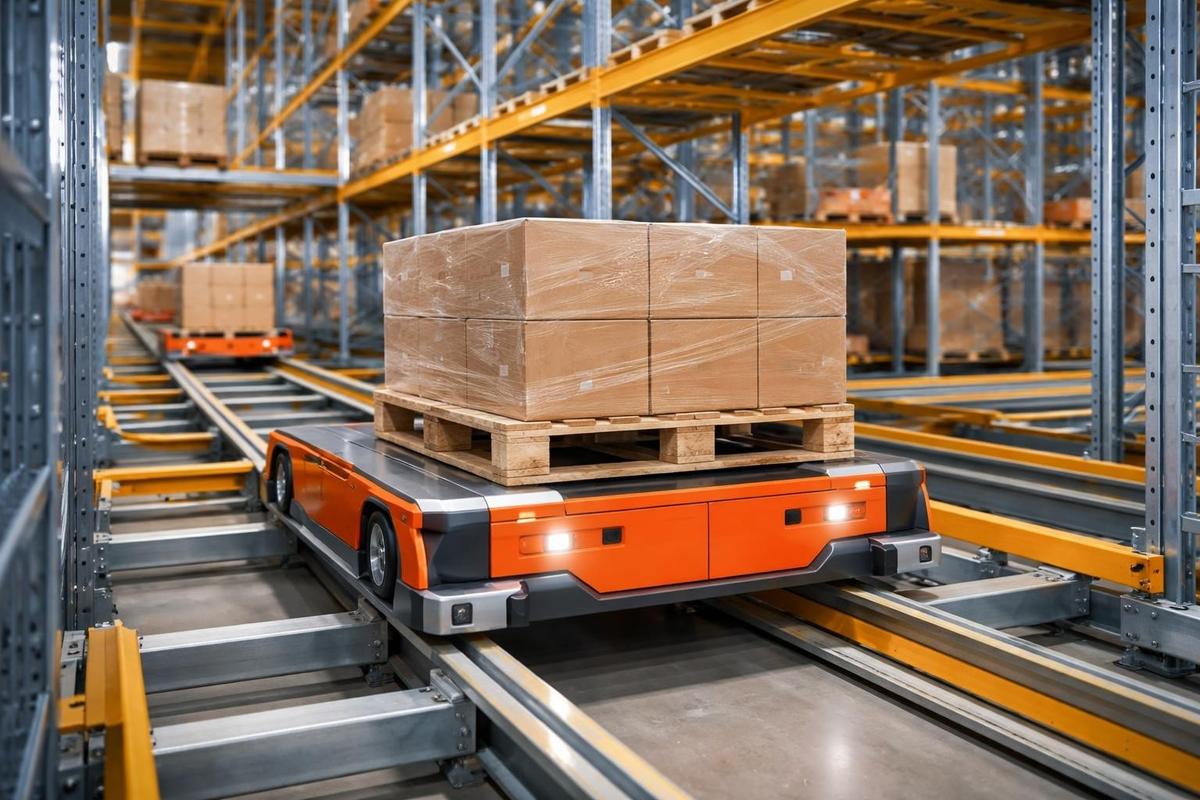
Warehouse automation has evolved dramatically over the past decade, driven by increasing demands for faster order fulfillment, higher storage density, and operational efficiency. Among the most innovative solutions transforming modern distribution centres is the 4 way shuttle system, a sophisticated automated storage and retrieval technology that delivers unprecedented flexibility in pallet handling. Unlike traditional shuttle systems restricted to single-axis movement, these advanced systems navigate in multiple directions, fundamentally changing how warehouses approach high-density storage and retrieval operations. For logistics providers, 3PLs, and manufacturers seeking scalable automation solutions, understanding this technology's capabilities becomes essential for strategic planning.
Understanding 4 Way Shuttle System Architecture
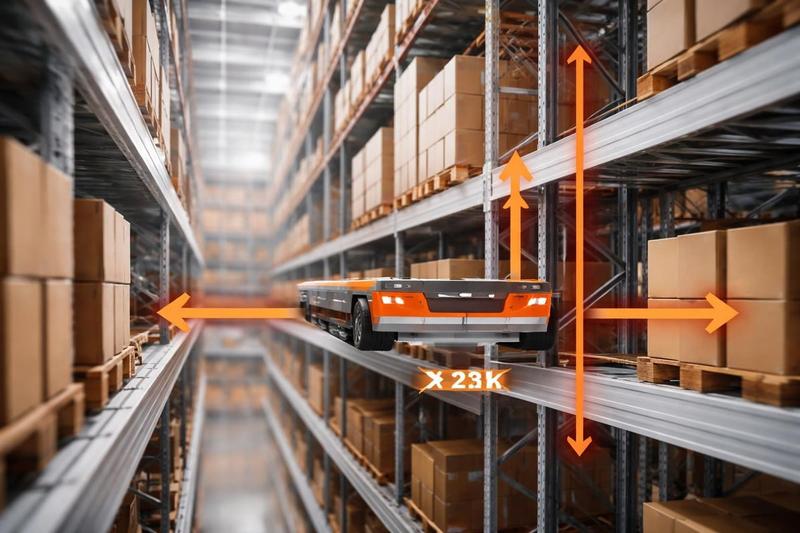
A 4 way shuttle system represents a significant advancement in automated material handling, characterised by its ability to move pallets horizontally along both X and Y axes within racking structures, as well as vertically between storage levels. This multi-directional capability eliminates the traditional constraints of fixed-path shuttle systems.
The core architecture comprises several integrated components working in harmony. Autonomous shuttle vehicles equipped with sensors and navigation systems traverse the racking infrastructure independently, whilst vertical lifts facilitate movement between storage levels. A warehouse control system orchestrates all movements, optimising pallet placement and retrieval based on real-time inventory demands and operational priorities.
Key Components and Functionality
The shuttle vehicles themselves feature sophisticated onboard technology that enables precise positioning and safe pallet handling. Load sensors ensure proper weight distribution, whilst proximity detectors prevent collisions and maintain operational safety throughout the system.
- Multi-directional drive mechanisms allowing movement in four directions without repositioning
- Integrated lifting platforms for independent vertical movement within dedicated lanes
- Advanced battery technology supporting extended operation cycles with rapid charging capabilities
- Communication systems maintaining constant connectivity with warehouse management software
- Safety sensors detecting obstacles, monitoring load stability, and preventing operational hazards
Racking structures designed for these systems differ significantly from conventional pallet storage. The framework must accommodate shuttle pathways whilst maintaining structural integrity under dynamic loading conditions. Rails guide the shuttles precisely, whilst strategically positioned transfer points enable movement between different zones within the storage matrix.
Operational Advantages Over Traditional Systems
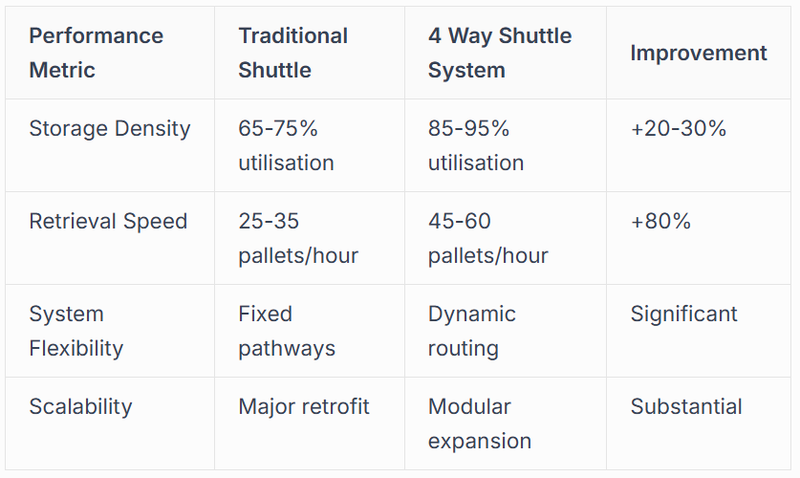
The 4-way shuttle system delivers measurable improvements across multiple performance metrics that directly impact warehouse profitability. Storage density increases substantially compared to conventional racking arrangements, as the elimination of multiple operating aisles frees valuable floor space for additional storage positions.
Throughput capabilities represent another compelling advantage. Traditional automated storage systems often create bottlenecks when multiple retrieval requests target the same aisle simultaneously. Four-way shuttles navigate around congestion, accessing alternative routes to maintain consistent cycle times even during peak operational periods.
Flexibility and Scalability Benefits
Warehouses face constantly evolving demands as product ranges change, seasonal variations impact volumes, and business growth requires additional capacity. The 4 way shuttle system architecture supports incremental expansion without disrupting ongoing operations.
Labour requirements decrease significantly as automation handles the repetitive, physically demanding aspects of pallet movement. Operators transition to supervisory roles, monitoring system performance and managing exceptions rather than manually operating forklifts or manually intensive equipment. This shift not only reduces operational costs but also improves workplace safety by minimising exposure to common warehouse injuries.
Energy efficiency emerges as an unexpected benefit. Modern shuttle vehicles utilise regenerative braking systems that capture energy during deceleration, whilst intelligent routing algorithms minimise unnecessary travel distances. Combined with LED lighting in automated zones requiring less illumination than manual operating areas, overall energy consumption typically decreases by 20-40% compared to conventional operations.
Implementation Considerations and Planning
Successfully deploying a 4 way shuttle system requires thorough analysis of operational requirements, existing infrastructure, and business objectives. The investment represents a significant capital commitment, making proper planning essential for achieving expected returns.
Space utilisation analysis forms the foundation of system design. Engineers assess ceiling heights, floor loading capacities, and building column positions to maximise storage density whilst accommodating shuttle movement requirements. Existing facilities may require structural modifications, whereas purpose-built warehouses can incorporate design elements that optimise system performance from inception.
Inventory Profile Analysis
Understanding your SKU characteristics determines optimal system configuration. Different product profiles demand different approaches to storage allocation and retrieval sequencing.
Fast-moving items benefit from strategic positioning near dispatch zones, whilst slow-moving inventory occupies deeper storage positions where longer retrieval times create minimal operational impact. The system's flexibility allows dynamic reallocation as product velocity patterns shift seasonally or in response to market trends.
Temperature-controlled environments present unique considerations. Cold-storage operations particularly benefit from four-way shuttle systems as automation minimises human exposure to harsh conditions whilst maintaining consistent throughput despite challenging operating temperatures. Battery performance, lubricant selection, and component materials require careful specification for sub-zero applications.
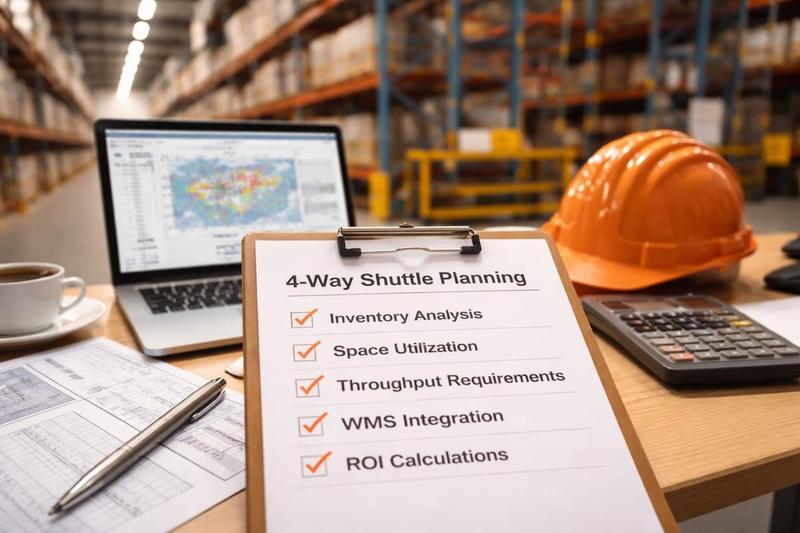
Integration with existing warehouse management and enterprise resource planning systems represents another critical planning element. The shuttle control software must exchange data seamlessly with broader business systems, receiving inbound instructions and transmitting real-time inventory positions. API development, data mapping, and testing protocols ensure reliable communication across platforms.
For businesses exploring automation for the first time, the comprehensive capital investment in a full 4 way shuttle system might seem overwhelming. The Automate-X GTP Starter Grid offers a strategic entry point, providing goods-to-person automation capabilities that introduce operational teams to automated processes whilst delivering immediate productivity improvements. This foundation creates organisational readiness for expanding into more sophisticated systems as business volumes grow.
Industry Applications and Use Cases
The versatility of 4-way pallet shuttle systems makes them suitable for diverse warehouse environments, each benefiting from specific capabilities that address unique operational challenges.
Third-Party Logistics Providers
3PL operations manage inventory for multiple clients with varying SKU profiles, storage requirements, and service level agreements. The system's flexible allocation capabilities enable logical segregation of client inventories whilst optimising overall space utilisation. Dynamic slotting adjusts storage positions as client volumes fluctuate, maintaining consistent performance despite changing demands.
Billing accuracy improves through precise inventory tracking, with the warehouse control system maintaining detailed transaction histories for each client account. This transparency strengthens client relationships whilst simplifying auditing and reconciliation processes.
E-commerce Fulfilment Centres
Online retail demands rapid order processing with same-day or next-day dispatch expectations. E-commerce operations experience extreme volume fluctuations during promotional periods, requiring systems that scale performance elastically.
The 4 way shuttle system maintains consistent retrieval speeds regardless of storage positions, eliminating the performance degradation that affects traditional systems as aisles extend deeper. Multi-pallet retrieval capabilities support wave picking strategies, simultaneously staging products for multiple orders to maximise picking efficiency.
Manufacturing and FMCG Operations
Manufacturers maintaining raw material storage and finished goods distribution within integrated facilities benefit from the system's ability to handle diverse pallet types and weights. Production lines receive materials with predictable timing, supporting just-in-time manufacturing philosophies whilst minimising work-in-progress inventory.
FMCG environments with high SKU counts and rapid stock rotation particularly value the optimised warehouse efficiency and throughput that four-way systems deliver. First-in-first-out rotation occurs automatically through intelligent placement algorithms, reducing waste from expired products whilst maintaining optimal stock freshness.
Pharmaceutical and Cold Storage
Regulatory compliance demands in pharmaceutical warehousing require impeccable inventory accuracy and traceability. Automated systems eliminate manual handling errors whilst maintaining detailed audit trails for every pallet movement. Temperature-sensitive products remain within controlled environments, with minimal exposure during storage and retrieval operations.
Cold-storage facilities reduce energy consumption substantially through automation. Minimising door openings, reducing lighting requirements in automated zones, and eliminating heat generated by manually operated equipment all contribute to lower refrigeration loads and improved temperature stability.
How different industries utilise 4 way shuttle systems including 3PL multi-client operations, e-commerce high-volume fulfillment, manufacturing raw materials and finished goods, pharmaceutical compliance requirements, and cold-storage temperature control
Technical Specifications and Performance Metrics
System performance varies based on configuration, operational parameters, and facility characteristics. Understanding key specifications enables accurate comparison between solutions and realistic performance expectations.
Shuttle Vehicle Capabilities
Modern shuttle units typically handle pallet loads ranging from 500kg to 1,500kg, with specialised units accommodating heavier loads for specific applications. Travel speeds reach 120-180 metres per minute horizontally, whilst vertical lift mechanisms operate at 30-45 metres per minute. These velocities translate to cycle times measured in seconds rather than minutes.
Positioning accuracy within ±5mm ensures reliable pallet placement even in tightly configured racking systems. This precision prevents jamming incidents that could halt operations whilst maintaining safe clearances between stored pallets and racking structures.
Battery technology has advanced significantly, with lithium-ion systems now standard across most installations. Opportunity charging during brief idle periods maintains operational readiness without dedicated charging cycles, whilst battery management systems optimise charging patterns to maximise service life.
System Throughput Calculations
Throughput depends on numerous variables including travel distances, storage density, pallet handling requirements, and operational patterns. A typical installation in a 15,000-square-metre facility might achieve 45-60 pallet movements per hour per shuttle, with multiple shuttles operating simultaneously to scale overall system capacity.
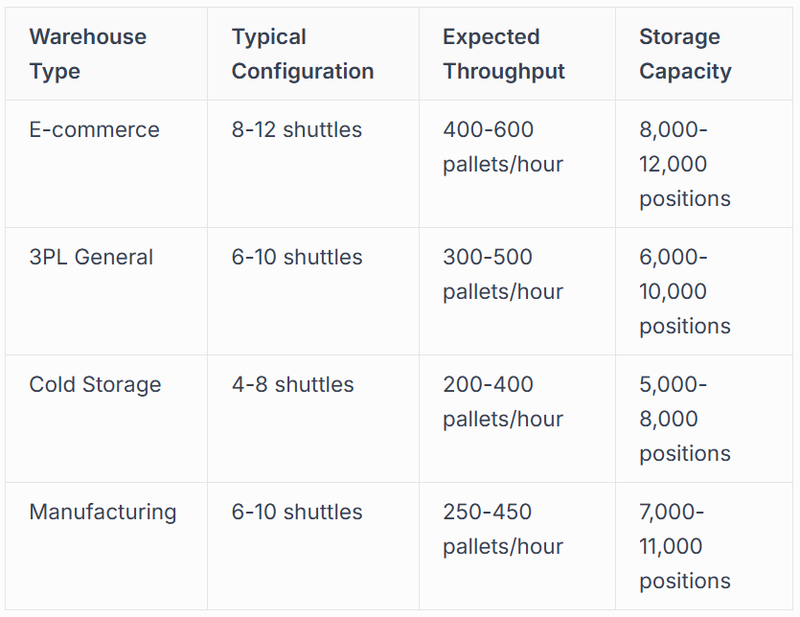
Peak performance occurs when retrieval requests distribute evenly across storage zones, allowing shuttles to operate independently without competing for the same pathways. Warehouse control systems employ sophisticated algorithms to sequence operations optimally, considering current shuttle positions, travel distances, and priority levels when allocating tasks.
Maintenance and Operational Reliability
Sustained performance requires proactive maintenance programmes that address both mechanical components and software systems. Preventive maintenance schedules based on operating hours or movement cycles ensure components receive attention before failures occur.
Predictive Maintenance Approaches
Advanced installations incorporate condition monitoring technology that tracks component performance in real-time. Vibration sensors detect bearing wear, temperature monitoring identifies developing electrical issues, and movement analysis reveals efficiency degradation indicating required adjustments.
These predictive approaches transition maintenance from scheduled interruptions to condition-based interventions, reducing unnecessary service whilst catching developing problems before they impact operations. Maintenance windows occur during off-peak periods, minimising disruption to core warehouse functions.
- Daily inspections covering visual checks and system status reviews
- Weekly maintenance including lubrication points and battery health monitoring
- Monthly servicing addressing wear components and calibration verification
- Quarterly reviews analysing performance trends and planning component replacements
- Annual overhauls conducting comprehensive system assessment and major component replacement
Software maintenance parallels physical system care. Regular updates address security vulnerabilities, introduce performance enhancements, and expand functionality as warehouse control systems evolve. Integration testing ensures updates don't disrupt communication with warehouse management platforms or introduce operational anomalies.
Spare parts inventory management balances availability against holding costs. Critical components with long procurement lead times justify on-site stock, whilst readily available items operate on just-in-time replenishment. Vendor relationships establishing guaranteed response times and parts availability provide additional operational security.
Cost Analysis and Return on Investment
Investment in a 4 way shuttle system encompasses multiple cost elements beyond the equipment purchase price. Comprehensive financial analysis accounts for installation, integration, training, and ongoing operational expenses whilst projecting returns through labour savings, productivity improvements, and space optimisation benefits.
Capital Investment Components
Initial capital requirements include shuttle vehicles, racking infrastructure, control systems, and installation labour. A moderate-sized installation serving 8,000 pallet positions might represent an investment between $2.5-4.5 million, varying based on specification, site complexity, and integration requirements.
Building modifications potentially add significant costs, particularly in retrofit applications where existing structures require strengthening or ceiling heights limit storage levels. Purpose-designed facilities amortise these costs across broader construction budgets, improving overall project economics.
Operational Savings and Payback
Labour cost reductions provide the most immediate financial impact. Eliminating manual forklift operations removes associated wages, benefits, and equipment costs. A typical installation might reduce direct labour requirements by 60-75%, with remaining personnel focusing on supervision, quality control, and exception handling.
Space efficiency gains enable either increased inventory holdings within existing footprints or deferred expansion of warehouse capacity. For businesses facing high property costs or limited expansion opportunities, this benefit alone may justify automation investment.
Accuracy improvements reduce costs associated with inventory discrepancies, mis-shipments, and customer returns. Enhanced first-time-right performance strengthens customer relationships whilst eliminating expense-intensive error correction processes.
Payback periods typically range from 3-6 years depending on operational intensity, labour rates, and facility utilisation levels. High-throughput operations with significant labour costs achieve faster returns, whilst lower-volume applications may extend payback timelines but still deliver positive long-term value.
The 4 way shuttle system represents a transformative approach to warehouse automation, delivering measurable improvements in storage density, operational efficiency, and scalability for businesses across diverse industries. Understanding the technology's capabilities, implementation requirements, and financial implications enables informed decision-making about automation strategies aligned with business objectives. Automate-X specialises in intelligent warehouse automation solutions that combine modern robotics, warehouse software, and system integration to streamline operations and enable scalable growth. Whether you're exploring your first automation project or expanding existing capabilities, our team delivers expertise and technology to transform your warehouse performance.