

Automate X: Transform Your Warehouse Operations in 2026
Share on
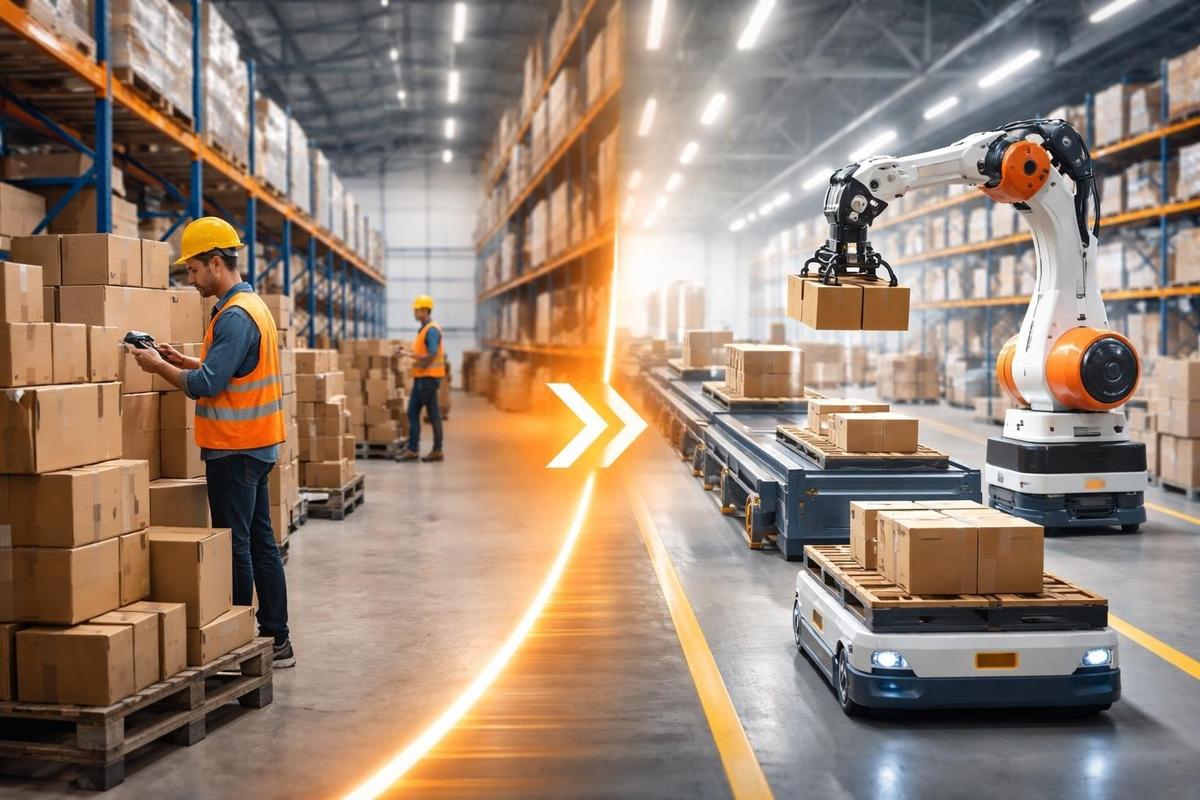
Modern warehouses face unprecedented pressure to process more orders, faster, with greater accuracy and lower costs. The solution lies in intelligent automation that transforms every aspect of warehouse operations. When businesses choose to automate X across their logistics infrastructure, they unlock scalability, efficiency, and competitive advantages that manual processes simply cannot match. This comprehensive guide explores how warehouse automation delivers measurable results for logistics providers, 3PLs, e-commerce fulfillment centres, and distribution operations throughout Australia and New Zealand.
Understanding the Full Scope of Warehouse Automation
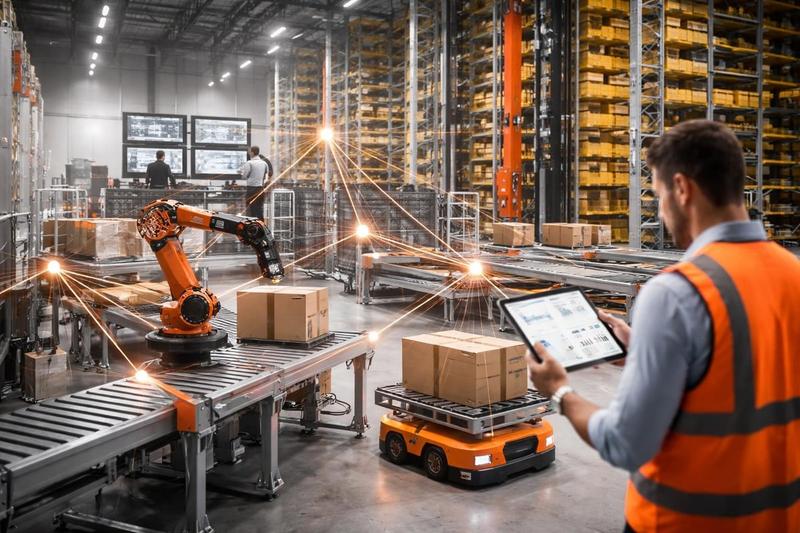
Warehouse automation extends far beyond simple conveyor systems or barcode scanners. To truly automate X in today's competitive logistics environment, businesses must embrace an integrated ecosystem of technologies working in harmony.
Modern warehouse automation encompasses:
- Automated storage and retrieval systems (ASRS) for optimised space utilisation
- Goods-to-person picking solutions that eliminate unnecessary worker movement
- Warehouse management software (WMS) providing real-time inventory visibility
- Robotics and autonomous mobile robots (AMRs) for material handling
- System integration connecting all technologies into a unified operation
The key difference between basic mechanisation and true automation lies in intelligence. When you automate X effectively, systems make decisions, adapt to changing conditions, and continuously optimise performance without constant human intervention. This intelligence transforms warehouses from labour-intensive facilities into precision-engineered operations.
Breaking Down Automation by Warehouse Function
Different warehouse functions require distinct automation approaches. Understanding where to automate X within your specific operation ensures maximum return on investment.
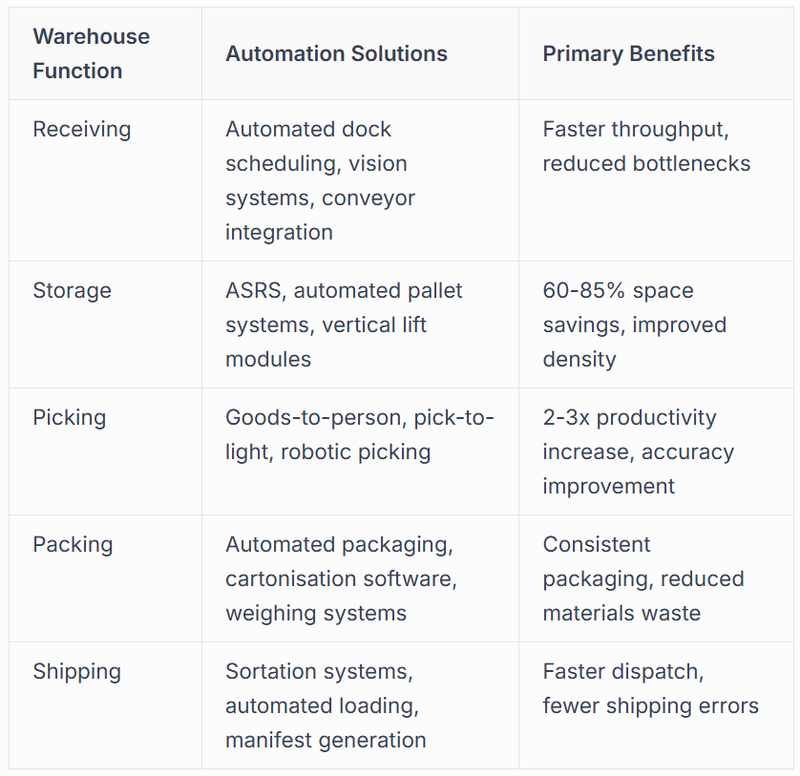
Each function presents unique opportunities. For instance, when businesses automate X in their picking operations, they typically see the most dramatic productivity improvements because picking represents 50-60% of total warehouse operating costs.
The Business Case for Automation Investment
Financial justification remains the primary hurdle for warehouse automation projects. However, the economics have shifted dramatically in recent years, making automation accessible to mid-sized operations, not just large enterprises.
Calculating Your Automation ROI
To automate X successfully requires understanding the complete financial picture. Labour costs continue rising across Australia and New Zealand, with warehouse wages increasing 15-20% since 2023. Simultaneously, automation technology costs have decreased while capabilities have expanded.
Key ROI factors include:
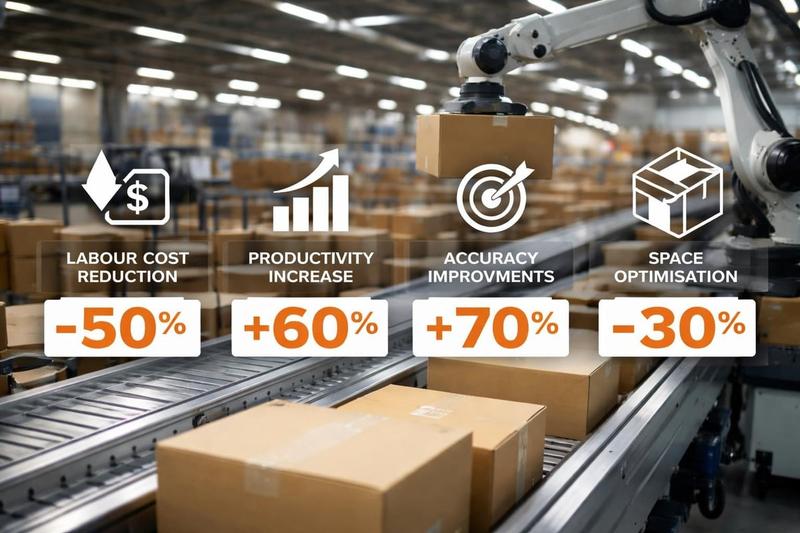
- Direct labour reduction - Typically 30-70% depending on automation level
- Productivity gains - 2-4x throughput increase per square metre
- Accuracy improvements - Picking accuracy from 95-98% to 99.8%+
- Space optimisation - 40-80% more inventory in existing footprint
- Error reduction - Fewer returns, recalls, and customer service issues
Most businesses that automate X in their core operations achieve payback periods of 18-36 months. More importantly, automation provides scalability that manual operations cannot match during peak seasons or growth phases.
Hidden Costs of Maintaining Manual Operations
Beyond obvious labour expenses, manual warehouse operations carry substantial hidden costs that become apparent only when you automate X and eliminate them.
Recruitment and training costs in warehouse environments average $4,000-$7,000 per employee. With typical annual turnover rates of 35-45% in manual warehousing, this represents continuous expense. Automated systems require minimal retraining and eliminate turnover-related productivity losses.
Workplace injuries and associated costs decline dramatically with automation. Manual material handling generates the highest injury rates in logistics, with each lost-time injury costing businesses $15,000-$45,000 when accounting for workers' compensation, lost productivity, and replacement labour.
Technology Selection and Integration Strategy
Choosing the right automation technologies requires careful analysis of your specific operational requirements. The temptation to automate X with the latest trending technology often leads to poor outcomes if that technology doesn't align with your workflows, products, or volume profiles.
Matching Technology to Operational Profiles
Different warehouse profiles demand different automation approaches. An e-commerce fulfillment centre with 10,000+ daily orders of small items requires vastly different solutions than a pharmaceutical distributor handling 200 pallet movements daily.
Small to medium operations (1,000-5,000 orders/day) benefit from modular automation solutions that scale incrementally. Goods-to-person starter systems provide immediate productivity gains without requiring complete facility redesign. These systems typically occupy 500-1,500 square metres and deliver 2-3x picking productivity improvements.
For businesses ready to begin their automation journey, modular approaches reduce both initial investment and implementation risk. The Automate-X GTP Starter Grid offers an accessible entry point specifically designed for Australian and New Zealand businesses seeking to automate X in their picking operations without the complexity and expense of enterprise-scale systems.
Medium to large operations (5,000-20,000+ orders/day) require integrated automation ecosystems. These facilities benefit from combining multiple technologies: ASRS systems for storage density, goods-to-person for picking, automated sortation for shipping, and comprehensive WMS orchestrating all systems.
The Critical Role of Software Integration
Hardware represents only half the equation when you automate X. Software integration determines whether individual automated systems function as disconnected islands or as a unified, intelligent operation.
Warehouse management systems serve as the central nervous system, coordinating all automated equipment while maintaining real-time inventory accuracy. However, WMS integration extends beyond the warehouse to connect with:
- Enterprise resource planning (ERP) systems for order management
- Transportation management systems (TMS) for shipping optimization
- Customer relationship management (CRM) for service visibility
- E-commerce platforms for direct order flow
When properly integrated, these systems enable true end-to-end automation where customer orders flow automatically from placement through fulfillment without manual intervention.
Implementation Planning and Change Management
Technical capability means nothing without successful implementation. The majority of automation project failures stem not from technology issues but from inadequate planning and change management.
Phased Implementation Approaches
To automate X across an entire warehouse simultaneously invites disaster. Successful implementations follow phased approaches that allow teams to adapt, systems to be optimised, and lessons to be incorporated before expanding scope.
Phase 1: Pilot and Proof Deploy automation in a contained area with controlled product ranges. This phase validates technology selection, tests integration points, and builds internal expertise. Duration: 8-16 weeks.
Phase 2: Core Operations Expand automation to primary workflows handling the majority of volume. Focus on stability and performance optimisation before adding complexity. Duration: 12-24 weeks.
Phase 3: Complete Integration Extend automation to remaining functions, add advanced features, and optimise cross-system workflows. This phase continues indefinitely as operations evolve. Duration: Ongoing.
This phased approach allows businesses to automate X while maintaining operational continuity and minimising disruption to customer service levels.
Preparing Your Workforce for Automation
Workforce concerns represent the most sensitive aspect of automation projects. Transparent communication and genuine investment in employee development transform potential resistance into enthusiastic adoption.
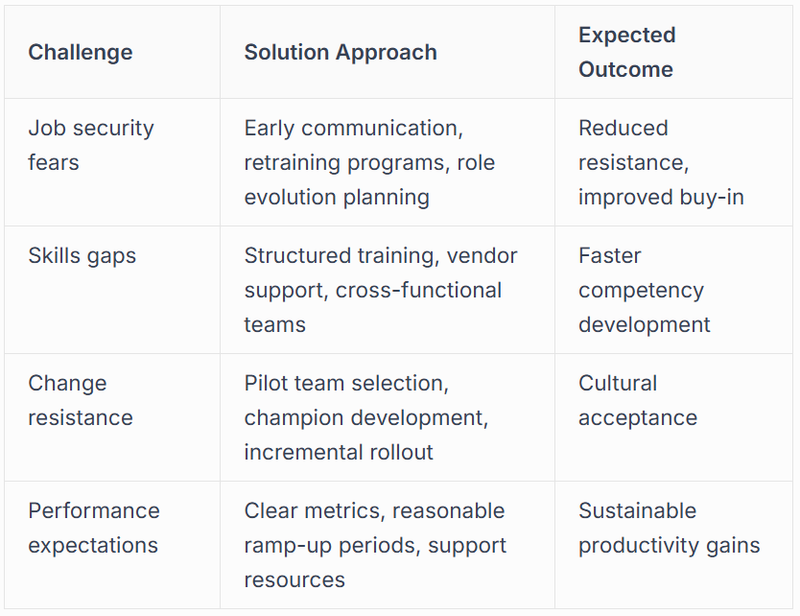
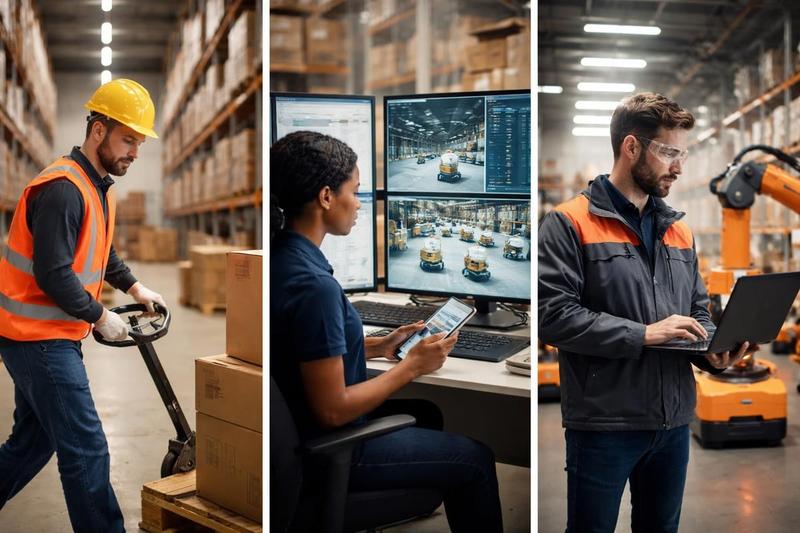
When you automate X in warehouse operations, the workforce doesn't disappear-it evolves. Manual pickers become system operators. Forklift drivers become AMR fleet managers. Supervisors become process optimisation specialists. This evolution requires investment in training and development, but it creates more skilled, higher-paid positions that reduce turnover and improve operational stability.
Optimising Performance and Measuring Success
Implementation represents the beginning, not the end, of the automation journey. Continuous optimisation and rigorous performance measurement ensure you fully realise the potential when you automate X.
Key Performance Indicators for Automated Warehouses
Traditional warehouse metrics remain important but require supplementation with automation-specific KPIs that reveal system health and optimisation opportunities.
Throughput Metrics:
- Units per hour per system/operator
- Orders processed per shift
- Lines picked per labour hour
- Dock-to-stock time for inbound
- Order-to-ship time for outbound
Quality Metrics:
- Picking accuracy by system and SKU
- Inventory accuracy by storage location
- Damage rates for automated handling
- Perfect order percentage
- Return rates by root cause
System Performance Metrics:
- Equipment uptime and availability
- Mean time between failures (MTBF)
- Mean time to repair (MTTR)
- System utilisation rates
- Bottleneck identification
Advanced operations automate X not just in physical processes but in performance monitoring itself, using dashboards and alerts that highlight anomalies and optimisation opportunities in real-time.
Continuous Improvement Methodologies
Static automation quickly becomes obsolete. Market demands shift, product mixes evolve, and volume patterns change. Successful operations embed continuous improvement into their automated environments.
Weekly optimisation reviews examine performance data, identify constraint points, and implement incremental improvements. These sessions involve cross-functional teams including operations, maintenance, IT, and management.
Monthly deep dives analyse trends, evaluate capacity utilisation, and plan for seasonal variations or growth requirements. This cadence allows you to automate X more effectively over time as you understand system capabilities and limitations.
Quarterly strategic assessments evaluate whether current automation continues serving business objectives or whether expansion, modification, or technology additions would deliver additional value.
Scalability and Future-Proofing Your Investment
Technology evolves rapidly. Warehouse automation investments made today must accommodate tomorrow's requirements without complete replacement.
Building Flexible Automation Architecture
Modular, standards-based automation provides maximum adaptability. When you automate X using proprietary, closed systems, you create vendor lock-in and limit future options. Open architecture approaches enable:
- Technology substitution - Replace underperforming systems without replacing everything
- Incremental expansion - Add capacity or capabilities as business grows
- Multi-vendor integration - Select best-of-breed solutions for each function
- Software upgrades - Enhance capabilities without hardware changes
The most successful automated warehouses view their systems as platforms that evolve rather than fixed installations that ossify.
Preparing for Emerging Technologies
Warehouse automation continues advancing rapidly. Technologies emerging in 2026 include:
- Advanced robotic manipulation - Robots handling products previously requiring human dexterity
- Artificial intelligence optimization - Machine learning continuously improving workflows
- Digital twin simulation - Virtual replicas enabling risk-free testing and optimization
- Autonomous vehicles - Self-driving capabilities extending beyond controlled warehouse environments
- Sustainable automation - Energy-efficient systems reducing environmental impact
To automate X effectively for the long term requires infrastructure accommodating these emerging capabilities. Power capacity, network bandwidth, physical space allowances, and software architecture all need headroom for evolution.
Industry-Specific Automation Considerations
While core automation principles apply universally, specific industries present unique requirements that influence technology selection and implementation approaches.
E-commerce and 3PL Operations
E-commerce fulfillment demands extreme flexibility to handle unpredictable order patterns, diverse product ranges, and compressed delivery timeframes. To automate X in e-commerce environments requires:
- High-density storage accommodating thousands of SKUs
- Rapid pick-pack-ship cycles supporting same-day fulfillment
- Returns processing integration for reverse logistics
- Multi-client capabilities for 3PL operations
- Peak season scalability handling 3-5x normal volumes
Goods-to-person systems excel in e-commerce by consolidating inventory and eliminating travel time, the primary productivity constraint in traditional pick-to-cart operations.
Pharmaceutical and Cold Chain Logistics
Regulated industries like pharmaceuticals require automation solutions that maintain compliance while improving efficiency. Temperature-controlled environments, lot tracking, expiration date management, and audit trails all influence how you automate X in these settings.
Automated systems provide superior traceability compared to manual operations, with every product movement logged and reportable. This capability proves particularly valuable during recalls or regulatory audits.
Manufacturing and FMCG Distribution
High-volume, pallet-level operations in manufacturing and fast-moving consumer goods benefit from different automation technologies than piece-picking operations. Automated pallet storage and retrieval, layer picking, and case handling dominate these environments.
Integration between production lines and warehouse automation creates continuous flow from manufacturing through distribution, eliminating intermediate handling and associated costs.
Warehouse automation represents one of the most impactful investments logistics businesses can make, delivering productivity gains, accuracy improvements, and scalability that manual operations cannot match. Success requires careful technology selection, phased implementation, workforce development, and continuous optimisation aligned with your specific operational requirements. Automate-X combines modern robotics, intelligent software, and expert system integration to help logistics and supply chain businesses across Australia and New Zealand transform their warehouse operations and achieve sustainable competitive advantage.