

Automated Manufacturing Companies: 2026 Technology Guide
Share on
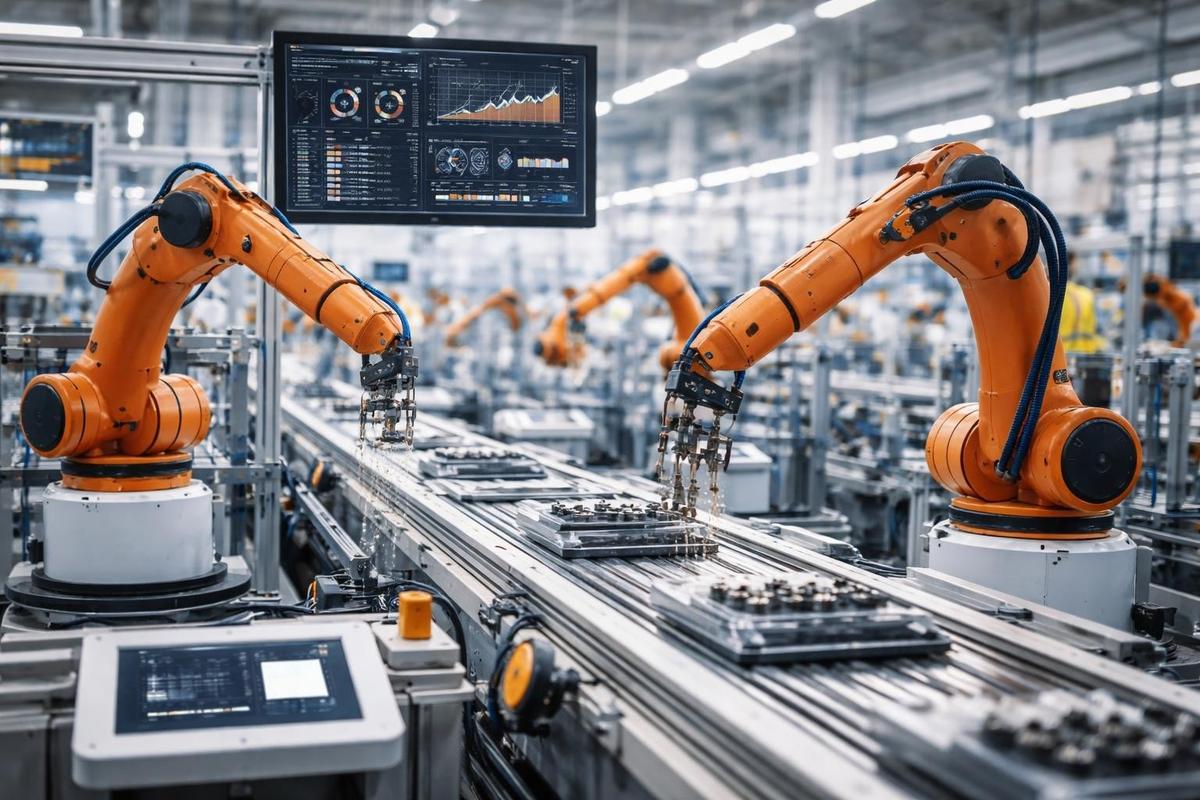
The manufacturing landscape has undergone a dramatic transformation over the past decade, with automated manufacturing companies leading the charge toward unprecedented efficiency and productivity. As businesses face mounting pressure to reduce costs, improve quality, and meet growing consumer demands, automation has shifted from a competitive advantage to a fundamental requirement for survival. Today's automated manufacturing companies combine robotics, artificial intelligence, and sophisticated software systems to create production environments that operate with precision and speed previously thought impossible.
The Evolution of Manufacturing Automation
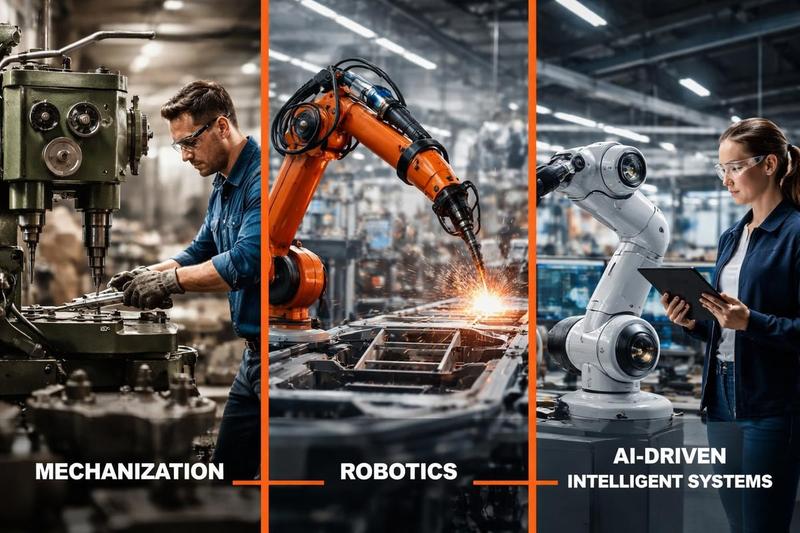
Manufacturing automation has progressed far beyond simple mechanization. Modern automated manufacturing companies deploy integrated systems that communicate seamlessly, make autonomous decisions, and adapt to changing production requirements in real-time.
From Assembly Lines to Intelligent Systems
The journey from Henry Ford's assembly line to today's smart factories represents a quantum leap in manufacturing capability. Early automation focused on repetitive tasks and basic mechanization, but contemporary systems leverage machine learning algorithms to optimize production schedules, predict maintenance needs, and adjust quality control parameters automatically.
Automated manufacturing companies now implement solutions that extend beyond the production floor. Warehouse automation and industrial robotics work together to create end-to-end efficiency, connecting manufacturing output directly to distribution and fulfillment operations. This integration eliminates bottlenecks and ensures that production gains translate into tangible business outcomes.
Key Technologies Driving Modern Automation
Several core technologies define what automated manufacturing companies deploy today:
- Collaborative robots (cobots) that work safely alongside human operators
- Computer vision systems for real-time quality inspection and defect detection
- Industrial IoT sensors that monitor equipment performance and environmental conditions
- Advanced control systems that orchestrate complex production sequences
- Predictive analytics platforms that forecast maintenance requirements and optimize scheduling
The convergence of these technologies creates production environments where machines handle precision tasks while humans focus on strategic decision-making, problem-solving, and continuous improvement initiatives.
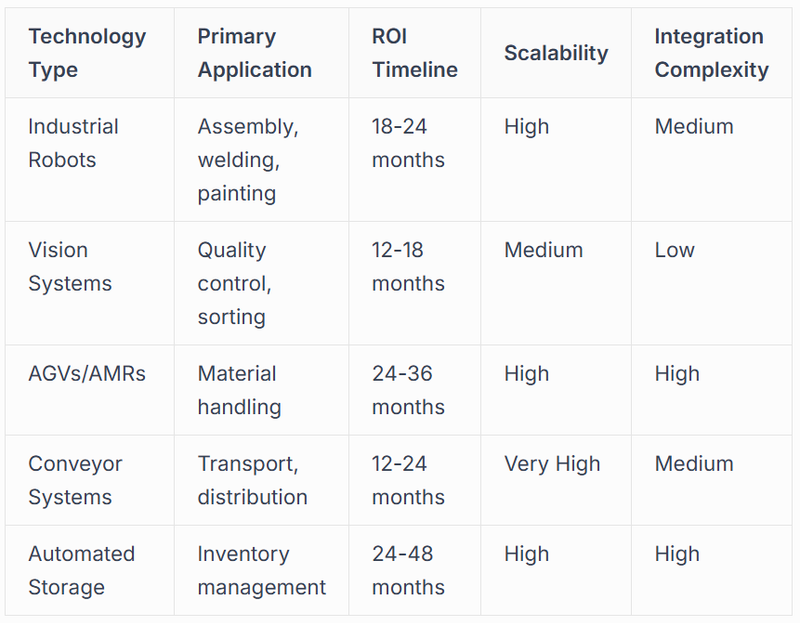
Manufacturing Automation Technologies Compared
Industry Applications and Success Stories
Automated manufacturing companies serve diverse sectors, each with unique challenges and opportunities. Understanding how automation delivers value across industries provides valuable insights for businesses considering similar investments.
Pharmaceutical and Medical Device Manufacturing
Pharmaceutical manufacturers face stringent regulatory requirements and zero-tolerance quality standards. Automated manufacturing companies have responded with systems that provide complete traceability, contamination-free environments, and consistent production quality. Recent innovations in medical device manufacturing demonstrate how automation meets evolving compliance requirements while accelerating production cycles.
These facilities deploy cleanroom-compatible robots, serialization systems, and automated inspection technologies that exceed human capability for precision and repeatability. The integration of electronic batch records with production equipment creates an auditable trail that satisfies regulatory authorities while reducing administrative burden.
Food and Beverage Production
The food and beverage sector demands automation solutions that handle diverse product formats, maintain strict hygiene standards, and accommodate seasonal demand fluctuations. Automated manufacturing companies design systems with washdown-rated components, flexible changeover capabilities, and temperature-controlled environments.
New automated warehouse operations in New Zealand showcase how production automation extends into distribution, creating seamless flow from manufacturing to customer delivery. This end-to-end approach eliminates handoff delays and maintains product integrity throughout the supply chain.
Implementation Strategies for Manufacturing Automation
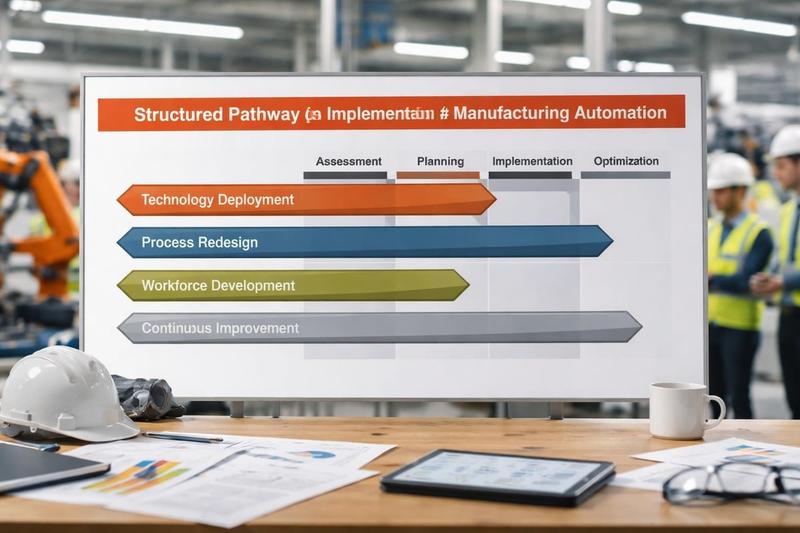
Successful automation requires more than purchasing equipment. Automated manufacturing companies that achieve meaningful results follow structured implementation approaches that address technology, processes, and people simultaneously.
Assessment and Planning
- Conduct comprehensive process mapping to identify automation opportunities
- Establish clear performance metrics aligned with business objectives
- Evaluate existing infrastructure for compatibility and integration requirements
- Develop realistic timelines that account for installation, testing, and training
- Secure stakeholder buy-in across operations, finance, and executive leadership
The assessment phase reveals which processes deliver the highest automation ROI. High-volume, repetitive tasks with consistent inputs typically offer the strongest business case, while highly variable processes may require phased implementation or hybrid manual-automated approaches.
Technology Selection and Integration
Choosing the right automation technologies requires balancing immediate needs against future flexibility. Automated manufacturing companies increasingly favor modular systems that scale incrementally rather than monolithic installations requiring massive upfront investment.
For businesses starting their automation journey, solutions like the Automate-X GTP Starter Grid provide an accessible entry point that delivers immediate productivity gains while establishing the foundation for expanded automation. This approach reduces financial risk while building organizational capability and confidence with automated systems.
Modern automation platforms prioritize interoperability, using standard communication protocols and open APIs that facilitate integration with existing systems. Conveyor solution design exemplifies this philosophy, creating material handling infrastructure that connects seamlessly with upstream and downstream processes.
Workforce Transformation and Skills Development
The rise of automated manufacturing companies has fundamentally changed workforce requirements. Rather than eliminating jobs, automation shifts human effort toward higher-value activities that leverage uniquely human capabilities.
New Roles in Automated Environments
Manufacturing automation creates demand for:
- Robotics technicians who maintain and troubleshoot automated systems
- Data analysts who interpret performance metrics and identify optimization opportunities
- Process engineers who design and refine automated workflows
- Integration specialists who connect disparate systems and ensure seamless operation
- Quality coordinators who oversee automated inspection systems and manage exception handling
Organizations that invest in comprehensive training programs achieve significantly better automation outcomes. Employees who understand how automated systems function become valuable partners in continuous improvement, identifying enhancement opportunities that purely technical implementations might miss.
Measuring Automation Success
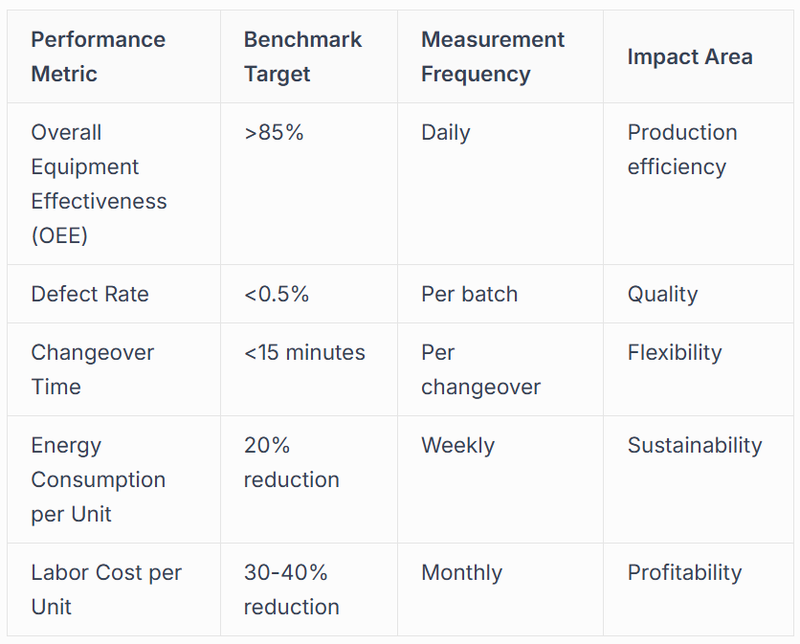
Financial Considerations and ROI
Automated manufacturing companies evaluate automation investments using metrics that extend beyond simple payback calculations. Total cost of ownership analysis accounts for initial capital expenditure, ongoing maintenance costs, energy consumption, and the value of improved quality and reduced waste.
Hidden Benefits of Manufacturing Automation
Financial models should incorporate often-overlooked advantages:
Reduced liability exposure through improved workplace safety and consistent product quality creates long-term value that may not appear in traditional ROI calculations. Companies thriving with automated manufacturing robots report significant insurance premium reductions alongside direct operational savings.
Enhanced market responsiveness enables automated facilities to accommodate custom orders and rapid product iterations without the cost penalties that manual operations face. This flexibility translates into revenue opportunities that justify automation investments independent of efficiency gains.
Knowledge capture and standardization ensure that production expertise becomes embedded in automated systems rather than residing solely in individual employees. This institutional knowledge protects against workforce turnover and accelerates training for new team members.
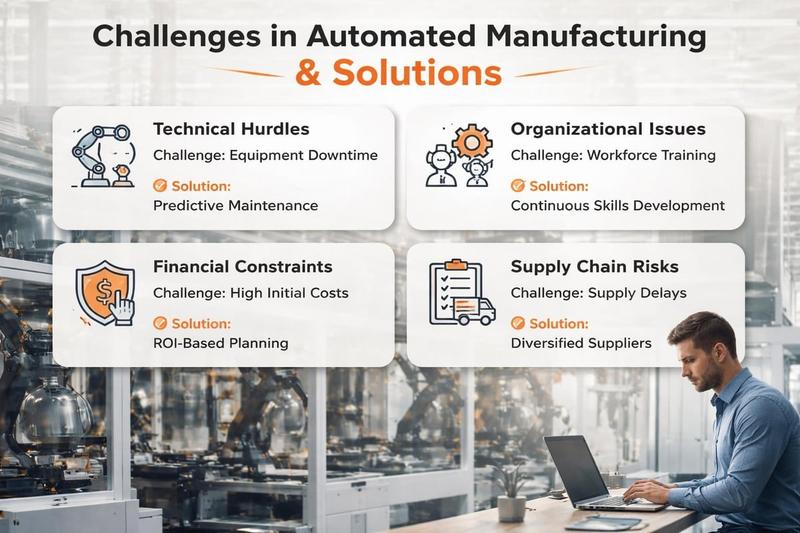
Overcoming Implementation Challenges
Despite clear benefits, automated manufacturing companies face common obstacles during automation deployment. Understanding these challenges enables proactive mitigation strategies.
Technical Integration Hurdles
Legacy equipment and incompatible control systems create integration complexity that extends project timelines and increases costs. Successful implementations conduct thorough compatibility assessments before equipment selection and budget for necessary upgrades to existing infrastructure.
Automated manufacturing companies increasingly adopt phased approaches that prove concepts in limited production areas before full-scale deployment. Manufacturing case studies demonstrate how pilot implementations reduce risk while building organizational capability.
Change Management and Organizational Readiness
Resistance to automation often stems from fear of job displacement and discomfort with new technologies. Transparent communication about automation objectives, employee involvement in implementation planning, and visible investment in training programs build support for transformation initiatives.
Successful automation implementations prioritize operator input during system design, ensuring that automated solutions address real workflow challenges rather than imposing theoretical improvements that ignore practical realities.
Future Trends Shaping Manufacturing Automation
The evolution of automated manufacturing companies continues accelerating as emerging technologies mature and converge. Understanding these trends helps businesses position automation investments for long-term relevance.
Artificial Intelligence and Machine Learning
AI-powered systems move beyond programmed responses to learn from production data, identifying patterns and optimization opportunities invisible to human analysis. Predictive maintenance platforms forecast equipment failures with increasing accuracy, while quality control systems detect subtle defects that escape traditional inspection methods.
Automated manufacturing companies deploy machine learning algorithms that continuously refine production parameters, automatically adjusting speeds, temperatures, and pressures to maintain optimal output quality. This autonomous optimization delivers compounding efficiency gains over time.
Sustainable Manufacturing Automation
Environmental considerations increasingly influence automation decisions. Modern systems incorporate energy management features that minimize consumption during idle periods, optimize production schedules to leverage off-peak electricity rates, and reduce material waste through precise process control.
Custom automation solutions demonstrate how tailored implementations address both productivity and sustainability objectives, creating business value through operational efficiency and environmental stewardship simultaneously.
Automation Technologies for Specific Manufacturing Processes
Different manufacturing processes benefit from specialized automation approaches:
- Assembly operations: Collaborative robots with force sensing and vision guidance
- Material handling: Autonomous mobile robots with dynamic path planning
- Quality inspection: Multi-spectrum vision systems with AI-powered defect classification
- Packaging: High-speed pick-and-place systems with flexible end-effector configurations
- Logistics integration: Automated storage with real-time inventory tracking
The most successful automated manufacturing companies select technologies based on specific process requirements rather than pursuing automation for its own sake. Robotic truck loading and unloading solutions illustrate how targeted automation addresses critical pain points while integrating with broader operational workflows.
Supply Chain Integration and Digital Connectivity
Manufacturing automation achieves maximum value when production systems connect directly with supply chain platforms. Real-time production data informs inventory planning, automated systems trigger raw material reorders based on consumption rates, and finished goods flow seamlessly into distribution networks without manual intervention.
This connectivity extends beyond physical automation to encompass digital systems that orchestrate entire value chains. Manufacturing software solutions demonstrate how integrated platforms eliminate information silos and enable data-driven decision-making across organizational boundaries.
Automated manufacturing companies increasingly participate in digital supply chain ecosystems where trading partners share forecast data, capacity information, and quality metrics through standardized interfaces. This transparency enables collaborative planning that reduces waste and improves service levels throughout extended supply networks.
Quality Control in Automated Environments
Automation transforms quality assurance from periodic sampling to continuous monitoring. Vision systems inspect every product at production speed, eliminating the statistical uncertainty inherent in manual inspection regimes. Sensor networks detect process variations before they produce defects, enabling preventive corrections rather than reactive scrap management.
Advanced quality systems correlate production parameters with outcome quality, building predictive models that identify optimal operating windows. These insights drive continuous improvement cycles that systematically enhance capability over time.
Global Competitiveness Through Automation
Automated manufacturing companies compete effectively against low-labor-cost regions by achieving productivity levels that offset wage differentials. Onshore automated production reduces supply chain complexity, improves customer responsiveness, and eliminates risks associated with extended global logistics networks.
The economic case for domestic automated manufacturing strengthens as shipping costs increase, sustainability regulations tighten, and consumers demand faster delivery. Automation and logistics transformation trends highlight how integrated production and distribution automation creates competitive advantages that purely offshore strategies cannot match.
Regional production supported by automation also provides strategic benefits during supply chain disruptions, ensuring continuity when global networks experience delays or constraints.
Automated manufacturing companies demonstrate that strategic automation investments deliver measurable returns across productivity, quality, flexibility, and competitiveness dimensions. Success requires balancing technology selection with workforce development, change management, and long-term strategic vision that extends beyond immediate cost reduction. Automate-X helps logistics and supply chain businesses navigate this transformation through intelligent warehouse automation solutions that combine modern robotics, warehouse software, and system integration. Whether you're beginning your automation journey or expanding existing capabilities, our team provides the expertise and technology platforms to streamline operations, improve productivity, and enable scalable growth across your distribution and fulfillment environments.