

Cold Chain Automation: Transform Temperature-Controlled Logistics
Share on
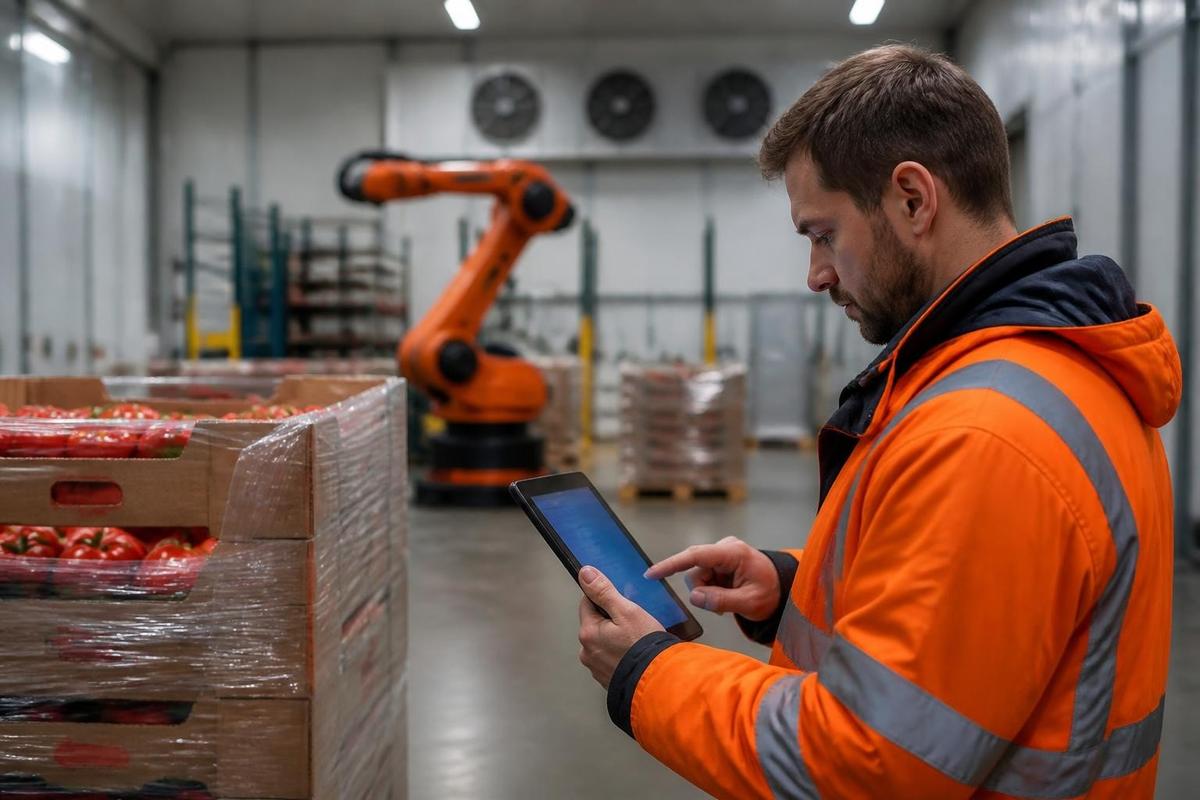
The pharmaceutical, food and beverage, and healthcare industries face mounting pressure to maintain product integrity throughout increasingly complex supply chains. Temperature-controlled logistics demands precision that human oversight alone cannot consistently deliver. Cold chain automation represents a transformative shift in how businesses manage refrigerated and frozen goods, combining robotics, intelligent monitoring systems, and advanced software to eliminate variability, reduce spoilage, and ensure compliance with stringent regulatory requirements.
The Critical Need for Automation in Temperature-Controlled Environments
Cold storage operations face unique challenges that make manual processes particularly vulnerable to failure. Workers operating in sub-zero environments experience reduced efficiency and increased safety risks, while human error in temperature-sensitive environments can result in catastrophic product loss. Traditional cold chain management relies heavily on manual monitoring, documentation, and material handling-each presenting opportunities for inconsistency.
The financial implications of cold chain failures extend far beyond immediate product loss. Regulatory non-compliance can trigger substantial penalties, while reputational damage from compromised products can devastate customer relationships. Research indicates that AI-driven temperature monitoring systems can reduce spoilage by up to 80%, demonstrating the substantial impact automation delivers.
Market Growth Driving Investment
The cold chain automation sector is experiencing unprecedented expansion. Industry analysis reveals that cold chain warehouse automation is booming due to surging demand for refrigerated goods, particularly in pharmaceutical distribution and online grocery delivery. This growth trajectory creates both opportunity and competitive pressure for businesses managing temperature-controlled facilities.
Core Technologies Powering Cold Chain Automation
Modern cold chain automation integrates multiple technological layers to create resilient, efficient operations. Understanding these components helps businesses identify the most impactful investment areas for their specific operational challenges.
Automated Storage and Retrieval Systems
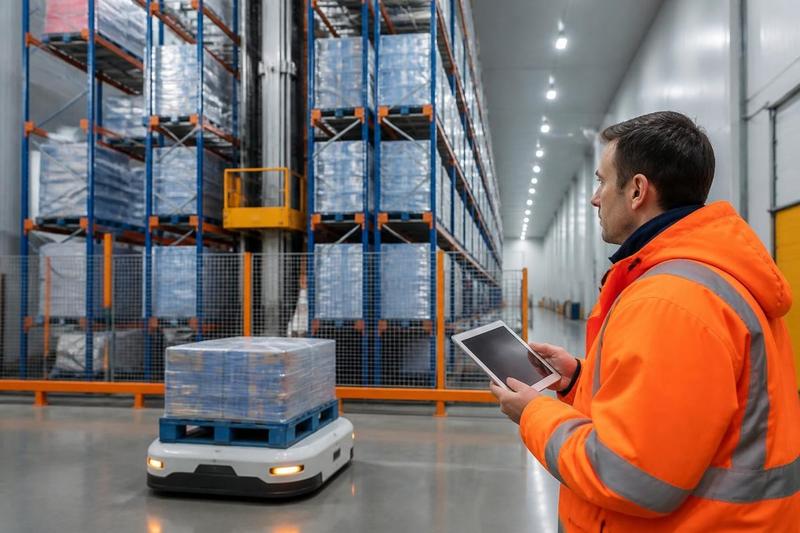
Automated Storage and Retrieval Systems (ASRS) eliminate the need for human workers to navigate extreme temperature environments. These systems use computer-controlled mechanisms to automatically place and retrieve products from designated storage locations, maintaining precise inventory positioning while maximizing vertical space utilisation. The benefits of ASRS in manufacturing environments translate powerfully to cold storage applications, where minimizing exposure time and maintaining environmental stability prove crucial.
Key benefits of ASRS in cold chain environments include:
- Reduced energy consumption through faster door cycles and minimized temperature fluctuations
- Elimination of worker exposure to hazardous cold conditions
- Consistent picking accuracy regardless of environmental challenges
- Optimized storage density reducing refrigeration costs per pallet position
- Real-time inventory visibility enabling precise stock rotation
Autonomous Mobile Robots and Goods-to-Person Systems
Rather than requiring workers to traverse vast refrigerated spaces, autonomous mobile robots bring inventory to climate-controlled picking stations. This goods-to-person automation approach fundamentally redesigns cold chain workflows, concentrating human activity in comfortable environments while robots handle the extreme temperature exposure.
Mobile robots navigate cold storage facilities using advanced sensors and mapping technologies, retrieving specific products and delivering them to ergonomic workstations. Workers complete picking tasks in normal temperatures, then robots return items to refrigerated storage-dramatically improving productivity while enhancing worker safety and retention.
Intelligent Temperature Monitoring and Control
Automation extends beyond material handling into environmental management itself. IoT sensors continuously monitor temperature, humidity, and other critical parameters throughout storage zones, generating real-time alerts when conditions deviate from specified ranges. However, implementing IoT in cold supply chains presents specific barriers that businesses must address, including connectivity challenges in metal-lined refrigeration units and sensor performance in extreme conditions.
Advanced systems leverage artificial intelligence to predict potential failures before they occur, analyzing patterns in compressor performance, door cycles, and ambient conditions. This predictive capability enables proactive maintenance, preventing costly breakdowns that could compromise entire inventory sections.
Operational Benefits Across the Cold Chain
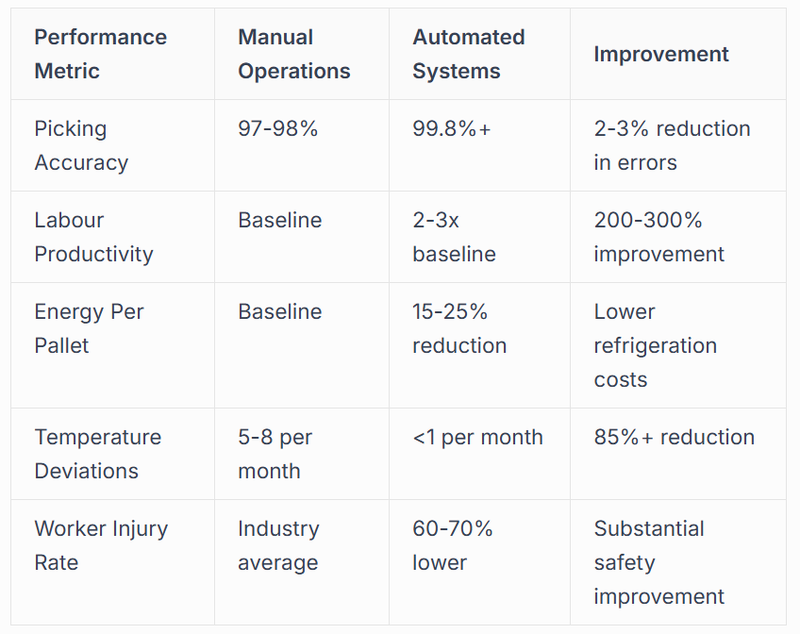
Cold chain automation delivers measurable improvements across multiple operational dimensions. Quantifying these benefits helps justify capital investment and prioritize implementation phases.
Enhanced Product Quality and Compliance
Automated systems maintain tighter temperature control than manual operations can achieve. Continuous monitoring eliminates gaps in documentation, creating comprehensive compliance records that satisfy regulatory requirements. For pharmaceutical operations, where vaccine distribution requires precise multi-tier cold chain optimization, automation provides the reliability and documentation necessary to meet stringent healthcare standards.
A healthcare company implementing real-time predictive intelligence in cold chain operations achieved faster reporting and significant annual savings, demonstrating how automation supports both compliance and financial objectives simultaneously.
Workforce Optimization and Safety
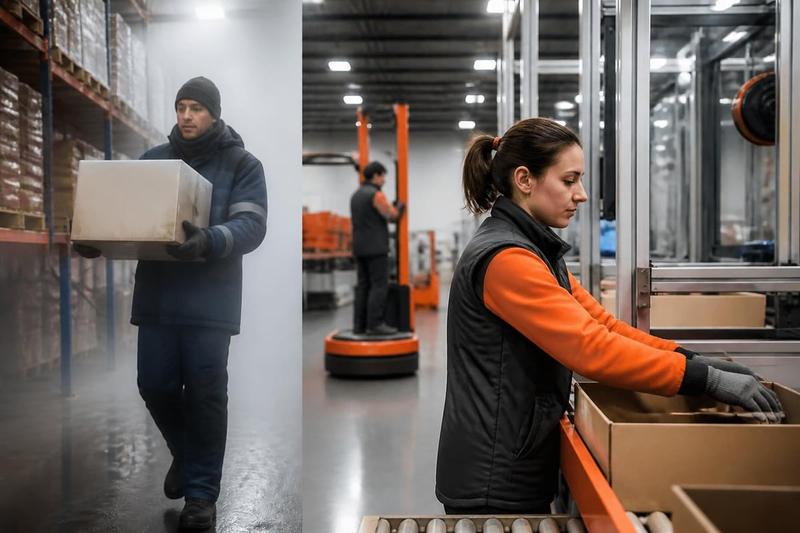
Cold storage facilities traditionally struggle with high staff turnover due to harsh working conditions. Automation addresses this challenge by removing workers from extreme environments, improving job satisfaction and reducing recruitment and training costs. The implementation of fully automated cold storage operating at -22°C with zero manual intervention exemplifies how technology can completely eliminate human exposure to dangerous conditions.
Modern cold chain facilities position workers as system operators and exception handlers rather than manual laborers, creating more skilled roles that command better compensation and loyalty. This transformation supports working alongside robots in collaborative environments that leverage both human judgment and robotic precision.
Implementation Strategies for Different Business Scales
Cold chain automation projects range from targeted deployments addressing specific pain points to comprehensive facility transformations. Selecting the appropriate scope depends on operational requirements, budget constraints, and growth trajectories.
Phased Implementation Approaches
Phase 1: Temperature Monitoring and Control
- Deploy IoT sensor networks throughout existing storage zones
- Implement centralized monitoring dashboards with automated alerts
- Establish baseline performance data to identify improvement opportunities
- Create predictive maintenance protocols based on equipment patterns
Phase 2: Material Handling Automation
- Automate high-volume, repetitive picking tasks with targeted robotics
- Implement goods-to-person systems for order consolidation
- Integrate warehouse management software with automation hardware
- Train staff on system operation and exception handling
Phase 3: Comprehensive Integration
- Expand automation to cover entire facility workflows
- Deploy advanced AI for demand forecasting and inventory optimization
- Integrate cold chain systems with broader supply chain networks
- Continuously refine operations based on performance analytics
Scalable Entry Points for Growing Businesses
Small and medium businesses often believe cold chain automation requires massive capital investment beyond their reach. However, modular solutions enable staged adoption that grows with business requirements. For operations ready to begin their automation journey, the Automate-X GTP Starter Grid provides an accessible entry point, offering a low-cost approach to automate picking processes that can extend into temperature-controlled zones as operations expand.
This scalable approach allows businesses to prove ROI with initial deployments before committing to larger investments, reducing risk while building internal expertise in automation management.
Technology Integration and System Architecture
Successful cold chain automation requires seamless integration between hardware, software, and existing business systems. The architecture must support real-time data flow, enable rapid decision-making, and accommodate future technological advances.
Software Layer Requirements
Warehouse Management Systems (WMS) serve as the command centre for automated cold chain operations, orchestrating robot movements, inventory transactions, and order fulfillment workflows. Modern WMS platforms designed for automation provide:
- Real-time inventory visibility across temperature zones
- Automated stock rotation based on expiration dates and temperature exposure
- Integration with enterprise resource planning (ERP) systems
- Analytics dashboards highlighting performance trends and optimization opportunities
- Mobile interfaces enabling remote monitoring and management
Industrial system integration expertise proves essential when connecting automation hardware with business software, ensuring reliable data exchange and coordinated operation across all system components.
Connectivity and Data Infrastructure
Cold chain facilities generate vast data streams from sensors, robots, and control systems. Robust network infrastructure must support this data volume while maintaining reliability in challenging environments. Wireless connectivity in metal-lined refrigeration units requires specialized equipment and careful network design to prevent dead zones.
Edge computing capabilities enable real-time processing of critical data-such as temperature alerts or collision avoidance-without dependence on cloud connectivity. This architecture ensures safety and operational continuity even during network disruptions.
Addressing Implementation Challenges
While cold chain automation delivers substantial benefits, successful deployment requires navigating technical, operational, and organizational challenges. Anticipating these obstacles enables proactive mitigation strategies.
Environmental Considerations
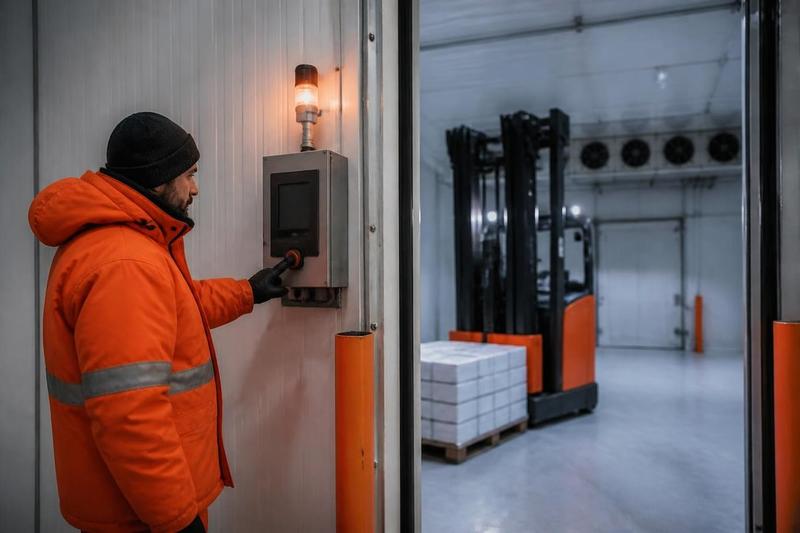
Automation equipment operating in extreme cold faces unique stresses. Batteries discharge faster in sub-zero temperatures, lubricants thicken affecting mechanical performance, and condensation creates potential electrical hazards when equipment moves between temperature zones. Case studies of mobile computers deployed in cold storage facilities highlight the importance of selecting technology specifically designed for temperature extremes.
Equipment specifications must account for operating temperature ranges, condensation management, and battery performance. Regular maintenance protocols should address cold-specific wear patterns and failure modes.
Change Management and Workforce Transition
Introducing automation fundamentally changes how workers interact with warehouse operations. Successful implementations include comprehensive training programs that develop new skill sets, clear communication about how roles will evolve, and involvement of frontline staff in solution design. Research exploring AI and robotics in cold chain logistics identifies organizational readiness as a critical success factor alongside technical capabilities.
Workers transitioning from manual handling to system operation require time to develop confidence with new technologies. Providing adequate training periods and ongoing support reduces resistance and accelerates productive operation.
Safety and Compliance Integration
Automated systems must incorporate appropriate safety mechanisms protecting both workers and equipment. Machine safety standards require risk assessments, protective barriers, emergency stop systems, and clear operational protocols. In cold chain environments, safety considerations extend to how automation affects emergency procedures, evacuation routes, and incident response capabilities.
Regulatory compliance adds complexity, particularly in pharmaceutical and food applications where traceability requirements demand detailed documentation of every product movement and environmental exposure. Automation systems must generate and preserve this documentation automatically, eliminating reliance on manual record-keeping.
Future Trends Shaping Cold Chain Automation
The cold chain automation landscape continues evolving rapidly as technologies mature and new capabilities emerge. Understanding these trends helps businesses make forward-looking investments that remain relevant as the industry advances.
Artificial Intelligence and Machine Learning Applications
Beyond basic automation, AI enables sophisticated optimization of cold chain operations. Machine learning algorithms analyze historical data to predict demand patterns, optimize inventory placement, and schedule maintenance activities during low-volume periods. Examining AI applications in cold chain monitoring and spoilage prevention reveals how intelligent systems continuously improve performance through pattern recognition and adaptive decision-making.
Predictive analytics identify products at elevated spoilage risk based on their temperature history, enabling proactive quality interventions before problems escalate. This capability proves particularly valuable for high-value pharmaceutical products where even minor deviations can compromise efficacy.
Blockchain for Traceability and Transparency
Distributed ledger technology provides immutable records of product journey through cold chains, from manufacture through final delivery. Each temperature reading, location change, and custody transfer creates a permanent record that stakeholders can verify independently. This transparency builds confidence among regulators, customers, and supply chain partners while simplifying audit processes.
Autonomous Vehicles and Last-Mile Innovation
Cold chain automation extends beyond warehouse walls into transportation and delivery. Autonomous refrigerated vehicles equipped with real-time monitoring capabilities maintain temperature control during transit while optimizing routes based on traffic, weather, and delivery windows. Last-mile delivery innovations including temperature-controlled lockers and robotic delivery systems extend automated cold chain management directly to end consumers.
Measuring Return on Investment
Justifying cold chain automation requires comprehensive ROI analysis that captures both direct cost savings and strategic value creation. Organizations should establish baseline metrics before implementation to enable accurate impact measurement.
Direct Financial Returns
Labour cost reduction typically represents the most immediate ROI driver, with automated systems reducing headcount requirements by 40-60% in highly repetitive operations. However, calculations should account for new roles in system operation and maintenance rather than assuming complete elimination of workforce costs.
Energy savings from optimized door cycles, reduced temperature fluctuations, and better space utilisation accumulate substantially over time. A 20% reduction in refrigeration costs for a medium-sized facility can generate savings exceeding $100,000 annually.
Reduced product loss from spoilage, damage, and expiration eliminates costs while improving revenue through higher fulfillment rates. Industries with high-value products see particularly dramatic returns from even modest improvements in shrinkage rates.
Strategic Value Considerations
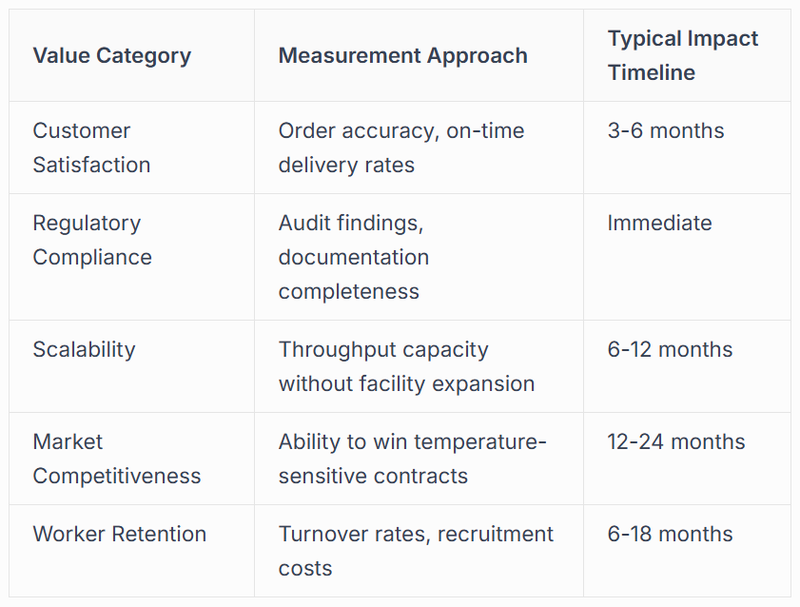
Beyond immediate cost savings, automation enables business growth that manual operations cannot support. The ability to guarantee precise temperature control opens new customer segments and geographic markets while providing competitive differentiation in increasingly demanding industries.
Industry-Specific Applications and Considerations
Different sectors face unique cold chain challenges that influence automation priorities and system design.
Pharmaceutical and Healthcare
Pharmaceutical cold chains demand absolute reliability and comprehensive documentation. Vaccines, biologics, and specialty medications often require specific temperature ranges with minimal deviation tolerance. Automation systems must provide redundant monitoring, automated alerting, and tamper-evident records that satisfy regulatory scrutiny. The complexity of optimizing multi-tier vaccine distribution networks demonstrates why pharmaceutical operations particularly benefit from sophisticated automation capabilities.
Food and Beverage Distribution
Food cold chains balance cost efficiency with quality preservation across diverse product categories requiring different temperature zones. Automation priorities include rapid throughput to minimize temperature exposure during picking, precise stock rotation to prevent expiration waste, and flexible systems accommodating seasonal demand fluctuations. The recent automated warehouse opening in Auckland showcases how modern facilities serve growing e-commerce grocery demand.
Third-Party Logistics Providers
3PL operations managing multiple clients face unique complexity requiring flexible automation that adapts to varying requirements. Systems must support client-specific processes, provide isolated inventory tracking, and generate customized reporting. The Wineworks case study illustrates how specialized logistics operations benefit from tailored automation approaches addressing their particular operational challenges.
Cold chain automation represents a fundamental evolution in temperature-controlled logistics, combining robotics, intelligent monitoring, and integrated software to deliver unprecedented reliability, efficiency, and scalability. As regulatory requirements tighten and customer expectations rise, businesses managing refrigerated and frozen goods must embrace automation to remain competitive. Automate-X specializes in intelligent warehouse automation solutions combining modern robotics, warehouse software, and system integration to transform cold chain operations for logistics, 3PL, pharmaceutical, and food and beverage businesses throughout Australia and New Zealand. Contact us to discuss how automation can address your specific cold chain challenges.