

Design of Conveyor System: Engineering Guide 2026
Share on
The design of conveyor system infrastructure represents a critical decision point for warehouse operations seeking to improve throughput, reduce labor costs, and maintain competitive advantage in today's demanding logistics environment. Whether you're operating a third-party logistics facility, e-commerce fulfillment centre, or manufacturing distribution hub, a well-engineered conveyor system can transform operational efficiency while poorly designed systems create bottlenecks, increase maintenance costs, and limit scalability. This comprehensive guide explores the engineering principles, design considerations, and strategic factors that determine conveyor system success in modern warehouse automation environments.
Understanding Conveyor System Design Fundamentals
The design of conveyor system architecture begins with a thorough analysis of operational requirements, material characteristics, and integration objectives. Engineers must consider numerous variables simultaneously, including product dimensions, weight distribution, throughput rates, floor space constraints, and existing infrastructure compatibility.
Material handling requirements dictate fundamental design parameters. Products with irregular shapes demand different conveyor types than uniform cartons, while temperature-sensitive pharmaceuticals require specialized belt materials that food and beverage operations can safely share. Understanding these nuances prevents costly redesigns and ensures long-term system viability.
Critical Load Capacity Calculations
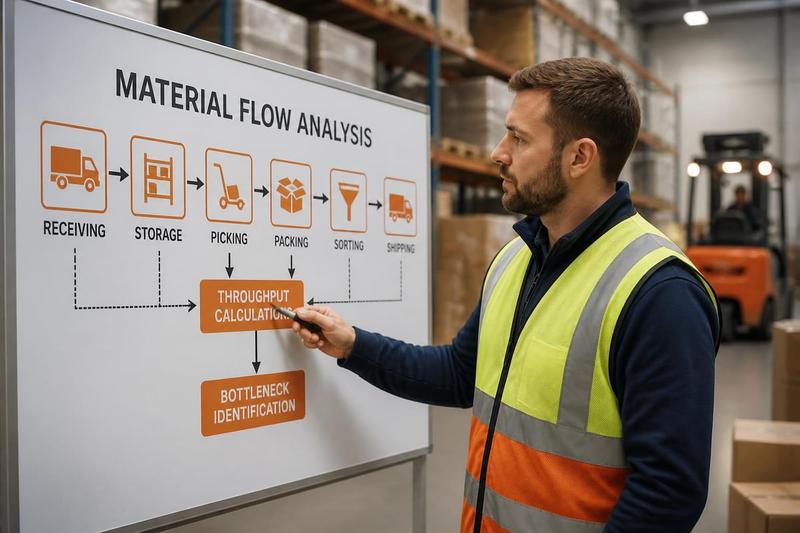
Load capacity determines whether a conveyor system will reliably handle operational demands or fail prematurely under stress. Engineers calculate both static load (maximum weight at rest) and dynamic load (weight during movement), accounting for surge conditions when products accumulate at merge points or upstream bottlenecks.
Key load considerations include:
- Unit load weight and dimensions
- Accumulation pressure during system stops
- Impact forces during product transfers
- Belt tension requirements across elevation changes
- Safety factors for peak demand periods
The considerations for choosing a conveyor system extend beyond simple weight calculations to include dynamic forces, acceleration rates, and emergency stop scenarios. A robust design of conveyor system infrastructure incorporates safety margins typically ranging from 25% to 50% above normal operating loads, depending on application criticality and product variability.
Speed and Throughput Optimization
Conveyor speed directly impacts system throughput, but faster isn't always better. The design of conveyor system velocity must balance throughput targets against product stability, noise levels, energy consumption, and worker safety considerations.
Calculating Optimal Conveyor Speed
Throughput requirements translate into conveyor speed through mathematical relationships between product spacing, belt velocity, and processing time. For example, a facility requiring 3,600 cartons per hour with products spaced 600mm apart needs a minimum conveyor speed of 36 meters per minute, excluding acceleration zones and merge point delays.
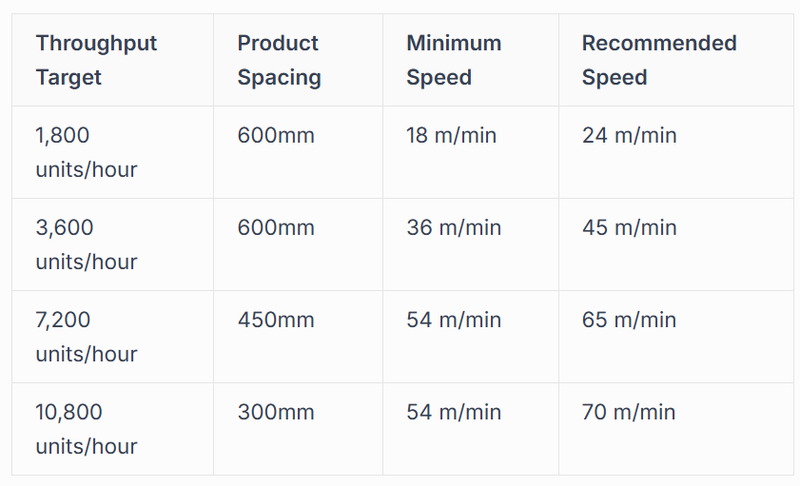
Speed variations across different system zones optimize performance. Manufacturing conveyor applications often employ variable speed sections, running faster through simple transport zones and slower through scanning, sorting, or manual interaction points. This approach maximizes throughput while maintaining operational control.
The engineering principles for conveyor design emphasize matching speed to process requirements rather than maximizing theoretical capacity. Over-specification wastes energy and increases wear, while under-specification creates permanent bottlenecks that limit facility growth.
Component Selection and Configuration
Selecting appropriate conveyor components ensures reliability, longevity, and maintainability across diverse operational environments. The design of conveyor system components encompasses belts, rollers, motors, drives, controls, and structural elements, each requiring careful specification.
Belt and Roller Selection Criteria
Belt material selection depends on product characteristics, environmental conditions, and hygiene requirements. Food processing facilities require FDA-approved materials resistant to moisture and cleaning chemicals, while pharmaceutical operations demand anti-static properties and contamination control.
Common belt material applications:
- PVC belting: General warehouse applications, moderate temperatures, cost-effective
- Polyurethane belting: Food processing, pharmaceutical, easy cleaning, chemical resistant
- Modular plastic belting: Heavy loads, extreme temperatures, long service life
- Rubber belting: High friction, inclines, bulk materials, impact resistance
Roller conveyors offer advantages in specific applications, particularly for accumulation zones and gravity-fed sections. Roller diameter, bearing type, and spacing intervals affect load capacity and product stability. The detailed design information for conveyor systems provides specifications for roller spacing based on product dimensions, typically maintaining three rollers in contact with the smallest product dimension.
Integration with Warehouse Management Systems
Modern conveyor systems function as intelligent components within broader warehouse automation ecosystems. The design of conveyor system controls must facilitate seamless integration with warehouse management systems, sortation software, and robotics platforms.
Integration requirements influence control architecture from initial design phases. Distributed control systems offer flexibility and fault isolation, while centralized platforms simplify programming and maintenance. Automated warehouse management system integration demands real-time communication protocols, standardized data formats, and robust error handling.

Control System Architecture Considerations
Control system design determines operational flexibility and future expansion capability. Programmable logic controllers (PLCs) manage real-time conveyor functions while higher-level systems coordinate material flow, routing decisions, and performance monitoring.
Essential control system features include:
- Zone control for isolated section management
- Photoeye and proximity sensors for product tracking
- Variable frequency drives for speed modulation
- Emergency stop circuits meeting safety standards
- Diagnostic capabilities for troubleshooting
- Network connectivity for system integration
Industrial system integration expertise ensures conveyor controls communicate effectively with upstream picking systems and downstream shipping processes. The design of conveyor system software interfaces must accommodate multiple communication protocols, from legacy serial connections to modern Ethernet-based industrial networks.
Safety and Compliance Requirements
Safety considerations shape every aspect of conveyor system design, from emergency stop placement to pinch point guards. Regulatory compliance isn't optional, and facilities operating across multiple jurisdictions must meet the most stringent applicable standards.
Essential Safety Features
The design of conveyor system safety features begins during conceptual planning, not as afterthoughts during installation. Emergency stop buttons must be positioned within easy reach along conveyor runs, with maximum spacing determined by operator travel distances and response time requirements.
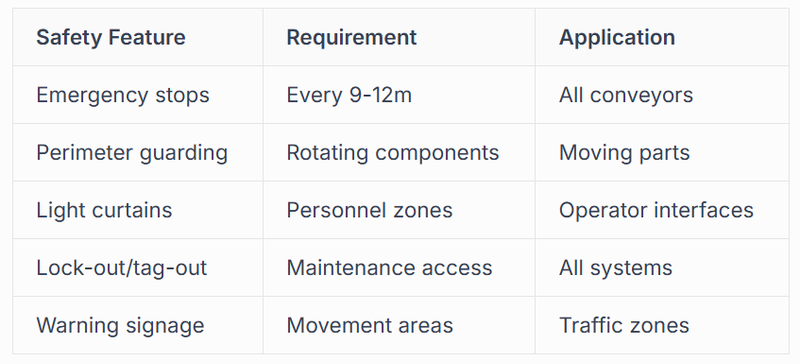
The critical design considerations for conveyor systems highlight safety integration with operational functionality. Guards and safety devices shouldn't impede normal operation or routine maintenance, yet must provide absolute protection during equipment servicing.
Pharmaceutical and food processing environments add specialized safety requirements including sanitation accessibility, contamination prevention, and material compatibility verification. These facilities benefit from design factors focused on sanitation and safety that prevent product contamination while maintaining cleaning efficiency.
Layout Optimization and Space Utilization
Effective space utilization separates exceptional conveyor designs from merely functional installations. The design of conveyor system layouts must balance shortest path routing against accessibility requirements, future expansion provisions, and existing building constraints.
Horizontal and Vertical Layout Strategies
Horizontal conveyor runs consume valuable floor space but offer simple installation and maintenance access. Vertical conveyors, including spiral configurations and incline/decline sections, maximize cubic space utilization in facilities with adequate ceiling height.
Three-dimensional layout planning considers:
- Minimum turn radiuses for product stability
- Clearance heights for maintenance access
- Structural support requirements for elevated sections
- Integration points with existing equipment
- Future expansion corridors
- Personnel traffic patterns
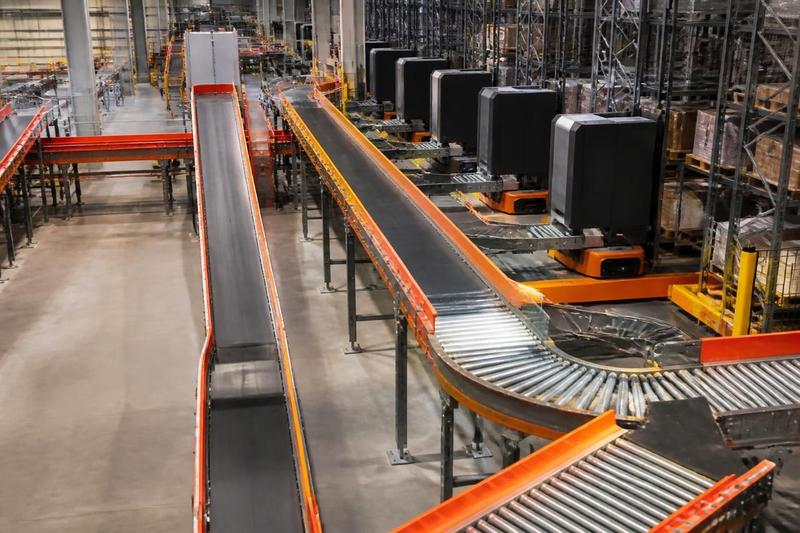
Mezzanine-mounted conveyors create additional operational space beneath elevated runs, though structural engineering requirements increase costs. The comprehensive guide to conveyor system design addresses layout considerations across diverse facility configurations, from single-story distribution centres to multi-level fulfillment operations.
Sortation and Routing Capabilities
Sortation functionality transforms simple transport conveyors into intelligent distribution systems capable of routing products to dozens or hundreds of destinations. The design of conveyor system sortation equipment depends on throughput requirements, product characteristics, and accuracy specifications.
Sortation Technology Options
Different sortation technologies suit specific operational profiles. Shoe sorters excel with fragile products and gentle handling requirements, while pusher diverters offer cost-effective solutions for durable goods. Bomb-bay sorters handle polybags and soft goods that sliding shoe systems cannot reliably divert.
- Sliding shoe sorters: High speed, gentle handling, wide product range, premium cost
- Pop-up wheel diverters: Moderate cost, good accuracy, suitable for cartons
- Pusher diverters: Low cost, durable goods only, simple maintenance
- Tilt-tray sorters: Versatile product range, high accuracy, space intensive
- Cross-belt sorters: Maximum flexibility, highest throughput, significant investment
Goods-to-person automation strategies increasingly incorporate conveyor-based sortation to optimize pick station workflows. Products travel to workers rather than workers traveling to products, dramatically improving picking productivity while reducing labor costs.
For facilities beginning their automation journey, the Automate-X GTP Starter Grid provides an accessible entry point into warehouse automation, combining conveyor technology with goods-to-person principles at a scale appropriate for small and medium businesses. This approach allows operations to experience automation benefits without the complexity and investment of full-scale systems.
Energy Efficiency and Sustainability
Energy consumption represents a significant operational expense across conveyor system lifecycles. The design of conveyor system power distribution, motor selection, and operational modes directly impacts electricity costs and environmental sustainability.
Power Optimization Strategies
Modern conveyor designs incorporate energy-saving features that reduce consumption during low-demand periods without sacrificing responsiveness. Zero-pressure accumulation prevents products from driving against stopped items, eliminating wasted motor energy. Zone controllers power down unused sections automatically when products aren't present.
Energy-efficient design features:
- Variable frequency drives adjusting speed to demand
- High-efficiency motors exceeding minimum standards
- LED lighting replacing fluorescent fixtures
- Regenerative braking capturing deceleration energy
- Sleep modes during idle periods
- Optimized belt tensioning reducing friction
Throughput analysis of conveyor systems reveals that energy optimization doesn't require throughput sacrifice. Intelligent controls match power consumption to actual requirements, maintaining performance while reducing waste.
Maintenance Accessibility and Serviceability
Maintenance requirements extend throughout conveyor system lifecycles, and accessibility decisions made during design phases affect service costs for decades. The design of conveyor system maintenance features determines whether routine service requires minutes or hours, impacting both costs and operational availability.
Designing for Maintainability
Accessible components reduce maintenance downtime and extend equipment life. Belt tensioning mechanisms should be reachable without extensive disassembly, while motor mounts need clearance for removal and replacement. Filter access, lubrication points, and adjustment controls benefit from strategic positioning.
Modular design approaches simplify repairs by enabling component replacement rather than extensive rebuilding. Standardized parts across system sections reduce spare inventory requirements while improving technician familiarity. Documentation including electrical schematics, mechanical drawings, and software logic remains essential for efficient troubleshooting.
Common maintenance access requirements include:
- Minimum 600mm clearance around motors and drives
- Tool-free access panels for routine inspections
- Quick-release belt tensioners for adjustments
- Standardized fasteners throughout system
- Clear component labeling and identification
- Accessible electrical disconnects at each zone
Scalability and Future Expansion Planning
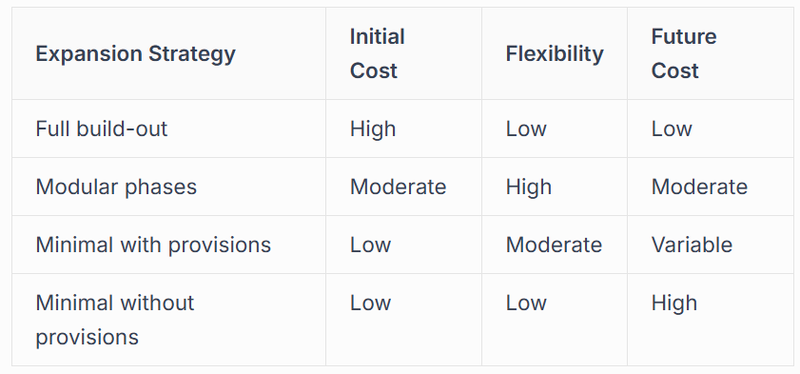
Warehouse operations evolve continuously, and conveyor systems must accommodate growth without complete replacement. The design of conveyor system expansion capabilities starts with initial installation decisions, including oversized power distribution, placeholder zones, and standardized interfaces.
Building Expansion Capacity
Future-ready designs incorporate expansion provisions that minimize disruption when adding capacity. Oversizing electrical services by 25-30% accommodates additional zones without panel replacements. Pre-installing conduit runs to potential expansion areas reduces future installation costs significantly.
Modular conveyor sections enable incremental expansion matching business growth. Rather than installing excess capacity immediately, facilities add zones as throughput requirements increase. This approach conserves capital while ensuring readiness for expansion when justified by volume growth.
Understanding order picking system options helps facilities plan conveyor integration with evolving fulfillment strategies. As operations adopt new picking methodologies, conveyor systems must adapt to changing product flow patterns and throughput profiles.
Environmental and Application-Specific Requirements
Operating environments significantly influence the design of conveyor system specifications. Temperature extremes, humidity levels, dust exposure, and chemical presence demand specialized materials and protective features that standard systems cannot provide.
Cold storage facilities require components rated for sub-zero operation, with special attention to bearing lubrication, belt flexibility, and condensation management. Food processing environments prioritize sanitation with stainless steel construction, sealed components, and easy cleaning access. Pharmaceutical operations demand contamination control through positive air pressure, specialized coatings, and validated cleaning procedures.
Environment-specific design elements:
- Cold storage: Synthetic lubricants, thermal breaks, condensation drainage, insulated controls
- Food processing: Stainless steel, FDA-approved materials, wash-down capability, sloped surfaces
- Pharmaceuticals: Clean-room compatibility, anti-static materials, validation documentation, contamination barriers
- Hazardous materials: Explosion-proof motors, grounded components, spark-resistant materials, specialized ventilation
Successful conveyor system design requires balancing numerous technical, operational, and financial considerations to create infrastructure that serves immediate needs while accommodating future growth. From initial load calculations through integration planning, each decision impacts system performance, reliability, and total cost of ownership. Automate-X delivers comprehensive warehouse automation solutions that integrate conveyor systems with robotics, software, and intelligent controls, helping logistics and supply chain businesses optimise operations, improve productivity, and achieve scalable growth across their distribution and fulfillment environments.