


Designing Automation for Modern Warehouse Operations
Share on
Designing automation systems for warehouse and logistics operations requires a methodical approach that balances immediate operational needs with long-term scalability. As supply chain demands intensify and labour markets tighten, businesses across Australia and New Zealand are investing heavily in automation technologies. However, the difference between successful implementations and costly failures often comes down to how thoroughly organisations plan their automation architecture. Understanding the fundamental principles of designing automation helps logistics leaders make informed decisions that deliver measurable returns while avoiding common pitfalls that plague rushed deployments.
Understanding the Foundation of Automation Design
When designing automation for warehouse environments, the first critical step involves comprehensive requirements analysis. This process extends beyond identifying which tasks to automate and encompasses understanding workflow dependencies, data requirements, integration points, and scalability thresholds.
Effective automation design begins with these foundational elements:
- Current state mapping of all warehouse processes and workflows
- Identification of bottlenecks and high-value automation opportunities
- Assessment of existing infrastructure and technology capabilities
- Definition of measurable success criteria and performance benchmarks
- Documentation of integration requirements with WMS, ERP, and transportation systems
The AWS Well-Architected Framework provides valuable guidance on reliability principles that apply equally to warehouse automation, emphasising automatic recovery mechanisms and thorough testing protocols.
Establishing Design Principles
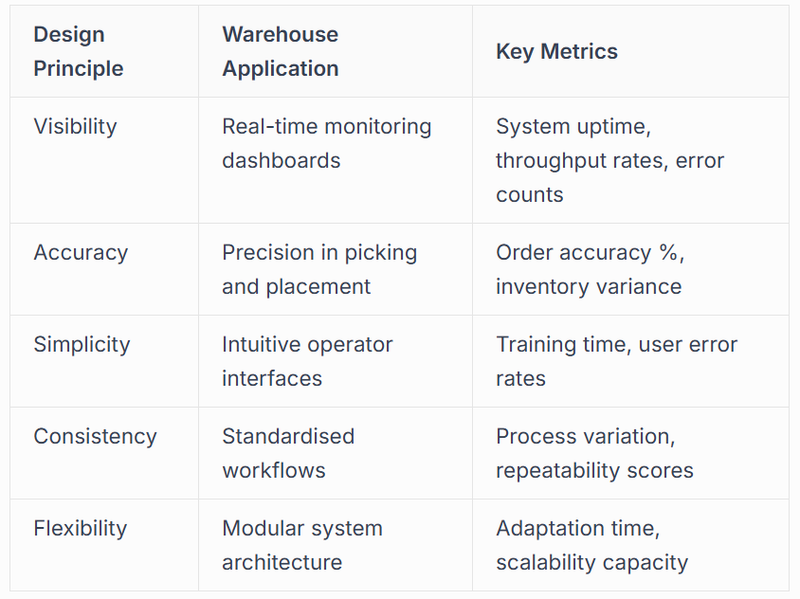
A robust framework for designing automation requires adherence to core principles that guide decision-making throughout the implementation lifecycle. The six key principles outlined by World Wide Technology include visibility, accuracy, simplicity, and consistency, each playing a vital role in warehouse contexts.
Visibility ensures that all stakeholders can monitor automation performance in real time. For warehouse operations, this means dashboards displaying throughput rates, error frequencies, system utilisation, and inventory accuracy metrics.

Accuracy focuses on eliminating errors through precise system design and validation protocols. In warehousing, this translates to picking accuracy, inventory counts, and order fulfilment precision.
Starting Small and Scaling Strategically
One of the most effective approaches to designing automation involves beginning with focused pilot projects rather than comprehensive facility-wide transformations. This strategy, advocated by Autodesk's best practices for scaling design automation, allows organisations to validate concepts, refine processes, and build internal expertise before committing substantial capital.
For small to medium-sized warehouses in New Zealand, this approach proves particularly valuable. Rather than attempting to automate entire facilities immediately, businesses can start with specific high-impact zones such as picking operations or receiving processes.
The Automate-X GTP Starter Grid exemplifies this philosophy, offering an accessible entry point for businesses beginning their automation journey with goods-to-person technology that delivers immediate productivity gains in picking operations without requiring complete facility overhauls.
Building Modular Architecture
Designing automation with modularity as a core principle enables incremental expansion and technology updates without disrupting existing operations. This approach recognises that warehouse requirements evolve with business growth, seasonal fluctuations, and market dynamics.
Modular automation architectures incorporate:
- Standardised interfaces that allow different automation technologies to communicate seamlessly
- Scalable control systems capable of managing additional zones or equipment without complete reprogramming
- Flexible material handling that accommodates various product types and order profiles
- Adaptable storage configurations that respond to inventory mix changes
- Interchangeable components that simplify maintenance and reduce downtime
Alibaba Cloud's design principles for automated operations emphasise starting small and scaling up while flexibly combining various automation tools, a strategy particularly relevant for dynamic warehouse environments.
Integration and Data Flow Architecture
The technical backbone of any automation design lies in how systems exchange information and coordinate activities. Poor integration design creates data silos, synchronisation issues, and operational inefficiencies that undermine automation benefits.
When designing automation, integration architecture must address several critical layers. The control layer manages real-time equipment coordination, ensuring robots, conveyors, and sortation systems work harmoniously. The application layer connects warehouse management systems with automation controllers, enabling intelligent task allocation and priority management.
Data Management Strategies
Effective automation generates substantial data volumes that require thoughtful management strategies. Designing automation systems with robust data architecture ensures businesses extract actionable insights while maintaining system performance.
Consider these data flow requirements:
- Real-time operational data for immediate decision-making and system adjustments
- Historical performance data for trend analysis and continuous improvement initiatives
- Inventory data synchronisation across multiple systems and facilities
- Quality metrics and exception tracking for compliance and process refinement
- Predictive maintenance indicators that prevent equipment failures
The automation design principles from Pega Academy highlight the importance of limiting data inputs and outputs for efficient workflow integration, preventing information overload while ensuring critical data flows seamlessly.

Human-Machine Interface Design
While designing automation often focuses on robotic systems and software, the human element remains crucial for operational success. Operators, supervisors, and maintenance technicians interact with automation daily, making interface design a critical component of overall system effectiveness.
Successful human-machine interfaces demonstrate these characteristics:
- Intuitive navigation that minimises training requirements and reduces operator errors
- Clear visual indicators of system status, alerts, and performance metrics
- Contextual information delivery that presents relevant data based on user roles
- Accessible override controls for exception handling and emergency situations
- Mobile compatibility enabling monitoring and management from anywhere in the facility
Research on principles of design for automation applied to construction tasks emphasises considering automation at both task and process levels, a concept equally applicable to warehouse operations where individual workstation design impacts overall facility performance.
Safety and Redundancy Considerations
Designing automation for warehouse environments demands rigorous attention to safety protocols and system redundancy. Unlike many industrial automation applications, warehouses feature constant human presence alongside automated equipment, creating unique safety challenges.
Multi-Layered Safety Architecture
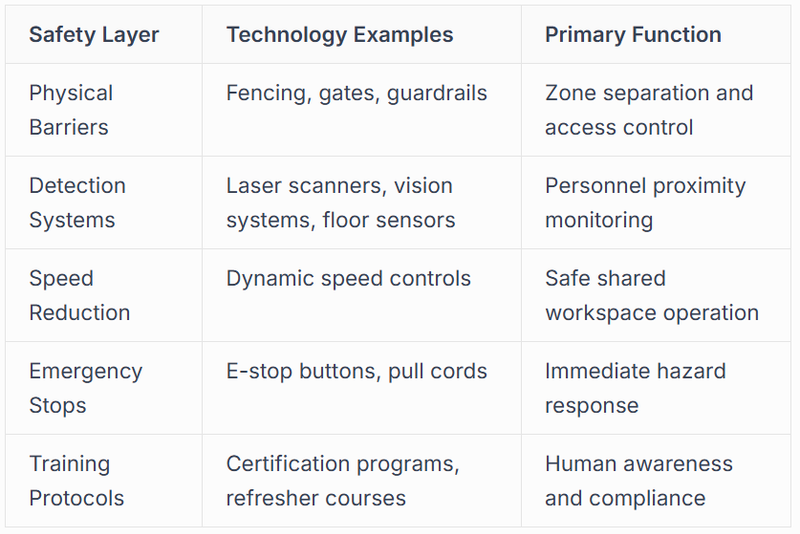
A comprehensive safety design incorporates multiple protection layers that prevent accidents while maintaining operational efficiency. Physical barriers establish clear zones separating human workers from automated equipment paths. Sensor systems detect personnel intrusion and automatically slow or stop equipment as appropriate.
Redundancy planning extends beyond safety to encompass operational continuity. Designing automation with built-in redundancy ensures warehouse operations continue despite equipment failures or maintenance requirements. Critical systems may include backup units, alternative routing capabilities, or manual fallback procedures that prevent complete operational shutdowns.
Performance Testing and Validation
No automation design reaches completion without thorough testing protocols that validate system performance against defined requirements. The guiding principles for automated software testing emphasise realistic time estimates and collaboration between different teams, principles that apply equally to warehouse automation commissioning.
Phased Testing Methodology
Effective validation follows a structured progression from component testing through full system integration. Individual equipment undergoes factory acceptance testing before installation, verifying basic functionality and safety features. Site acceptance testing confirms proper installation and integration with facility infrastructure.
The complete testing sequence includes:
- Component-level validation of individual automation elements
- Subsystem integration testing for coordinated equipment groups
- End-to-end process testing with actual inventory and orders
- Peak load simulation to verify capacity under maximum demand
- Failure mode testing to validate redundancy and recovery procedures
- User acceptance testing with operational staff performing real tasks
This comprehensive approach to designing automation ensures systems perform reliably under real-world conditions before going live. Many facilities in Australia and New Zealand have experienced costly delays from inadequate testing, highlighting the importance of thorough validation phases.
Sustainability and Energy Efficiency
Modern automation design increasingly incorporates sustainability objectives alongside productivity and accuracy goals. Energy-efficient equipment selection, intelligent power management, and waste reduction contribute to both environmental responsibility and operational cost reduction.
When designing automation systems, energy considerations influence multiple decisions. Equipment selection favours energy-efficient motors, drives, and lighting systems. Control logic incorporates power-saving modes that reduce consumption during low-activity periods without compromising responsiveness.
Automated storage solutions demonstrate how thoughtful design maximises space utilisation while minimising energy consumption through optimised vertical storage and efficient retrieval patterns. High-density storage reduces building footprint requirements, lowering heating, cooling, and lighting demands.
Environmental Impact Reduction
Beyond energy efficiency, comprehensive automation design addresses broader environmental considerations. Reduced packaging waste through precise dimensioning systems, optimised transportation through improved order consolidation, and decreased product damage from gentle automated handling all contribute to sustainability outcomes.
The principles of automating by default highlight how automation improves consistency and reliability, reducing waste from errors and rework while enhancing overall operational efficiency.
Future-Proofing Automation Investments
Designing automation with longevity in mind protects substantial capital investments while ensuring systems remain effective as business requirements evolve. Technology selection should favour established standards, open architectures, and vendor ecosystems that support ongoing innovation.
Scalability planning considers both capacity expansion and capability enhancement. Physical infrastructure should accommodate additional automation zones without major reconfiguration. Software platforms must support new features, integration points, and analytics capabilities as they become available.
Future-proof design strategies include:
- Selecting equipment from manufacturers committed to long-term platform support
- Implementing software architectures that enable updates without operational disruption
- Designing physical layouts with expansion zones and utility capacity headroom
- Establishing vendor partnerships that provide ongoing optimisation and support
- Documenting systems thoroughly to facilitate future modifications and troubleshooting
Notable implementations like DHL's new automated warehouse in Auckland demonstrate how forward-thinking design accommodates growth while delivering immediate operational benefits.
Security and Access Control
As warehouse automation systems become increasingly connected and data-driven, designing automation with robust security measures protects both physical assets and valuable operational data. The ten best practices for secure bot design from Automation Anywhere emphasise minimising attack surfaces and establishing secure defaults, principles applicable to warehouse automation controllers and management systems.
Network segmentation isolates automation systems from general corporate networks, limiting potential breach impacts. Authentication protocols ensure only authorised personnel can modify system parameters or access sensitive operational data. Regular security audits identify vulnerabilities before they can be exploited.
Physical access control prevents unauthorised interaction with automation equipment. Locked panels, secured control rooms, and monitored access points protect critical infrastructure while enabling appropriate personnel to perform necessary maintenance and adjustments.
Change Management and Training
Even the most sophisticated automation design fails without effective change management and comprehensive training programmes. Designing automation must consider the human transition from manual processes to automated workflows, addressing concerns, building capabilities, and fostering acceptance.
Training programmes should begin during the design phase, involving operational staff in requirements definition and solution validation. This early engagement builds understanding and ownership while ensuring designs reflect practical operational realities.
Building Internal Expertise
Long-term automation success requires developing internal expertise capable of operating, troubleshooting, and optimising systems without complete dependence on external vendors. When designing automation, consider how knowledge transfer occurs and what resources support ongoing skill development.
Documentation standards ensure critical information remains accessible and understandable. Maintenance procedures, troubleshooting guides, and operational protocols should be clear, comprehensive, and regularly updated as systems evolve.
Successful warehouse automation represents more than technology deployment. It reflects thoughtful design that balances technical capabilities with human factors, immediate requirements with future growth, and operational efficiency with safety and sustainability.
Designing automation for warehouse operations requires careful attention to integration architecture, scalability planning, safety protocols, and human factors that together determine long-term success. Whether you're considering your first automation investment or expanding existing capabilities, Automate-X combines modern robotics, intelligent software, and comprehensive system integration expertise to deliver solutions that streamline operations, improve productivity, and enable sustainable growth across your distribution and fulfilment environments.