

Handling Solutions: Optimising Warehouse Efficiency
Share on
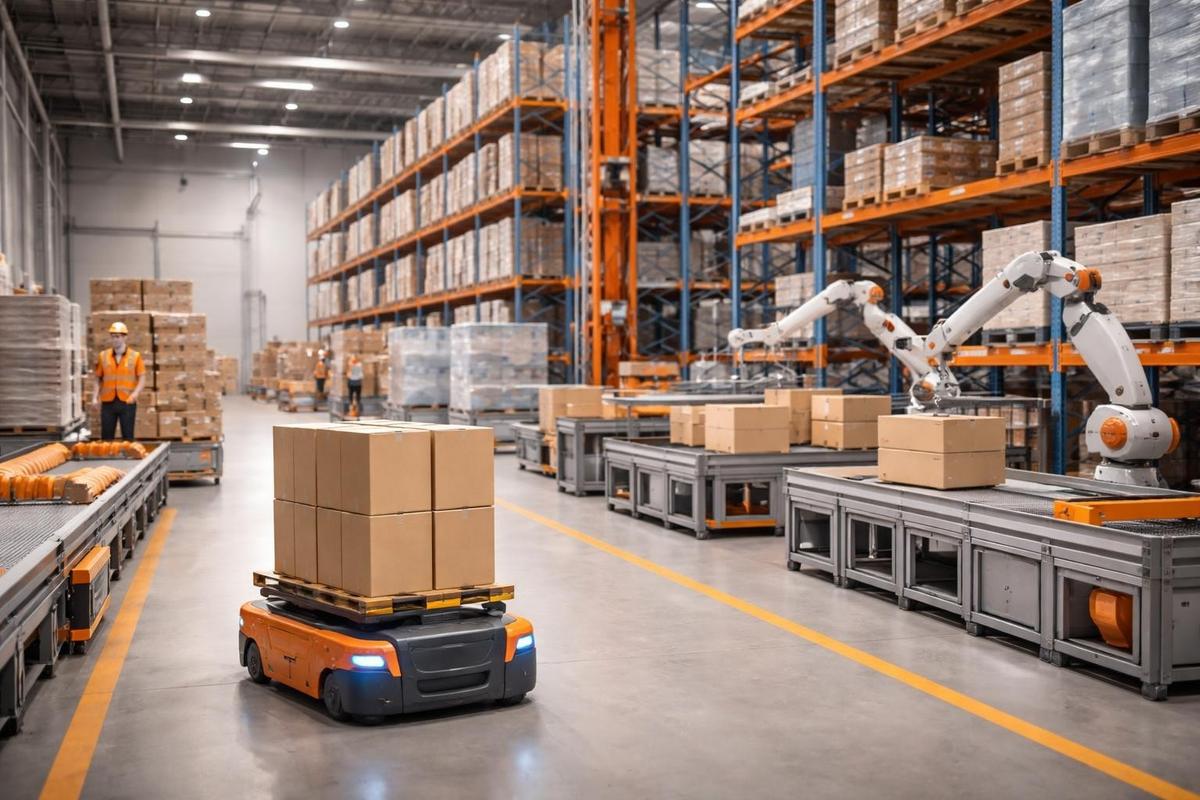
Warehouses face mounting pressure to process more orders, reduce errors, and maintain profitability in an increasingly competitive landscape. A comprehensive handling solution addresses these challenges by integrating technology, automation, and optimised workflows to move products efficiently from receiving through to dispatch. Whether managing e-commerce fulfillment, third-party logistics, or manufacturing distribution, the right approach to material handling determines operational success and scalability potential.
Understanding Modern Handling Solutions
A handling solution encompasses the complete system of equipment, software, and processes that move, store, and track inventory throughout a warehouse facility. This integrated approach extends beyond simple conveyors or forklifts to include automated systems, robotics, warehouse management software, and strategic workflow design.
The evolution of warehouse automation solutions has transformed traditional manual operations into sophisticated environments where technology and human expertise work in harmony. Modern facilities leverage multiple handling technologies simultaneously, creating layered systems that optimise different aspects of material flow.
Core Components of Effective Handling Solutions
Physical Infrastructure Elements:
- Conveyor systems for continuous product movement
- Automated storage and retrieval systems (AS/RS)
- Goods-to-person robotics and shuttle systems
- Vertical lift modules and carousel storage
- Sortation equipment for order consolidation
Digital Integration Layers:
- Warehouse management systems (WMS)
- Warehouse control systems (WCS)
- Inventory tracking and visibility platforms
- Order management integration
- Performance analytics and reporting tools
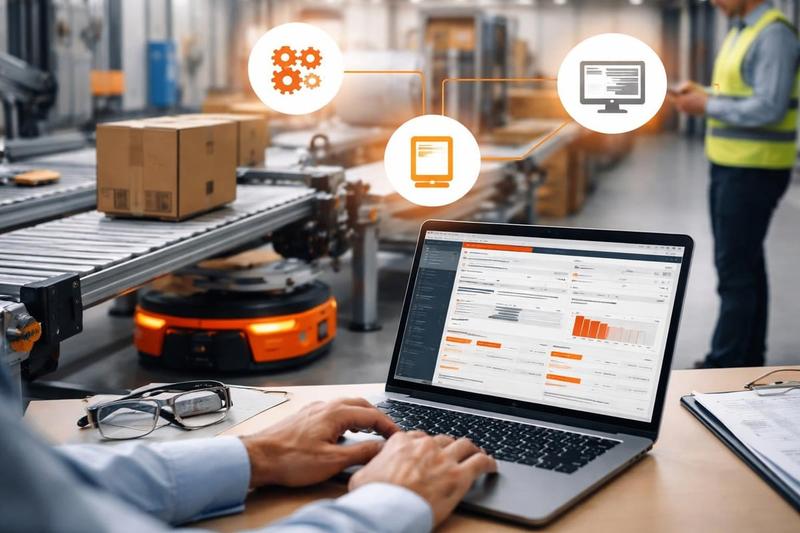
The synergy between physical automation and digital intelligence creates handling solutions that adapt to changing demands, optimise resource allocation, and deliver measurable productivity gains across warehouse operations.
Evaluating Your Material Handling Requirements
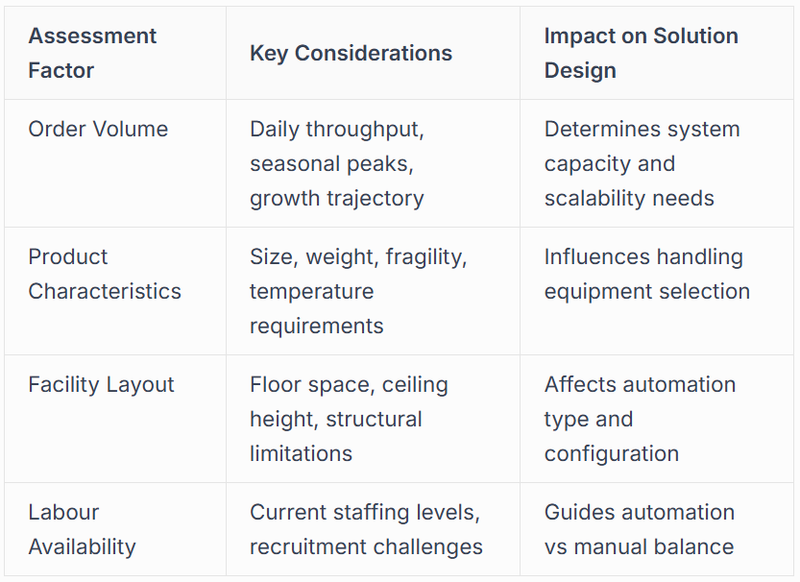
Before implementing any handling solution, warehouse operators must conduct thorough assessments of their current operations, future growth projections, and specific operational constraints. This evaluation process identifies bottlenecks, inefficiencies, and opportunities for automation investment.
Operational Pain Points Driving Automation
Logistics operations typically face several recurring challenges that signal the need for improved handling solutions. Order accuracy remains a critical concern, with manual picking processes generating error rates between 1-3% in traditional warehouses. Even small percentages translate to substantial costs when processing thousands of daily orders.
Labour constraints have intensified across Australia and New Zealand, with warehouse operators struggling to recruit and retain qualified staff. This shortage drives increased interest in automation technologies that reduce dependency on manual labour whilst improving working conditions for existing teams.
Throughput limitations become apparent during peak periods when existing handling infrastructure cannot scale to meet demand. Facilities relying on manual processes or outdated equipment find themselves unable to capitalise on growth opportunities, losing business to competitors with more capable handling solutions.
Goods-to-Person Systems Revolutionising Picking Operations
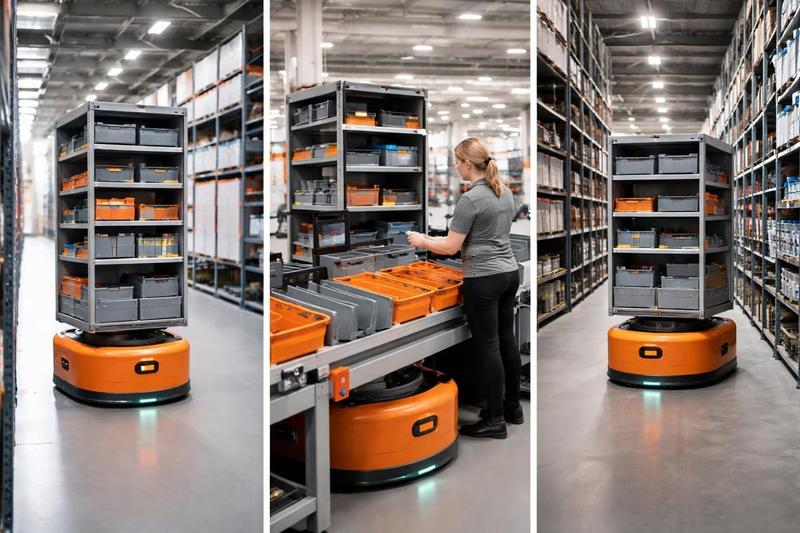
Goods-to-person (GTP) technology represents one of the most transformative handling solution approaches for modern warehouses. Rather than sending workers to traverse aisles searching for products, GTP systems deliver inventory directly to ergonomic picking stations, dramatically improving efficiency and accuracy.
This technology suits operations processing high volumes of small to medium-sized items, particularly e-commerce fulfillment centres, pharmaceutical distribution, and spare parts warehousing. Research into optimising picker routes through deep reinforcement learning demonstrates how advanced algorithms can further enhance GTP system performance by predicting order patterns and pre-positioning inventory.
For businesses exploring automation without massive capital investment, solutions like the Automate-X GTP Starter Grid provide accessible entry points into goods-to-person technology. These modular systems allow warehouses to automate specific zones or product categories whilst maintaining flexibility for future expansion.
Implementation Considerations for GTP Systems
Space efficiency improves dramatically with goods-to-person handling solutions. Dense storage configurations maximise vertical space utilisation, often doubling or tripling storage capacity within existing facilities. This density also reduces walking distances for remaining manual tasks, creating compound productivity benefits.
Picking accuracy increases substantially when workers remain stationary at dedicated workstations equipped with visual confirmation systems, barcode scanning, and guided workflows. Error rates typically drop below 0.1%, reducing costly returns and improving customer satisfaction.
Throughput scalability becomes possible through modular expansion. As order volumes grow, facilities can add picking stations, storage modules, or robotic units without disrupting existing operations, creating flexible handling solutions that evolve with business requirements.
Conveyor Systems and Sortation Technology
Conveyors form the circulatory system of automated warehouses, transporting products between receiving, storage, picking, packing, and shipping zones. A well-designed conveyor-based handling solution minimises manual touchpoints, reduces handling damage, and maintains consistent product flow throughout facilities.
Types of Conveyor Technologies
Modern warehouses deploy various conveyor types based on specific handling requirements:
- Roller conveyors provide cost-effective transport for cartons, totes, and pallets across short to medium distances
- Belt conveyors handle irregular shapes and delicate items with gentle continuous movement
- Accumulation conveyors create buffer zones that balance processing speeds between different operational areas
- Vertical conveyors efficiently move products between mezzanine levels or multi-story facilities
- Spiral conveyors maximise vertical transport within minimal floor space footprints
Sortation systems extend conveyor functionality by automatically directing items to designated destinations based on order requirements, shipping zones, or product characteristics. These handling solutions prove essential for operations processing diverse order profiles requiring rapid allocation across multiple shipping lanes.
Automated Storage and Retrieval Systems
AS/RS technology represents the pinnacle of automated handling solutions for high-density storage applications. These systems use computer-controlled cranes, shuttles, or robotic vehicles to place and retrieve pallets, cases, or totes from multi-level racking structures with minimal human intervention.
The benefits extend beyond pure storage density. AS/RS handling solutions deliver exceptional inventory accuracy through automated tracking, reduce product damage by eliminating manual handling, and enable 24/7 operations without lighting or climate control in storage zones, generating substantial energy savings.
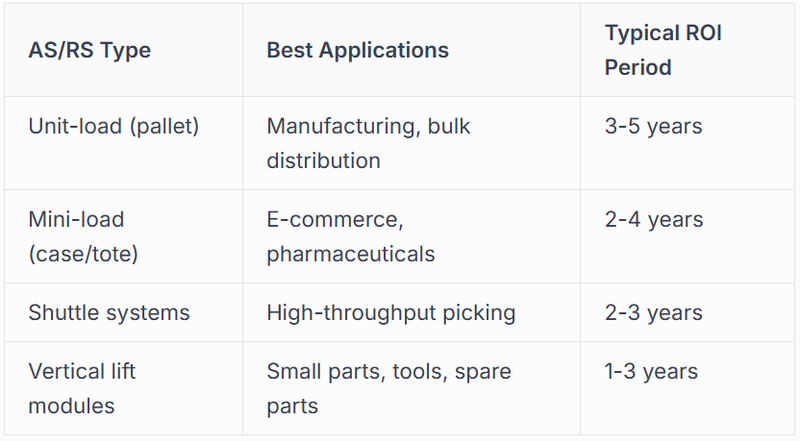
Implementation requires significant capital investment and careful integration with existing warehouse management systems. However, facilities with predictable inventory profiles, limited expansion space, or high-value products often find AS/RS technology delivers compelling returns through reduced operational costs and improved asset protection.
Software Integration for Intelligent Handling
Physical automation equipment delivers maximum value only when guided by sophisticated software orchestrating every movement, decision, and process throughout the warehouse. This digital layer transforms mechanical handling solutions into intelligent systems that learn, adapt, and optimise continuously.
Warehouse Management Systems serve as the operational brain, directing inventory placement, picking strategies, and resource allocation based on real-time demand signals and historical patterns. Advanced WMS platforms incorporate artificial intelligence to predict order patterns, optimise slotting strategies, and balance workloads across handling zones.
Warehouse Control Systems bridge WMS strategy with physical equipment execution, translating high-level instructions into specific commands for conveyors, sorters, robots, and automated storage systems. This middleware layer ensures seamless coordination between diverse automation technologies from multiple vendors.
Research into multi-agent path finding in large-scale warehouses highlights the computational complexity of coordinating numerous robots simultaneously whilst avoiding collisions and optimising efficiency. Modern handling solutions address these challenges through sophisticated algorithms that manage hundreds of autonomous units in real-time.
Data Analytics Driving Continuous Improvement
The digital foundation of contemporary handling solutions generates enormous datasets revealing operational patterns, bottlenecks, and improvement opportunities. Analytics platforms transform raw data into actionable insights that drive strategic decisions about layout optimisation, staffing allocation, and automation expansion.
Performance dashboards provide real-time visibility into key metrics including order cycle times, picking accuracy, equipment utilisation, and labour productivity. This transparency enables rapid problem identification and evidence-based management decisions.
Predictive analytics forecast demand patterns, seasonal variations, and equipment maintenance requirements, allowing proactive resource planning rather than reactive crisis management. Warehouses equipped with predictive capabilities maintain higher service levels whilst controlling operating costs more effectively.
Robotic Handling Solutions for Complex Environments
Autonomous mobile robots (AMRs) and robotic picking systems represent the cutting edge of warehouse handling technology. These solutions tackle challenges previously requiring human dexterity, decision-making, and adaptability, extending automation benefits into operations once considered unsuitable for mechanisation.
Applications Across Warehouse Functions
Picking robots equipped with advanced vision systems and gripper technology can identify, grasp, and manipulate diverse products including items with irregular shapes, varied textures, or fragile construction. Research on bin picking solutions for e-commerce warehouses demonstrates how dual sensor systems improve object recognition and handling precision for heterogeneous inventory.
Mobile transport robots autonomously navigate warehouse floors, transporting goods between zones without fixed infrastructure like conveyors or rails. These flexible handling solutions adapt quickly to layout changes, seasonal demand shifts, or operational reorganisations without costly infrastructure modifications.
Collaborative robots work safely alongside human operators, combining robotic precision and endurance with human judgment and flexibility. This partnership approach proves particularly effective for mixed operations requiring both automated efficiency and adaptive problem-solving.
Integration with Supply Chain Networks
Effective handling solutions extend beyond warehouse boundaries to integrate with broader supply chain ecosystems. This connectivity enables responsive operations that adapt to supplier variations, customer requirements, and transportation constraints throughout the logistics network.
Upstream integration with suppliers provides advance shipping notifications, enabling warehouses to pre-position resources, allocate storage, and schedule receiving activities before goods arrive. This proactive approach minimises dock congestion and accelerates inventory availability.
Downstream connectivity with transportation management systems optimises loading sequences, consolidates shipments, and coordinates carrier scheduling. The result reduces dwell time, maximises trailer utilisation, and improves on-time delivery performance.
Advanced handling solutions incorporate cross-docking capabilities that move products directly from receiving to shipping without storage, dramatically reducing order cycle times for time-sensitive inventory. This approach requires sophisticated coordination between inbound and outbound operations, achievable only through integrated technology platforms.
Industry-Specific Handling Requirements
Different sectors demand specialised handling solutions addressing unique operational characteristics, regulatory requirements, and product handling needs. Understanding these distinctions ensures appropriate technology selection and implementation approaches.
Temperature-Controlled Environments
Cold storage and pharmaceutical warehousing require handling solutions that function reliably in extreme temperature conditions whilst minimising human exposure to harsh environments. Automated systems prove particularly valuable here, reducing labour requirements in challenging conditions whilst maintaining strict temperature control.
Blast freezer automation employs specialised robotics and conveyors rated for extreme cold, handling products at temperatures reaching -30°C or lower. These systems protect product quality whilst improving worker safety and operational efficiency.
Food and Beverage Distribution
Handling solutions for food logistics must address first-in-first-out rotation, lot tracking, expiry management, and hygiene requirements. Automated systems with integrated traceability provide compliance documentation whilst reducing contamination risks associated with manual handling.
Pharmaceutical and Healthcare
Strict regulatory requirements governing pharmaceutical distribution demand handling solutions with comprehensive tracking, environmental monitoring, and security features. Automated systems deliver audit trails, serialisation tracking, and controlled access that manual operations struggle to maintain consistently.
Measuring Return on Investment
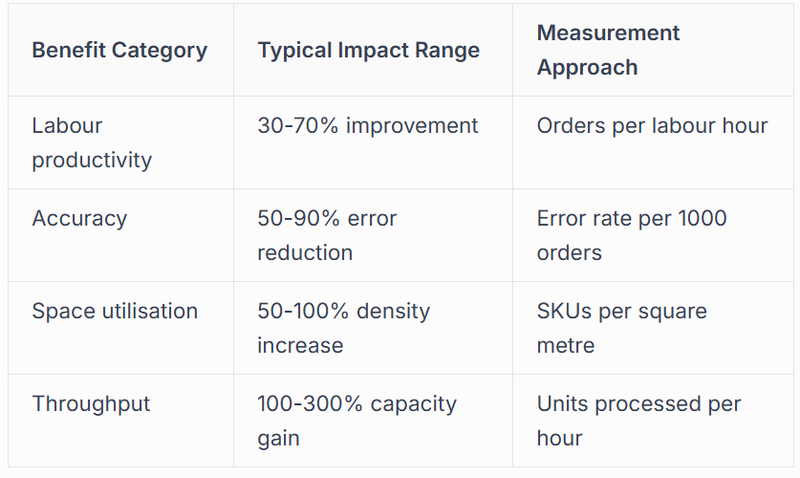
Justifying handling solution investments requires thorough financial analysis considering both tangible cost reductions and strategic value creation. Comprehensive ROI calculations extend beyond simple payback periods to evaluate total cost of ownership across system lifecycles.
Direct labour savings represent the most obvious benefit, with automation reducing picking, packing, and material movement requirements. However, focusing solely on workforce reduction overlooks substantial additional value drivers.
Accuracy improvements eliminate costs associated with mis-picks, returns processing, customer service interventions, and brand reputation damage. For operations processing thousands of daily orders, even fractional error rate reductions generate significant savings.
Space optimisation allows facilities to increase capacity without expensive building expansions. High-density storage handling solutions often provide 50-100% capacity increases within existing footprints, deferring or eliminating construction projects.
Throughput capacity enables revenue growth by processing more orders with existing infrastructure. This scalability proves crucial for e-commerce operations experiencing rapid growth or seasonal demand spikes.
Implementation Strategies and Change Management
Successful handling solution deployments require meticulous planning, phased implementation approaches, and comprehensive change management addressing both technical and human factors. Rushing implementation or neglecting workforce engagement creates risks that undermine project success.
Pilot projects allow organisations to validate technology performance, refine processes, and build internal expertise before full-scale rollouts. Starting with limited scope reduces financial risk whilst generating proof points that build stakeholder confidence.
Parallel operations during transition periods maintain business continuity whilst new handling solutions stabilise. This approach requires additional resources short-term but prevents catastrophic disruptions that damage customer relationships or revenue streams.
Training programmes must address both technical operation and strategic understanding. Workers need hands-on experience with new equipment and software, but also comprehension of how automation changes their roles, creates new opportunities, and contributes to organisational success.
As outlined by industry specialists in warehouse automation, successful implementations balance technological capability with organisational readiness, ensuring people, processes, and systems align throughout transformation journeys.
Future Developments Shaping Handling Solutions
Warehouse automation continues evolving rapidly, with emerging technologies promising further efficiency gains, flexibility improvements, and capability expansions. Forward-thinking organisations monitor these developments to time investments strategically and maintain competitive advantages.
Artificial intelligence integration enhances handling solutions through predictive analytics, autonomous decision-making, and continuous learning that optimises operations without human intervention. Research into self-supervised domain adaptation for warehouse automation demonstrates how AI systems improve perception and handling capabilities using real-world operational data.
5G connectivity enables real-time communication between thousands of sensors, robots, and control systems with minimal latency. This infrastructure supports responsive handling solutions that coordinate complex choreography across entire facilities instantaneously.
Digital twin technology creates virtual replicas of physical warehouses, allowing operators to test layout changes, evaluate automation investments, and optimise processes through simulation before implementing costly modifications in production environments.
Industrial automation solutions providers increasingly offer modular, scalable approaches that allow businesses to adopt advanced handling technologies incrementally, reducing barriers to entry whilst maintaining upgrade pathways toward comprehensive automation.
Sustainability and Environmental Considerations
Modern handling solutions increasingly incorporate sustainability objectives alongside traditional performance metrics. Environmental responsibility drives both regulatory compliance and competitive differentiation as customers prioritise partners demonstrating genuine commitment to reducing ecological impacts.
Energy efficiency improvements through LED lighting, regenerative braking on conveyors, and optimised routing algorithms reduce operational carbon footprints whilst lowering utility costs. Automated handling solutions typically consume 20-40% less energy than manual equivalents when properly designed and configured.
Space optimisation contributes to sustainability by maximising existing building utilisation, reducing construction of new facilities with associated environmental costs. High-density storage handling solutions defer or eliminate building expansions, preserving land and avoiding construction-related emissions.
Packaging reduction becomes possible when automated handling solutions provide gentler product treatment, allowing lighter protective materials. Integration with extended warehouse management systems optimises packaging selection based on product characteristics and handling requirements.
Selecting the Right Technology Partner
Choosing appropriate vendors and implementation partners critically influences handling solution success. Beyond technical capabilities, partner selection should consider industry experience, local support infrastructure, financial stability, and cultural alignment with organisational values.
Evaluation Criteria for Technology Vendors
Proven track record in similar applications, facility sizes, and industry sectors provides confidence that proposed handling solutions address real-world requirements rather than theoretical capabilities. Request site visits to operating installations and speak directly with reference customers about performance, support quality, and partnership experiences.
Integration capabilities determine how easily new automation connects with existing warehouse management systems, enterprise software, and legacy equipment. Proprietary platforms creating vendor lock-in pose long-term risks, whilst open architecture approaches preserve flexibility and expansion options.
Local support presence ensures responsive service, readily available spare parts, and technical expertise accessible when needed. International vendors without established regional infrastructure may struggle to provide timely assistance during critical operational periods.
Financial stability matters for long-term partnerships spanning years of system operation, maintenance, and potential expansion. Vendor financial difficulties can jeopardise parts availability, software updates, and technical support that automated handling solutions require throughout operational lifecycles.
Risk Management and Business Continuity
Implementing handling solutions creates dependencies on technology that, whilst improving normal operations, introduces vulnerabilities during system failures or disruptions. Comprehensive risk management strategies address these concerns through redundancy, contingency planning, and proactive maintenance programmes.
Preventive maintenance schedules regular inspections, component replacements, and performance optimisation that prevent failures rather than simply responding after breakdowns occur. Automated handling solutions generate diagnostic data identifying potential issues before they cause operational disruptions.
Redundancy design incorporates backup systems, alternative processing paths, and manual fallback procedures ensuring operations continue during equipment failures. Critical functions may warrant duplicate automation or maintained manual capability providing business continuity insurance.
Spare parts inventory for automation equipment prevents extended downtime awaiting component deliveries. Strategic partnerships with vendors can provide consignment arrangements, priority access, or nearby parts depots minimising replacement delays.
Implementing the right handling solution transforms warehouse operations from cost centres into competitive advantages, delivering measurable improvements in accuracy, productivity, and scalability. Whether starting with targeted automation in specific zones or pursuing comprehensive facility-wide integration, successful implementations align technology selection with operational requirements, growth objectives, and workforce capabilities. Automate-X specialises in designing and implementing intelligent warehouse automation solutions that combine robotics, software, and system integration to help logistics and supply chain businesses streamline operations and achieve sustainable growth across Australia and New Zealand.