

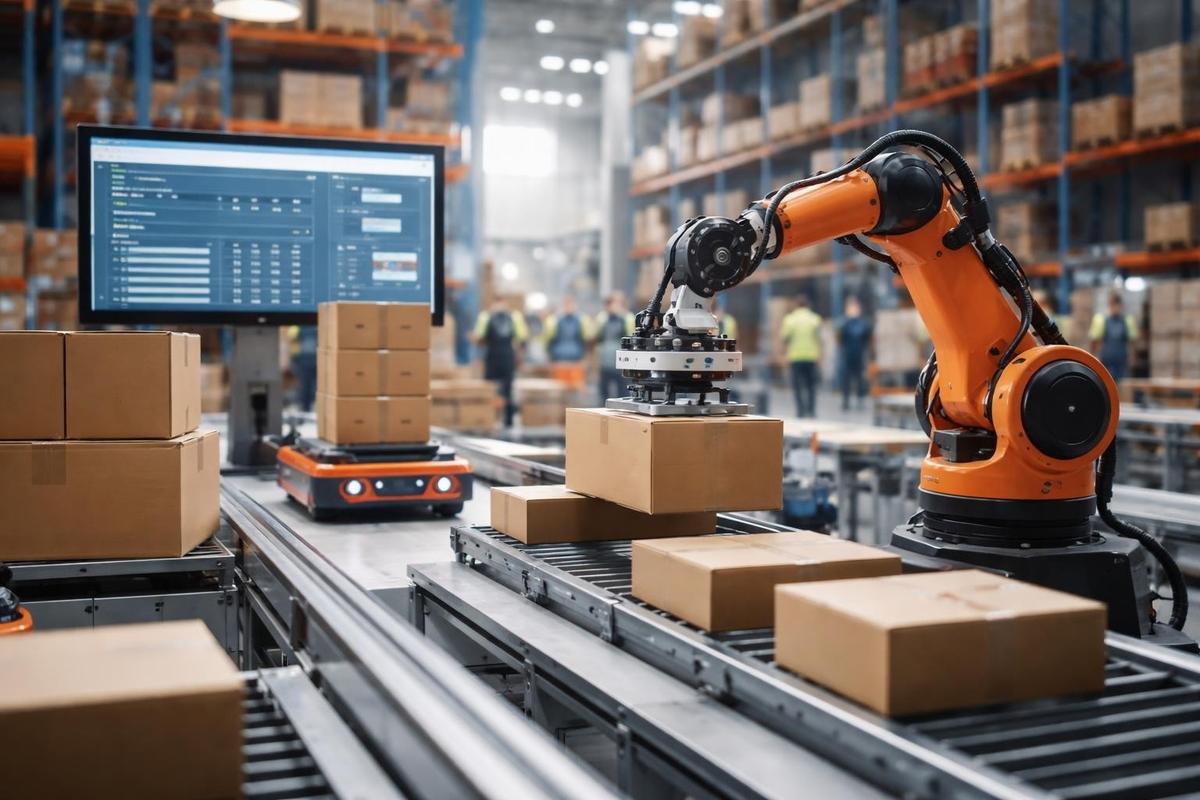
Industrial Robotics: The Future of Warehouse Efficiency
Share on
The warehouse and distribution landscape has undergone a remarkable transformation over the past decade, driven primarily by the rapid advancement and adoption of industrial robotics. These sophisticated automated systems now handle tasks ranging from simple pick-and-place operations to complex material handling workflows that require real-time decision-making and environmental adaptation. For logistics providers, third-party logistics companies, and supply chain operations, understanding the capabilities, applications, and strategic implementation of robotic systems has become essential for maintaining competitive advantage in an increasingly demanding market.
The Evolution and Current State of Industrial Robotics
Industrial robotics has matured from simple programmable machines performing repetitive tasks to sophisticated systems capable of collaborative work, autonomous navigation, and adaptive learning. Modern robotic platforms integrate advanced sensors, vision systems, and artificial intelligence to operate safely alongside human workers whilst maintaining exceptional accuracy and throughput.
The global expansion of industrial robot installations continues to accelerate, particularly within warehouse and logistics environments where labour shortages, accuracy requirements, and operational efficiency demands drive adoption. Today's robotic systems encompass multiple categories, each designed for specific operational challenges:
- Articulated robots with multiple rotary joints for complex manipulation tasks
- Collaborative robots (cobots) designed to work safely alongside human operators
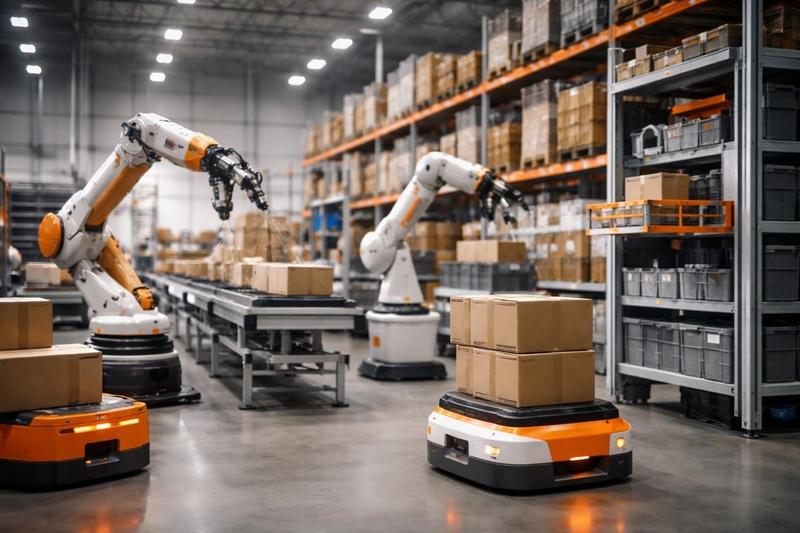
- Autonomous mobile robots (AMRs) for dynamic material transport and inventory management
- Palletising and depalletising systems for efficient loading and unloading operations
- Automated picking systems integrating vision and gripper technology
These platforms represent a significant evolution from traditional fixed automation, offering flexibility and scalability that align perfectly with modern warehouse requirements.
Standards and Safety Frameworks
Understanding industrial robotics standards proves critical for successful implementation and safe operation. National and international standards govern robot performance, safety protocols, and integration requirements, ensuring consistent operational parameters across different manufacturers and applications.
Safety considerations include risk assessment protocols, protective equipment specifications, and operational boundaries that prevent human-robot collisions. Modern systems incorporate advanced safety features such as force limiting, zone monitoring, and emergency stop mechanisms that enable collaborative workflows without compromising worker protection.
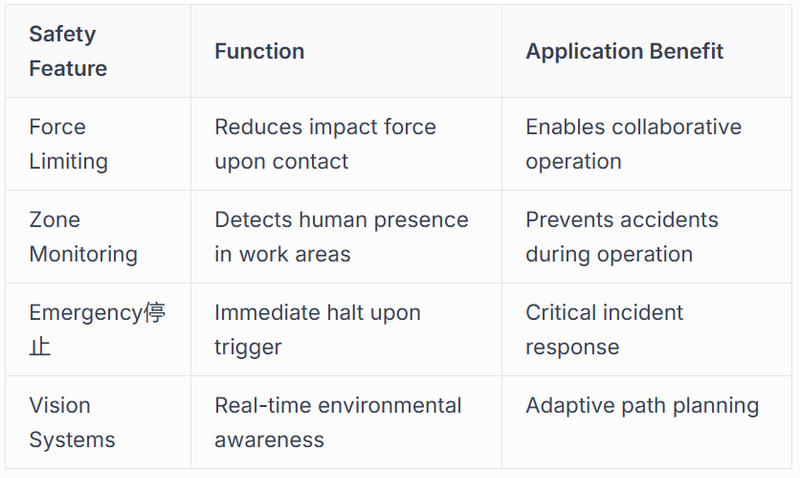
Compliance with established standards also facilitates smoother integration with existing warehouse management systems and ensures long-term operational reliability.
Key Technologies Driving Robotic Capabilities
Several technological advancements have transformed industrial robotics from rigid automation tools into flexible, intelligent systems capable of handling diverse warehouse challenges.
Artificial Intelligence and Machine Learning Integration
The integration of AI and knowledge representation has fundamentally enhanced robot capabilities, enabling systems to learn from experience, adapt to environmental variations, and optimise performance over time. Machine learning algorithms process vast amounts of operational data to improve picking accuracy, path efficiency, and task prioritisation.
Vision systems powered by deep learning now recognise objects across varying lighting conditions, orientations, and packaging types. This capability eliminates the need for structured environments and pre-positioned items, dramatically increasing operational flexibility. Robots equipped with advanced vision can handle mixed SKU environments, identify damaged goods, and verify picking accuracy in real-time.
Natural language processing and semantic understanding enable more intuitive human-robot interaction, whilst predictive analytics anticipate maintenance needs and potential system failures before they impact operations. These intelligent capabilities transform robots from simple task executors into strategic operational assets.
Sensor Fusion and Environmental Perception
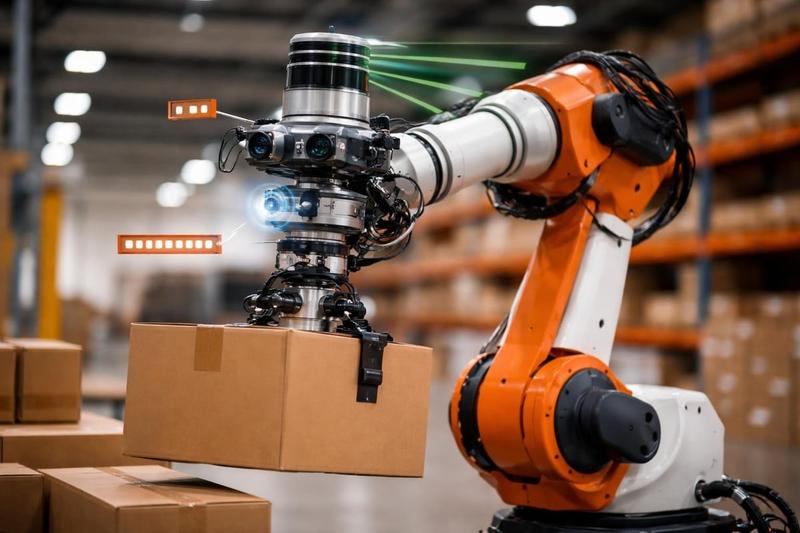
Modern industrial robotics platforms incorporate multiple sensor types to build comprehensive environmental awareness. LiDAR, ultrasonic sensors, cameras, and force-torque sensors work in concert to provide detailed operational context.
This sensor fusion enables:
- Precise navigation through dynamic warehouse environments
- Object recognition across diverse product types and packaging
- Collision avoidance with moving obstacles and personnel
- Quality verification during handling and assembly operations
- Adaptive grasping based on object properties and fragility
The combination of multiple sensing modalities creates redundancy and reliability, essential for mission-critical warehouse operations where downtime directly impacts customer commitments and revenue.
Applications Across Warehouse Operations
Industrial robotics delivers transformative impact across multiple warehouse functional areas, each presenting unique automation opportunities and operational benefits.
Goods-to-Person Systems
Goods-to-person (GTP) automation represents one of the most impactful applications of industrial robotics within distribution environments. Rather than requiring workers to travel throughout the facility retrieving items, robotic systems transport inventory directly to ergonomic picking stations. For businesses beginning their automation journey, solutions like the Automate-X GTP Starter Grid provide accessible entry points that deliver immediate productivity gains without requiring massive capital investment or complete facility redesign.
This approach dramatically reduces walking time, minimises picking errors through visual confirmation systems, and enables operators to process significantly higher order volumes. The scalability of GTP systems allows businesses to start small and expand capacity incrementally as operational demands grow.
Autonomous Material Transport
AGV and AMR technologies have revolutionised internal logistics, eliminating manual forklift operations and creating flexible transport networks that adapt to changing workflow patterns. Unlike traditional automated guided vehicles following fixed paths, modern autonomous mobile robots navigate dynamically using simultaneous localisation and mapping (SLAM) technology.
These platforms handle diverse transport tasks including:
- Pallet movement between receiving, storage, and dispatch areas
- Replenishment of picking locations from bulk storage
- Cross-docking operations requiring minimal dwell time
- Returns processing and quarantine management
Fleet management software coordinates multiple robots simultaneously, optimising traffic flow, preventing congestion, and maximising throughput whilst minimising energy consumption.
Automated Picking and Packing
Robotic picking systems continue advancing rapidly, with new gripper technologies and machine vision capabilities enabling handling of increasingly diverse product types. From vacuum grippers for smooth-surfaced items to adaptive soft grippers for delicate or irregular products, modern end-effectors provide versatility previously impossible with rigid automation.
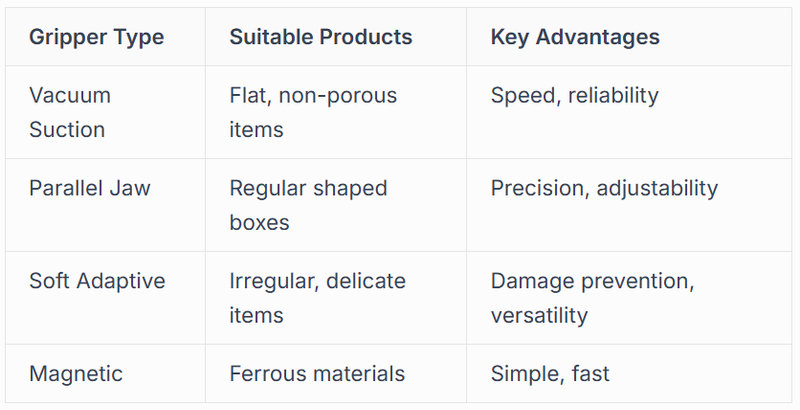
Packing automation extends beyond simple case erection to include optimal box selection, void fill placement, and labelling, creating complete end-to-end automated workflows from order receipt to shipping.
Implementation Considerations and Planning
Successful industrial robotics deployment requires comprehensive planning that extends beyond equipment selection to encompass workflow redesign, system integration, and change management.
Workflow Analysis and Process Mapping
Before implementing robotic systems, organisations must thoroughly analyse existing workflows to identify optimal automation opportunities. This analysis examines:
- Current task sequences and dependencies
- Volume patterns across products, orders, and time periods
- Quality requirements and error rates
- Space utilisation and material flow patterns
- Labour allocation and shift patterns
Understanding these operational parameters enables informed decisions about which processes deliver maximum return on automation investment and where human expertise remains most valuable.
Integration Architecture
Modern warehouse operations rely on seamless communication between robotic systems, warehouse management software, enterprise resource planning platforms, and other operational technologies. Research into industrial robotics and automation demonstrates that integration architecture significantly impacts both implementation timelines and long-term operational success.
Standard communication protocols including OPC UA, MQTT, and RESTful APIs enable interoperability between systems from different manufacturers. Well-designed integration ensures real-time data synchronisation, enabling coordinated workflows where robotic systems respond immediately to order demands, inventory changes, and operational priorities.
Middleware platforms often serve as translation layers, converting proprietary robot commands into standardised formats and aggregating data from multiple systems into unified operational dashboards. This architecture provides both operational visibility and strategic analytics capabilities.
Scalability and Future-Proofing
Investment in industrial robotics represents significant capital commitment, making scalability and adaptability critical selection criteria. Modular system architectures allow capacity expansion through additional robot units rather than complete system replacement.
Consider these scalability factors:
- Incremental capacity addition without operational disruption
- Software upgradability to incorporate new capabilities
- Hardware modularity enabling component replacement and enhancement
- Vendor ecosystem supporting long-term parts availability
- Standards compliance ensuring compatibility with emerging technologies
Future-oriented planning also considers how intelligent manufacturing systems will evolve, with increased AI integration, edge computing capabilities, and autonomous optimisation becoming standard features rather than premium options.
Operational Performance and Metrics
Measuring industrial robotics performance requires comprehensive metrics that capture both efficiency gains and broader operational impacts.
Productivity and Throughput Metrics
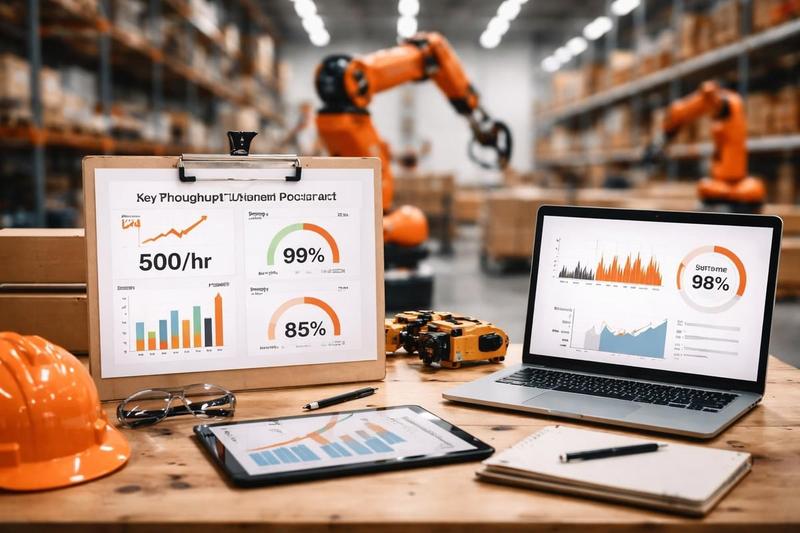
Direct productivity measurements include units picked per hour, orders processed per shift, and cycle times for specific tasks. Robotic systems typically deliver consistent performance throughout operating periods, eliminating the productivity variations inherent in manual operations.
However, comprehensive performance assessment extends beyond simple throughput to examine:
- Accuracy rates and reduction in picking errors
- Space utilisation improvements from denser storage configurations
- Labour redeployment to higher-value activities
- Energy efficiency compared to conventional equipment
- System availability and mean time between failures
These broader metrics provide clearer understanding of total operational impact and return on investment across multiple dimensions.
Return on Investment Analysis
ROI calculations for industrial robotics must account for both direct cost savings and strategic operational benefits. Direct savings include reduced labour costs, lower error rates, and decreased damage to inventory and infrastructure.
Strategic benefits often deliver greater long-term value:
- Enhanced capacity to handle volume peaks without temporary labour
- Improved service levels through faster processing and higher accuracy
- Competitive differentiation through advanced capabilities
- Data generation enabling continuous optimisation
- Reduced workplace injuries and associated costs
Payback periods vary based on operational scale, labour costs, and system complexity, typically ranging from 18 months to four years for warehouse applications. However, the increasing speed of automation technology advancement continues compressing these timelines as system costs decrease and capabilities expand.
Workforce Implications and Change Management
Industrial robotics implementation fundamentally changes workforce composition and required skill sets, necessitating proactive change management and training programmes.
Skills Transformation
Rather than simply eliminating positions, successful automation initiatives transform job roles from physical labour to technical operation and system management. Workers transition from manual picking and transport to robot fleet supervision, exception handling, and quality assurance.
Essential new skills include:
- System monitoring and performance optimisation
- Basic troubleshooting and first-line maintenance
- Data interpretation for continuous improvement
- Human-robot collaboration techniques and safety protocols
- Technology adaptation as systems evolve
Progressive organisations invest heavily in retraining existing workforce members rather than wholesale replacement, preserving institutional knowledge whilst building technical capabilities. This approach maintains employee engagement and leverages operational understanding that new hires cannot replicate.
Safety Culture Evolution
Introducing industrial robotics requires evolving safety culture from traditional warehouse hazards to include human-robot interaction considerations. Common questions about robotic systems often centre on safety protocols and risk mitigation strategies.
Comprehensive safety programmes address:
- Clear demarcation of robot operating zones
- Protocols for entering automated areas
- Emergency stop procedures and responsibilities
- Regular safety audits and system verification
- Incident reporting and continuous improvement processes
Collaborative robot deployment requires particular attention to force limiting, speed restrictions, and operational boundaries that ensure safe shared workspaces. Building strong safety culture around automation protects workers whilst maximising system utilisation and operational confidence.
Emerging Trends and Future Directions
The industrial robotics landscape continues evolving rapidly, with several emerging trends poised to reshape warehouse automation capabilities over the coming years.
Edge Computing and Autonomous Decision-Making
Moving processing power closer to robotic systems through edge computing enables faster response times and reduces dependence on centralised infrastructure. Robots equipped with edge intelligence make real-time decisions about path planning, task prioritisation, and exception handling without constant cloud connectivity.
This distributed intelligence architecture improves system resilience, reduces latency, and enables operations to continue during network disruptions. As edge computing capabilities expand, robots will increasingly operate as autonomous agents within coordinated fleets rather than centrally controlled units.
Human-Robot Collaboration Advancement
Future industrial robotics development emphasises seamless collaboration between human workers and robotic systems, with each performing tasks suited to their respective strengths. Humans excel at complex decision-making, problem-solving, and handling exceptional situations, whilst robots deliver consistent performance, endurance, and precision.
Advanced collaboration capabilities include:
- Intuitive interfaces using gesture recognition and natural language
- Adaptive behaviour responding to human presence and activity
- Shared task execution with dynamic responsibility allocation
- Predictive assistance anticipating worker needs
- Continuous learning from human demonstration
These capabilities create truly hybrid operations where automation amplifies human capabilities rather than simply replacing manual tasks.
Sustainability and Energy Efficiency
Environmental considerations increasingly influence industrial robotics design and deployment, with energy efficiency, recyclability, and sustainable manufacturing becoming key selection criteria. Modern systems incorporate regenerative braking, intelligent sleep modes, and optimised path planning that minimises energy consumption.
Battery technology improvements enable longer autonomous operation periods whilst reducing charging time and environmental impact. Some advanced warehouses now integrate robotic systems with renewable energy sources and intelligent power management that balances operational demands with grid capacity and cost optimisation.
Industrial robotics has evolved from specialised automation equipment into essential infrastructure for competitive warehouse operations, delivering measurable improvements in productivity, accuracy, and scalability whilst transforming workforce capabilities. For logistics providers, e-commerce fulfilment centres, and distribution operations facing mounting pressure to process higher volumes with greater speed and precision, robotic automation provides the foundation for sustainable growth and operational excellence. Automate-X specialises in designing and implementing intelligent warehouse automation solutions that combine modern robotics, advanced software, and seamless system integration tailored to your specific operational requirements and growth objectives.