

Manufacturing Automation Solutions for Modern Warehouses
Share on
The landscape of warehouse operations has undergone a dramatic transformation as businesses across logistics, e-commerce, and manufacturing sectors increasingly adopt advanced technologies to meet growing demands. Manufacturing automation solutions have emerged as essential tools for organisations seeking to optimise their distribution centres, improve accuracy, and scale operations efficiently. These integrated systems combine robotics, intelligent software, and streamlined processes to address the complex challenges facing modern supply chains. From pharmaceutical companies requiring precise inventory control to cold-storage facilities managing temperature-sensitive products, automation technologies are reshaping how goods move through warehouses and fulfillment centres.
Understanding Manufacturing Automation Solutions in Warehouse Environments
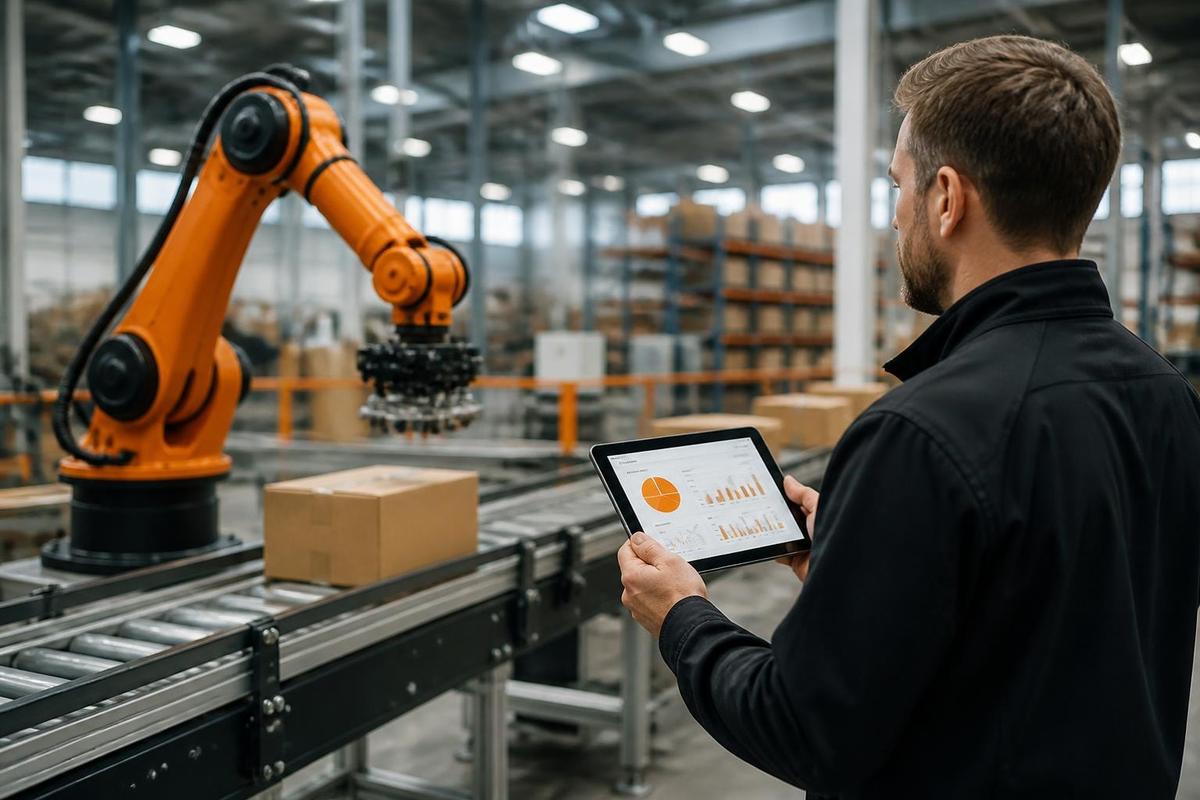
Manufacturing automation solutions encompass a broad range of technologies designed to reduce manual intervention whilst increasing operational efficiency across warehouse and production environments. These systems integrate hardware components such as autonomous mobile robots, conveyors, and sorting equipment with sophisticated software platforms that orchestrate workflows, manage inventory, and provide real-time visibility.
The National Institute of Standards and Technology highlights how robotics and automation enhance productivity and worker safety across industrial settings. Within warehouse contexts, this translates to systems that handle repetitive tasks such as picking, packing, sorting, and transporting goods throughout facilities.
Core Components of Automated Warehouse Systems
Effective automation strategies rely on several interconnected elements:
- Warehouse management software (WMS) that coordinates all activities
- Automated storage and retrieval systems (AS/RS) for efficient space utilisation
- Conveyor networks and sortation systems for product movement
- Robotics platforms including autonomous mobile robots (AMRs) and robotic arms
- Data analytics tools for performance monitoring and optimisation
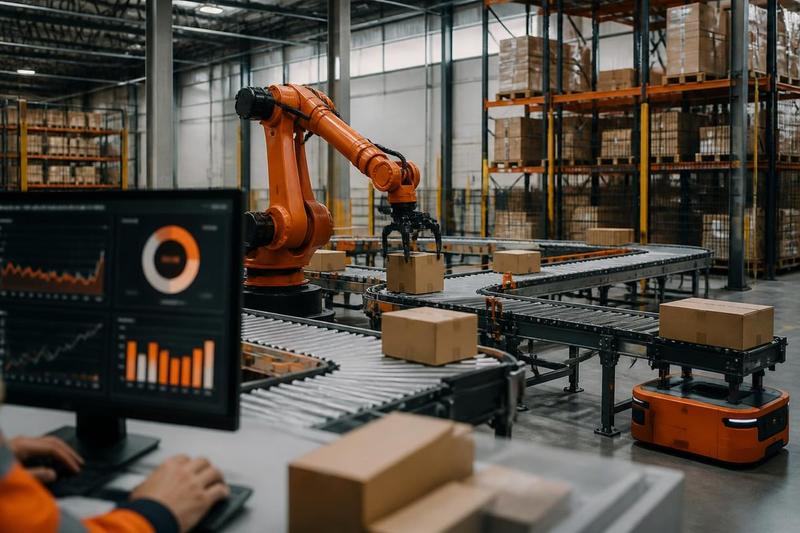
These components work in harmony to create seamless workflows that adapt to changing demand patterns whilst maintaining accuracy and speed.
Benefits Driving Adoption Across Industries
The shift towards manufacturing automation solutions delivers measurable advantages that directly impact operational performance and financial outcomes. Businesses implementing these technologies report significant improvements across multiple metrics that matter most to warehouse managers and supply chain directors.
Operational Efficiency and Throughput
Automated systems process orders at speeds impossible for manual operations alone. A distribution centre handling 10,000 orders daily might increase throughput to 25,000 or more without proportional increases in labour costs or facility footprint. This scalability proves particularly valuable during peak seasons when e-commerce and 3PL operations experience demand surges.
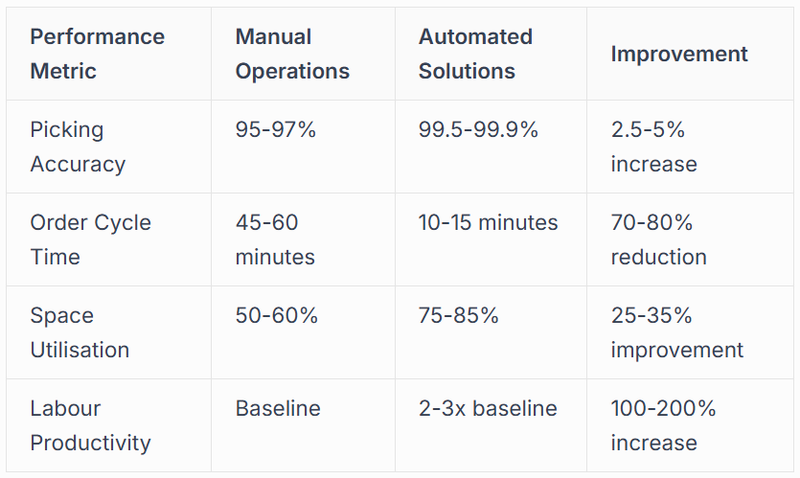
The integration of automation technologies in manufacturing environments demonstrates how these improvements extend beyond simple speed increases to fundamental workflow optimisation.
Cost Reduction and Resource Optimisation
Financial benefits extend across multiple cost centres. Labour represents 50-70% of warehouse operating expenses in traditional facilities, and whilst automation requires upfront investment, the long-term savings prove substantial. Energy-efficient automated systems reduce utility costs, whilst improved accuracy minimises returns, damaged goods, and associated handling expenses.
Pharmaceutical and food & beverage operations particularly benefit from reduced waste through precise inventory rotation and temperature monitoring. Cold-storage facilities see additional savings through optimised door openings and reduced cold exposure for workers.
Technology Categories Within Manufacturing Automation Solutions
Modern warehouse automation encompasses diverse technology categories, each addressing specific operational challenges whilst contributing to overall system performance.
Goods-to-Person Systems
These solutions bring products directly to stationary picking stations where workers fulfil orders without walking warehouse aisles. Robotic shuttles, automated storage cubes, and vertical lift modules eliminate travel time, which can represent 60-70% of order fulfillment duration in traditional operations.
For small to medium businesses exploring automation, starter systems provide accessible entry points. The Automate-X GTP Starter Grid offers an approachable pathway for organisations beginning their automation journey, delivering goods-to-person efficiency without requiring massive capital investment or facility redesigns.
Autonomous Mobile Robots
AMRs navigate warehouse floors independently using sensors and mapping technology, transporting pallets, totes, or individual items between locations. Unlike fixed conveyor systems, these flexible solutions adapt to changing floor plans and seasonal workflow variations. FMCG operations particularly value this adaptability when managing diverse product portfolios with fluctuating demand patterns.
The International Society of Automation provides standards and guidance on implementing mobile robotics safely and effectively within industrial environments.
Automated Sorting and Distribution
High-speed sorters process thousands of units hourly, directing items to appropriate destinations based on order requirements, shipping zones, or product characteristics. E-commerce fulfillment centres handling multi-channel distribution rely heavily on these systems to meet same-day and next-day delivery commitments.
Modern sorting solutions incorporate machine vision systems that identify products, verify quality, and detect damage without human intervention. These visual inspection capabilities prove invaluable for quality control in pharmaceutical and food production environments where product integrity directly impacts safety.
Integration Challenges and Implementation Strategies
Successfully deploying manufacturing automation solutions requires careful planning and systematic execution. Organisations that approach implementation strategically achieve better outcomes than those pursuing rapid, poorly planned deployments.
System Integration Considerations
Warehouse automation never exists in isolation. These systems must integrate with enterprise resource planning (ERP) platforms, transportation management systems (TMS), and customer order management interfaces. Data flows seamlessly between systems when integration receives appropriate attention during planning phases.
The ODVA organisation advances open, interoperable protocols that facilitate communication between diverse automation components, reducing vendor lock-in and enabling best-of-breed system selection.
- Conduct thorough process mapping to understand current workflows and identify automation opportunities
- Evaluate existing infrastructure compatibility including power supply, network connectivity, and structural capacity
- Develop phased implementation roadmaps that deliver value incrementally whilst minimising operational disruption
- Establish clear performance metrics before deployment to measure ROI and identify optimisation opportunities
- Invest in workforce training to ensure teams can operate, maintain, and optimise automated systems effectively
Data Architecture and Analytics
Manufacturing automation solutions generate massive data volumes covering equipment performance, inventory movements, order accuracy, and system efficiency. Organisations that harness this information gain competitive advantages through predictive maintenance, demand forecasting, and continuous process improvement.
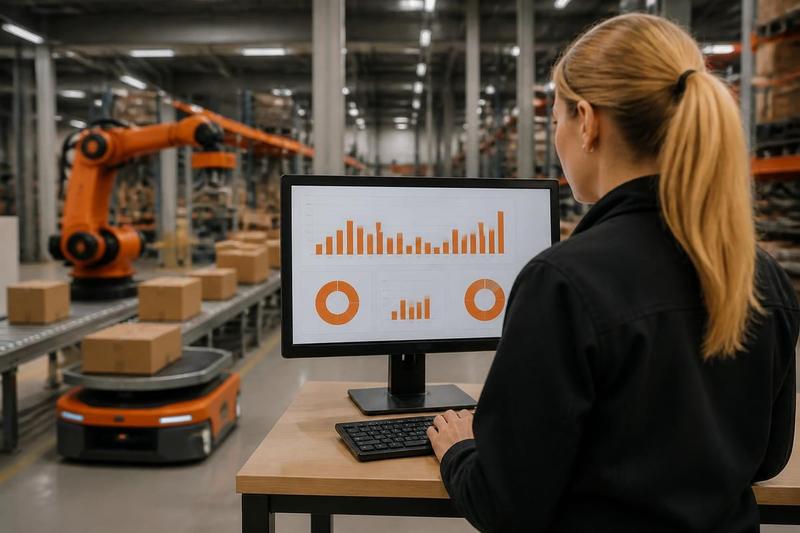
Cloud-based analytics platforms enable real-time monitoring across multi-site operations, allowing logistics directors to identify bottlenecks, compare facility performance, and make data-driven decisions about capacity planning and resource allocation.
Industry-Specific Applications
Different sectors face unique challenges that manufacturing automation solutions address through tailored configurations and specialised capabilities.
E-Commerce and 3PL Operations
The explosive growth of online retail demands fulfillment capabilities that traditional warehouses cannot deliver economically. Automated systems process single-item orders efficiently, a stark contrast to pallet-level wholesale distribution that dominated logistics for decades. Peak season scalability proves essential when order volumes triple during promotional periods.
Third-party logistics providers serving multiple clients benefit from automation flexibility that accommodates diverse product types, packaging requirements, and service level agreements within shared facilities.
Food & Beverage and Cold Storage
Temperature-controlled environments present special challenges where manual labour becomes uncomfortable and costly. Automated systems operate reliably in freezer conditions whilst reducing worker exposure to extreme temperatures. Strict first-in-first-out (FIFO) rotation requirements for perishable goods are enforced systematically through software controls rather than relying on manual compliance.
Traceability requirements in food handling integrate naturally with automated systems that track every product movement, supporting recall readiness and regulatory compliance.
Pharmaceutical and Healthcare Logistics
Medication distribution demands exceptional accuracy where errors directly impact patient safety. Manufacturing automation solutions achieve near-perfect picking accuracy whilst maintaining chain-of-custody documentation required by regulatory frameworks. Serialisation tracking and temperature monitoring integrate seamlessly with automated handling equipment.
The pharmaceutical sector also benefits from cleanroom-compatible robotics that maintain sterile environments whilst handling products, reducing contamination risks inherent in manual processing.
Scalability and Future-Proofing Considerations
Forward-thinking organisations evaluate manufacturing automation solutions not just for current needs but for long-term adaptability as business requirements evolve.
Modular System Design
The most successful implementations employ modular architectures that allow capacity increases through component addition rather than complete system replacement. A facility might begin with automated storage in one zone, then add robotics picking in another area, gradually expanding coverage whilst learning optimal configurations.
This approach spreads capital investment over time whilst reducing implementation risk. Real-world examples, such as the PPP Industries case study, demonstrate how staged automation delivers value at each phase whilst building towards comprehensive solutions.
Emerging Technologies and Innovation
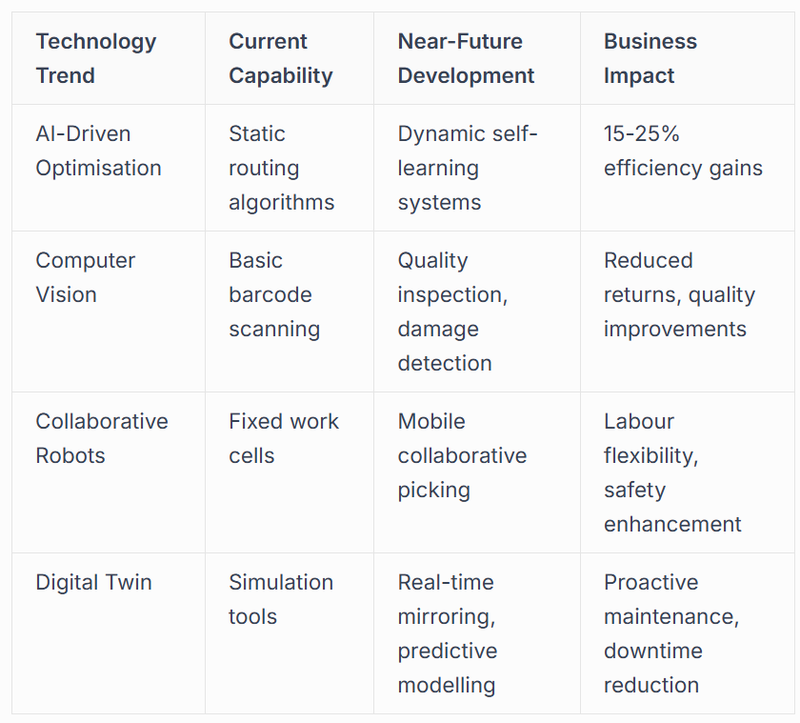
The automation landscape continues advancing rapidly with artificial intelligence, machine learning, and advanced sensors expanding system capabilities. Predictive algorithms optimise pick paths, reducing travel distances and energy consumption. Computer vision systems identify damaged packaging or incorrect products with increasing sophistication.
Industry publications like Automation.com provide insights into emerging trends helping businesses anticipate technological developments relevant to their operations. Staying informed about innovations ensures organisations can plan upgrade paths and avoid premature obsolescence.
Workforce Transformation and Skills Development
Contrary to concerns about job displacement, manufacturing automation solutions create new opportunities whilst transforming existing roles. Successful organisations view automation as augmenting human capabilities rather than simply replacing workers.
Evolving Job Roles
Traditional warehouse positions focusing on manual picking and packing evolve into technology-focused roles including:
- Automation technicians maintaining and troubleshooting robotic systems
- Data analysts interpreting performance metrics and identifying optimisation opportunities
- Process coordinators managing exception handling and complex order requirements
- System operators monitoring automated equipment and managing workflow priorities
These positions typically offer higher wages and improved working conditions compared to manual material handling roles, supporting employee retention and satisfaction.
Training and Change Management
Effective workforce transition requires structured training programmes and clear communication about automation benefits. Employees understanding that automation handles physically demanding, repetitive tasks whilst they focus on problem-solving and quality oversight generally embrace technological change.
Logistics automation initiatives in New Zealand demonstrate how regional businesses successfully navigate workforce transformation whilst implementing advanced warehouse technologies.
Measuring Return on Investment
Quantifying the financial impact of manufacturing automation solutions helps justify investment and track performance against business objectives.
Financial Metrics
Standard ROI calculations consider both direct and indirect benefits:
- Labour cost savings from reduced headcount or redeployment to higher-value activities
- Increased throughput capacity without proportional facility expansion
- Accuracy improvements reducing returns, damages, and customer service costs
- Inventory carrying cost reductions through space optimisation
- Energy and utility savings from efficient equipment operation
Payback periods typically range from 18 months to 4 years depending on system complexity, labour rates, and operational scale. High-volume e-commerce and 3PL operations often achieve faster returns than lower-throughput manufacturing distribution centres.
Operational Performance Indicators
Beyond financial metrics, operational KPIs demonstrate automation value:
- Order accuracy rates climbing from 96% to 99.8%
- Fulfillment cycle times dropping from hours to minutes
- Inventory accuracy improving from 95% to 99.5%
- Worker productivity measured in units per labour hour
- Equipment utilisation tracking asset efficiency
Continuous monitoring of these indicators enables ongoing optimisation and identifies opportunities for further automation expansion.
Selecting the Right Automation Partner
The complexity of manufacturing automation solutions demands experienced implementation partners who understand both technology and warehouse operations.
Evaluation Criteria
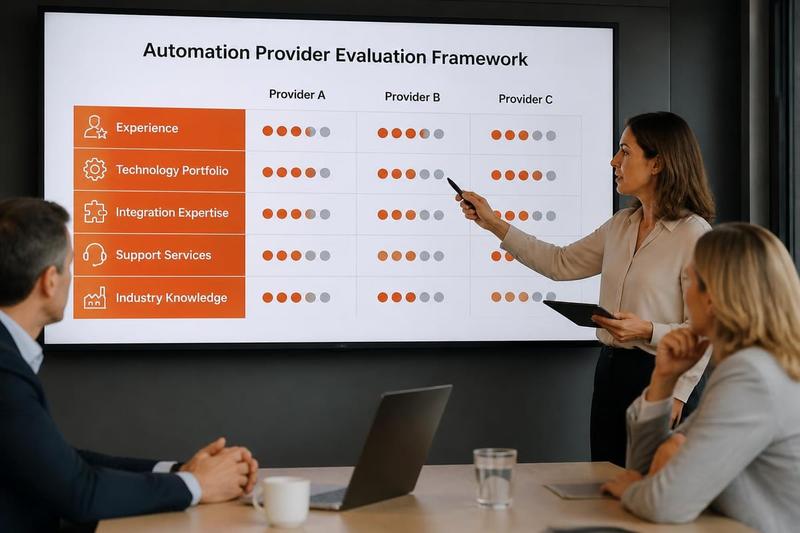
Key factors when assessing automation providers include:
- Proven experience in your specific industry sector
- Comprehensive solution portfolios covering hardware, software, and integration
- Strong project management methodologies and implementation track records
- Ongoing support, maintenance, and system optimisation services
- Financial stability and long-term viability
References from similar organisations operating comparable facilities provide valuable insights into partner capabilities and potential challenges. Site visits to existing installations reveal system performance under real-world conditions.
Understanding order picking system options helps organisations evaluate whether providers offer technologies aligned with operational requirements and future growth plans.
Integration Expertise
The best automation partners excel at integrating diverse components into cohesive systems. They understand how warehouse management platforms, robotics controllers, sortation systems, and analytics tools must communicate seamlessly. This systems integration expertise separates successful implementations from problematic deployments that never achieve promised performance.
Machine vision integration capabilities exemplify how specialised technologies must work harmoniously within broader automation frameworks to deliver comprehensive solutions.
Regulatory Compliance and Safety Standards
Manufacturing automation solutions must adhere to safety regulations protecting workers whilst ensuring equipment operates reliably without creating hazards.
Safety System Requirements
Automated equipment incorporates multiple safety layers including:
- Emergency stop systems accessible throughout facilities
- Light curtains and sensors preventing worker entry into hazardous zones
- Lockout/tagout procedures for maintenance activities
- Speed limitations and collision avoidance for mobile robotics
- Regular safety audits and compliance verification
Collaborative robotics designed to work alongside humans employ force-limiting technologies that stop operation upon unexpected contact, reducing injury risks whilst enabling flexible deployment.
Industry Standards and Certifications
The International Society of Automation publishes standards covering automation system design, installation, and operation. Compliance with these frameworks ensures systems meet recognised safety and performance criteria whilst facilitating insurance coverage and regulatory approvals.
Pharmaceutical facilities require additional validation documentation proving automated systems maintain product integrity and traceability throughout handling processes. Cold-storage operations must demonstrate temperature control maintenance even during equipment failures or power disruptions.
Environmental Sustainability Benefits
Manufacturing automation solutions contribute to environmental objectives whilst delivering operational improvements, an increasingly important consideration as organisations pursue sustainability commitments.
Energy Efficiency Advantages
Modern automated equipment consumes less energy per unit processed compared to traditional operations requiring extensive lighting, heating, and cooling for human workers throughout large facilities. LED lighting paired with motion sensors illuminates only active zones, whilst automated storage systems operate effectively in darkened areas.
Optimised routing algorithms reduce unnecessary equipment movement, minimising power consumption whilst extending component lifecycles. Regenerative braking in conveyor systems captures energy during deceleration, feeding it back into facility electrical grids.
Waste Reduction and Resource Conservation
Improved picking accuracy directly reduces packaging waste from incorrect shipments and returns processing. Precise inventory management minimises product spoilage in food & beverage operations whilst pharmaceutical facilities reduce medication waste through better rotation enforcement.
Compact automated storage systems maximise building space utilisation, reducing the physical footprint required for equivalent capacity compared to conventional racking. This translates to lower heating, cooling, and lighting requirements whilst preserving land resources.
Manufacturing automation solutions represent transformational investments that position warehouses and distribution centres for sustained competitive advantage through enhanced efficiency, accuracy, and scalability. The technologies and strategies outlined here provide frameworks for evaluating automation opportunities whilst understanding implementation considerations across diverse operational contexts. Whether you're managing e-commerce fulfillment, pharmaceutical distribution, or cold-storage logistics, Automate-X delivers intelligent warehouse automation combining modern robotics, sophisticated software, and expert system integration to streamline operations and enable scalable growth across your supply chain environment.