

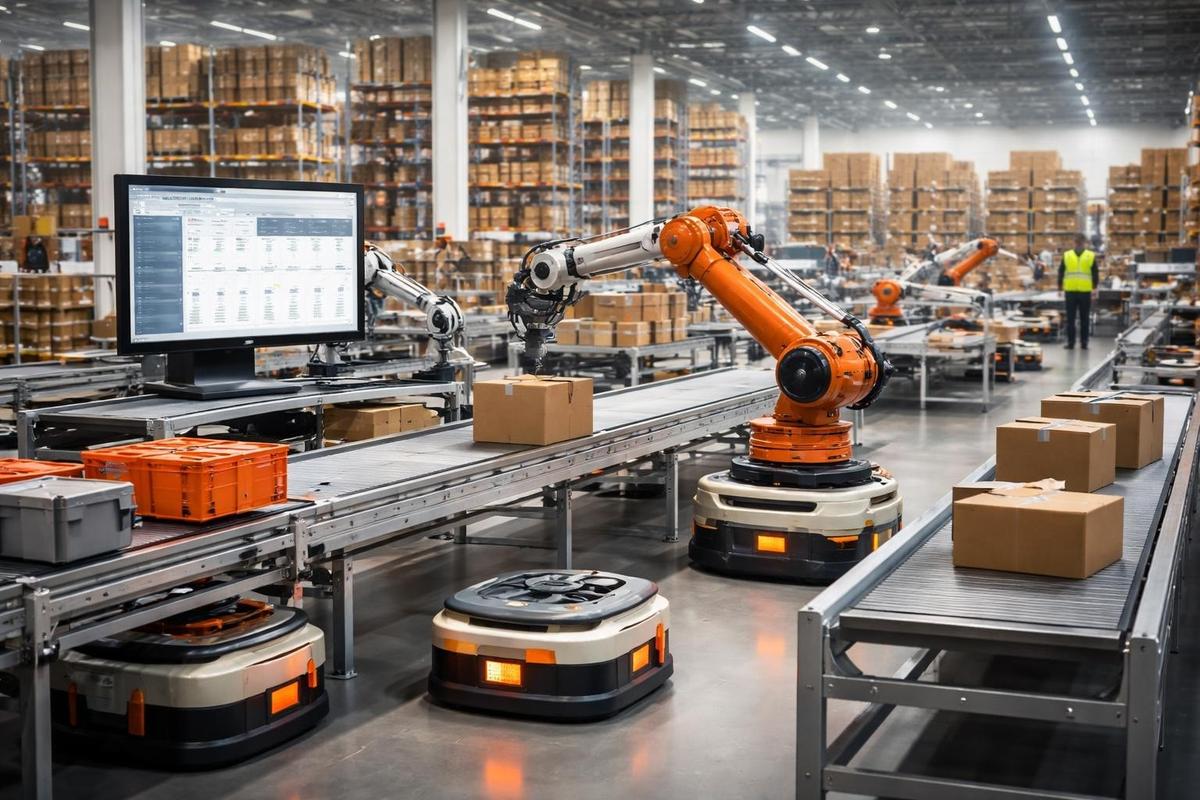
Production Automation: Warehouse Efficiency Guide 2026
Share on
The warehouse and logistics sector faces unprecedented pressure to deliver faster, more accurately, and at lower costs. Production automation has emerged as the definitive solution for organisations seeking to maintain competitive advantage whilst managing labour constraints, rising customer expectations, and operational complexity. By integrating intelligent systems, robotics, and software platforms, modern warehouse operations can achieve productivity levels previously thought impossible.
Understanding Production Automation in Modern Warehousing
Production automation refers to the systematic application of technology and control systems to manage warehouse processes with minimal human intervention. Within distribution and fulfillment environments, this encompasses everything from automated storage and retrieval systems to intelligent picking solutions and autonomous material handling.
The fundamental objective remains consistent: eliminate repetitive manual tasks, reduce error rates, and optimise throughput. However, production automation in 2026 extends far beyond simple mechanisation. Today's solutions incorporate artificial intelligence, machine learning, and advanced analytics to create adaptive systems that continuously improve operational performance.
Core Technologies Driving Warehouse Automation
Modern production automation platforms integrate multiple technology layers:
- Warehouse Control Systems (WCS): Orchestrate real-time equipment coordination and material flow
- Warehouse Management Systems (WMS): Manage inventory, orders, and operational workflows
- Autonomous Mobile Robots (AMRs): Navigate facilities independently to transport goods
- Automated Storage and Retrieval Systems (AS/RS): Maximise vertical space utilisation and retrieval speed
- Vision Systems and Sensors: Enable quality control and dimensional verification
- Conveyor Networks: Create efficient material highways throughout facilities
These technologies function synergistically, creating an ecosystem where data flows seamlessly between physical equipment and software intelligence.

Identifying Automation Opportunities in Your Operations
Not every process demands automation immediately. Strategic implementation requires careful analysis of current operations to identify high-impact opportunities. Production automation delivers maximum value when applied to processes characterised by high volume, repetitive actions, and minimal variation.
Process Assessment Framework
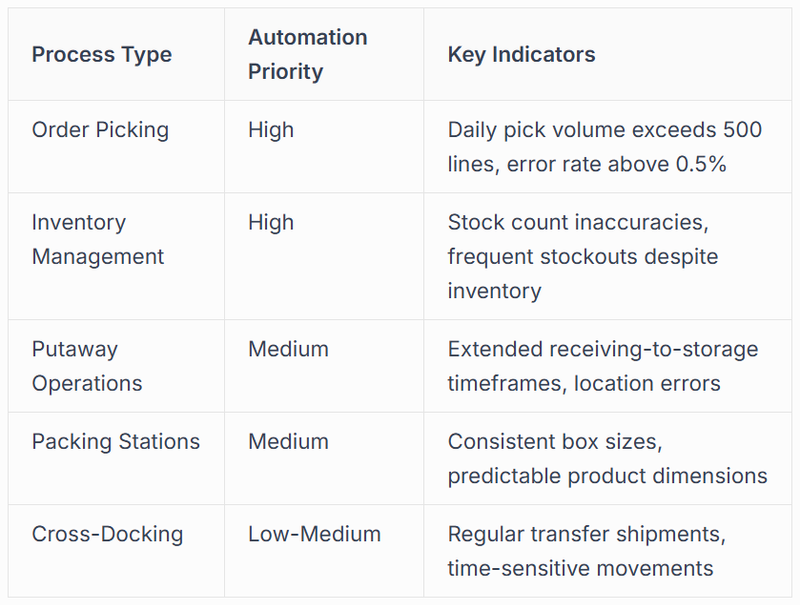
Begin by documenting current state metrics: throughput rates, error percentages, labour allocation, and peak capacity constraints. Identify bottlenecks where manual processes limit overall system performance. These constraint points typically offer the highest return on automation investment.
The goods-to-person automation model exemplifies strategic automation application. Rather than automating all warehouse movements, this approach focuses specifically on eliminating non-value-added travel time for picking staff.
Implementing Production Automation: A Phased Approach
Successful production automation implementation follows structured phases that minimise disruption whilst building organisational capability. The traditional "big bang" approach of complete facility transformation has given way to iterative deployment strategies.
Phase One: Foundation and Proof of Concept
Establish baseline performance metrics across all operational areas. Select a contained process area for initial automation deployment, ideally one with clear success criteria and manageable scope. This proof-of-concept phase validates both technology performance and organisational readiness.
For small to medium enterprises entering automation for the first time, modular solutions that scale with growth provide lower-risk entry points. These systems allow organisations to demonstrate value quickly whilst developing internal expertise in automated operations management.
Phase Two: Core System Deployment
With proven technology and refined processes, expand automation to core operational areas. This phase typically focuses on primary value streams: inbound receiving, storage allocation, order fulfillment, and outbound dispatch.
Integration represents the critical success factor during core deployment. Production automation systems must communicate seamlessly with existing enterprise resource planning (ERP) systems, transportation management platforms, and customer order portals. Following key principles of automation ensures implementations deliver visibility, accuracy, and efficiency improvements.
- Map existing data flows between systems to identify integration points
- Establish data governance protocols ensuring consistency across platforms
- Define exception handling procedures for scenarios requiring human intervention
- Create performance dashboards providing real-time operational visibility
- Develop training programmes building staff competency with new systems

Phase Three: Optimisation and Expansion
Once core systems operate reliably, shift focus toward continuous improvement. Advanced analytics identify opportunities for algorithm refinement, process adjustments, and capacity expansion. This phase transforms production automation from a static installation into a dynamic competitive advantage.
Data Accuracy: The Foundation of Automated Success
Automation systems operate only as effectively as the data driving their decisions. Inaccurate inventory records, incorrect product dimensions, or flawed location mapping cascade into operational failures when production automation executes at scale.
Establishing an authoritative source of truth becomes paramount. This single, validated repository of master data governs all automated decision-making, eliminating conflicts between disparate systems.
Critical Data Elements Requiring Validation
Inventory Data: Real-time stock quantities, location assignments, and status flags (available, reserved, quarantined) must reflect physical reality. Regular cycle counting validates system accuracy.
Product Master Data: Dimensional information, weight specifications, handling requirements, and storage parameters enable automation systems to make intelligent decisions regarding storage location, picking methodology, and transportation equipment.
Operational Rules: Business logic governing allocation strategies, picking methodologies, and quality control requirements must translate accurately into system configurations.
Many organisations discover that data cleansing represents the most time-consuming aspect of automation implementation. However, this investment pays dividends throughout system lifecycle, enabling increasingly sophisticated automation capabilities.
Measuring Production Automation Performance
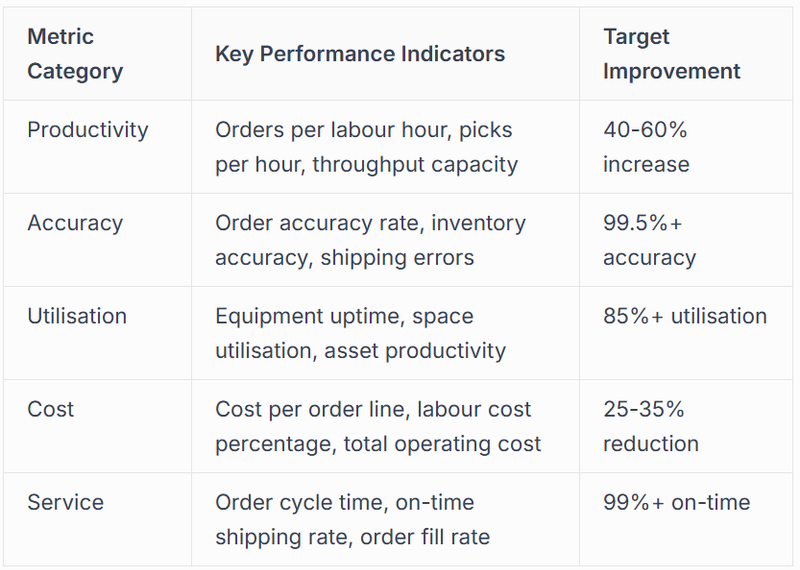
Effective performance measurement extends beyond simple before-and-after comparisons. Establish trending analysis that reveals performance patterns across time periods, product categories, and customer segments. This granular insight drives continuous improvement initiatives.
Real-world implementations demonstrate substantial returns. Consider how leading organisations have transformed operations through strategic automation deployment. The Tip Top Ice Cream case study illustrates measurable improvements in cold-storage efficiency through targeted automation.
Overcoming Common Implementation Challenges
Despite proven benefits, production automation implementations encounter predictable obstacles. Anticipating these challenges enables proactive mitigation strategies.
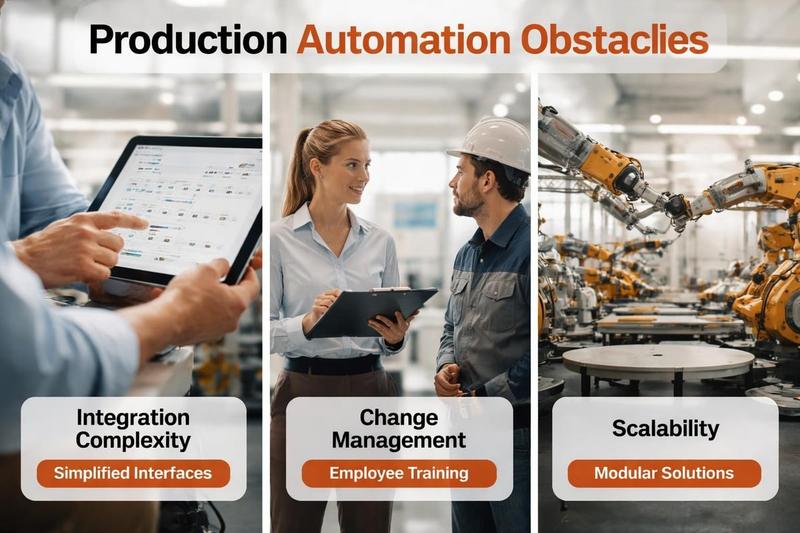
Technology Integration Complexity
Legacy systems often lack modern APIs or integration capabilities. Address this through middleware platforms that translate between protocols, enabling communication across disparate systems. Alternatively, phased system replacement can modernise infrastructure whilst maintaining operational continuity.
Change Management Resistance
Workforce concerns about automation typically centre on job security and skill obsolescence. Transparent communication about role evolution, coupled with comprehensive retraining programmes, transforms potential resistance into enthusiastic adoption. Production automation typically shifts labour from physically demanding repetitive tasks to higher-value supervisory and problem-solving roles.
Scalability Planning
Initial automation deployments may meet current demand perfectly yet lack expansion capacity. Design systems with future growth in mind, selecting modular platforms that accommodate additional capacity through incremental investment rather than wholesale replacement.
Selecting the Right Automation Partner
The automation vendor landscape spans equipment manufacturers, software developers, system integrators, and consultancies. Successful implementations typically involve partners who understand both technology capabilities and operational realities specific to your industry.
Evaluate potential partners across multiple dimensions:
- Industry Experience: Demonstrated success in similar operational environments (cold storage, pharmaceuticals, FMCG)
- Technology Integration Capability: Proven ability to integrate diverse systems into cohesive solutions
- Support Infrastructure: Local technical support, spare parts availability, and rapid response commitments
- Scalability Track Record: Experience deploying solutions that grow with client operations
- Financial Stability: Assurance of long-term vendor viability for ongoing support
Request facility tours at existing client sites operating similar automation systems. Direct observation reveals operational reality beyond marketing presentations. Understanding the industrial automation landscape helps contextualise vendor capabilities within broader technology trends.
Emerging Trends Shaping Production Automation
Production automation continues evolving rapidly as new technologies mature and operational requirements shift. Several trends will significantly impact warehouse operations through 2026 and beyond.
Artificial Intelligence and Machine Learning
Advanced algorithms now predict demand patterns, optimise picking paths, and anticipate equipment maintenance requirements. These capabilities enable proactive rather than reactive operational management. Machine learning systems continuously refine performance based on historical patterns and real-time feedback.
Collaborative Robotics
Rather than isolating automation in segregated zones, collaborative robots work alongside human operators in shared spaces. This flexibility suits operations with variable product mixes or seasonal demand fluctuations requiring human judgement combined with robotic productivity.
Cloud-Based Control Systems
Distributed computing architectures enable centralised management of multi-site operations whilst reducing on-premise infrastructure requirements. Cloud platforms also accelerate deployment of software updates and performance enhancements across entire networks simultaneously.
Sustainability Integration
Modern production automation systems incorporate energy consumption monitoring, packaging optimisation, and transportation efficiency algorithms that reduce environmental impact whilst improving operational economics. Sustainability metrics increasingly influence automation design decisions.
Financial Justification and ROI Modeling
Production automation requires significant capital investment, demanding rigorous financial analysis. Comprehensive business cases encompass both quantifiable returns and strategic benefits difficult to monetise directly.
Quantifiable Returns
Labour Cost Savings: Reduction in direct labour hours through automated processes. Calculate fully-loaded labour costs including wages, benefits, workers compensation, and recruitment expenses.
Error Reduction: Cost savings from eliminated shipping errors, returns processing, and customer service interventions. Include both direct costs and customer lifetime value implications.
Space Utilisation: Increased storage density through vertical automation and optimised layout enables deferral of facility expansion or reduction in leased space.
Throughput Capacity: Ability to process additional volume without proportional cost increases creates revenue opportunities and competitive advantages.
Strategic Benefits
Beyond immediate financial returns, production automation delivers competitive capabilities: enhanced scalability supporting business growth, improved customer service through faster order processing, and operational resilience reducing dependency on tight labour markets.
Most warehouse automation investments deliver payback periods between eighteen months and three years, depending on labour costs, throughput volumes, and system sophistication. However, strategic value often exceeds pure financial calculation by enabling business models otherwise infeasible.
Integration with Broader Supply Chain Ecosystem
Production automation functions within larger supply chain networks. Optimal performance requires coordination with upstream suppliers and downstream customers. Modern automation platforms expose APIs enabling integration with partner systems, creating visibility across organisational boundaries.
Share inventory availability in real-time with e-commerce platforms to prevent overselling. Provide shipment tracking updates directly into customer systems. Receive advance shipping notices from suppliers that automatically trigger receiving workflow preparation. These integrations compound automation benefits by eliminating manual communication overhead and accelerating information flow.
Consider how production automation impacts service level agreements with customers. Enhanced capabilities enable tighter delivery windows, more flexible order modification cutoffs, and value-added services like gift wrapping or customised packaging. These differentiators create competitive advantages beyond operational cost reduction.
Production automation represents a strategic imperative for warehouse operations seeking sustainable competitive advantage amidst evolving market demands and operational constraints. By implementing intelligent systems that integrate robotics, software platforms, and data analytics, organisations achieve substantial improvements in productivity, accuracy, and scalability.
Automate-X specialises in designing and implementing warehouse automation solutions tailored to your specific operational requirements, combining modern robotics with sophisticated software integration. Whether you operate in logistics, e-commerce fulfillment, manufacturing, or specialised environments like pharmaceuticals or cold storage, our team delivers scalable automation platforms that drive measurable performance improvements. Contact us to explore how intelligent automation can transform your warehouse operations.