

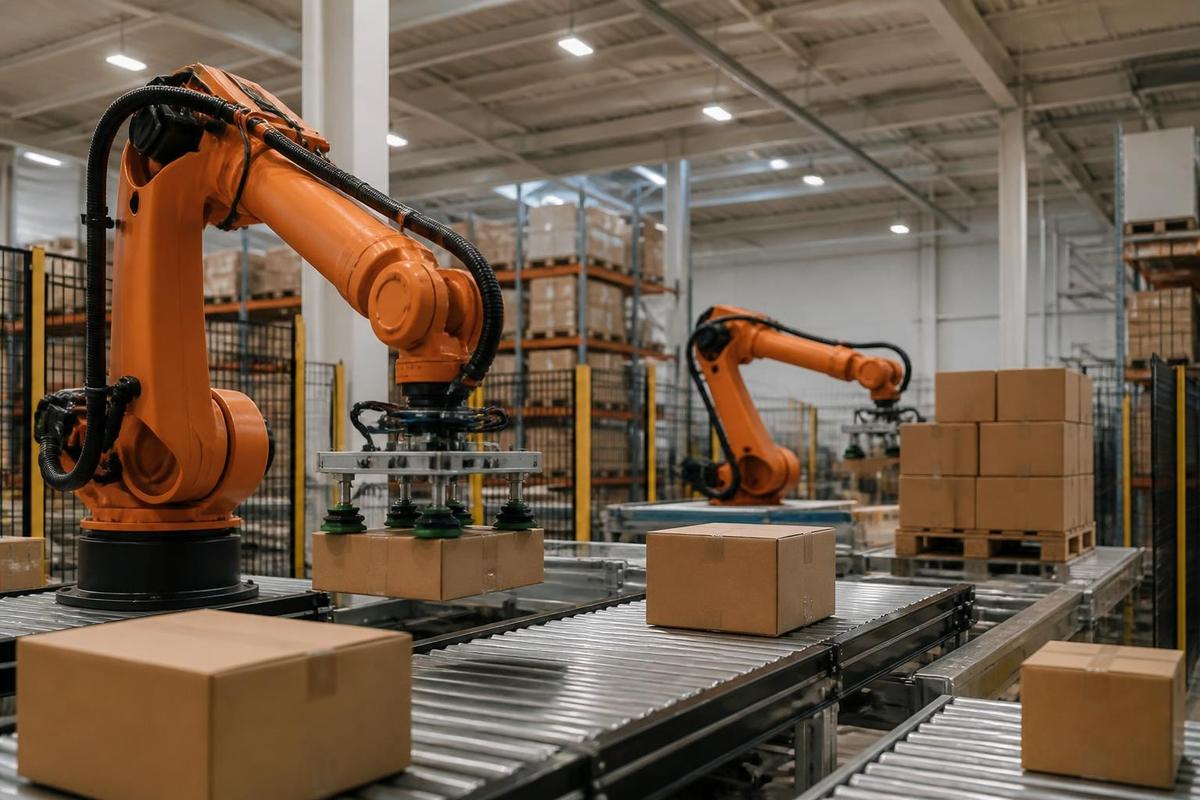
Production Robots: Transforming Warehouse Operations
Share on
Production robots have fundamentally transformed how modern warehouses and distribution centres operate, moving far beyond traditional fixed automation systems to deliver unprecedented flexibility, accuracy, and throughput. As logistics operations face mounting pressure to fulfil orders faster whilst managing complex inventory demands, these intelligent machines have become essential infrastructure for businesses seeking competitive advantage. The convergence of advanced sensor technology, artificial intelligence, and sophisticated control systems has elevated production robots from simple task-performers to adaptive systems capable of handling diverse operational challenges across supply chain environments.
The Evolution of Production Robots in Warehouse Settings
Manufacturing facilities first embraced robotic automation decades ago, but the warehouse sector has experienced its robotics revolution more recently. Early industrial robots required extensive programming, fixed positioning, and rigid operational parameters that didn't align well with the dynamic nature of distribution operations.
Today's production robots represent a quantum leap forward. Modern systems incorporate vision systems, machine learning algorithms, and collaborative capabilities that enable them to work safely alongside human operators. Research from ABI indicates that 53% of manufacturers are adopting robots to improve product quality, a trend mirroring what's occurring across warehouse operations where accuracy directly impacts customer satisfaction.
Key Technological Advancements
Several breakthrough technologies have enabled production robots to thrive in warehouse environments:
- Computer vision systems that identify, classify, and locate items regardless of orientation or packaging variations
- Adaptive gripper technology allowing single robots to handle diverse product types without manual reconfiguration
- Real-time path planning enabling navigation through dynamic environments with human workers and obstacles
- Cloud-based fleet management coordinating multiple robots to optimise throughput and prevent bottlenecks
- Predictive maintenance algorithms reducing downtime through proactive component replacement
The integration of these capabilities means production robots can now tackle tasks that previously required human judgment and dexterity. Warehouses handling pharmaceuticals, FMCG products, and e-commerce fulfilment benefit particularly from this technological sophistication.
Applications Across Warehouse Operations
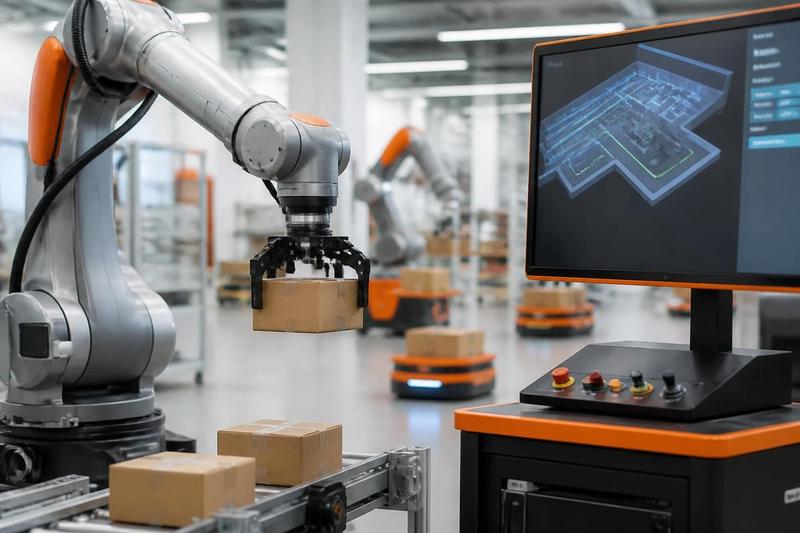
Production robots have found applications throughout the warehouse workflow, each addressing specific operational pain points whilst contributing to overall efficiency gains.
Goods Reception and Inbound Processing
Receiving operations benefit from robotic palletising and depalletising systems that process incoming shipments faster than manual methods. These production robots can scan barcodes, verify quantities, identify damaged goods, and transfer items to storage locations or cross-docking zones. The consistency of robotic handling reduces product damage during the critical receiving phase.
Cold-storage operations particularly value these systems. Human productivity declines in low-temperature environments, but production robots maintain consistent performance regardless of ambient conditions. Food and beverage distributors frequently deploy these systems to handle temperature-sensitive inventory efficiently.
Order Picking and Fulfilment
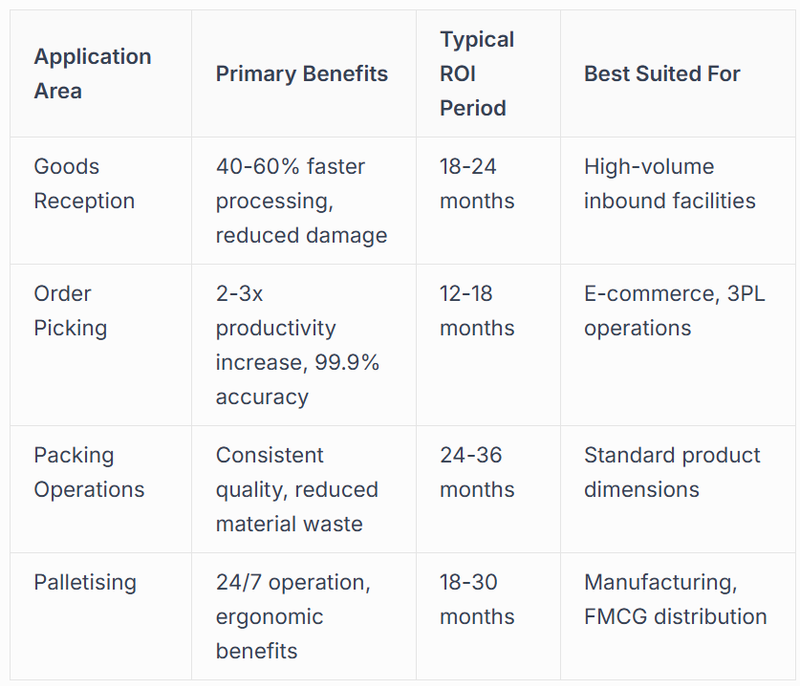
Picking represents the most labour-intensive warehouse activity, consuming approximately 55% of operational costs in traditional facilities. Production robots address this challenge through multiple approaches:
Goods-to-person systems bring inventory to stationary picking stations where robots present the correct items to operators. This eliminates unproductive walking time and significantly increases pick rates. Small and medium businesses looking to enter warehouse automation often start with these systems due to their scalability and rapid return on investment.
Autonomous mobile robots (AMRs) navigate warehouse aisles independently, collaborating with human pickers by transporting picked items to packing stations. This hybrid approach combines robotic efficiency with human flexibility for complex SKU environments. Understanding the broader landscape of warehouse automation technologies helps businesses identify which robotic solutions align with their operational requirements.
Piece-picking robots equipped with advanced grippers can select individual items directly from shelving or bins. Whilst these systems require substantial investment, they deliver exceptional accuracy for high-volume, repetitive picking tasks common in pharmaceutical distribution and cosmetics fulfilment.
Sorting and Distribution
Production robots excel at high-speed sorting applications where items must be directed to specific destinations based on shipping zone, carrier, or delivery priority. These systems process thousands of items hourly with error rates below 0.1%, far exceeding manual sorting capabilities.
The integration of industrial robotics solutions within broader warehouse management systems enables real-time routing decisions based on current capacity, shipping deadlines, and carrier schedules. This dynamic responsiveness optimises resource utilisation across the entire distribution network.
Integration Challenges and Solutions
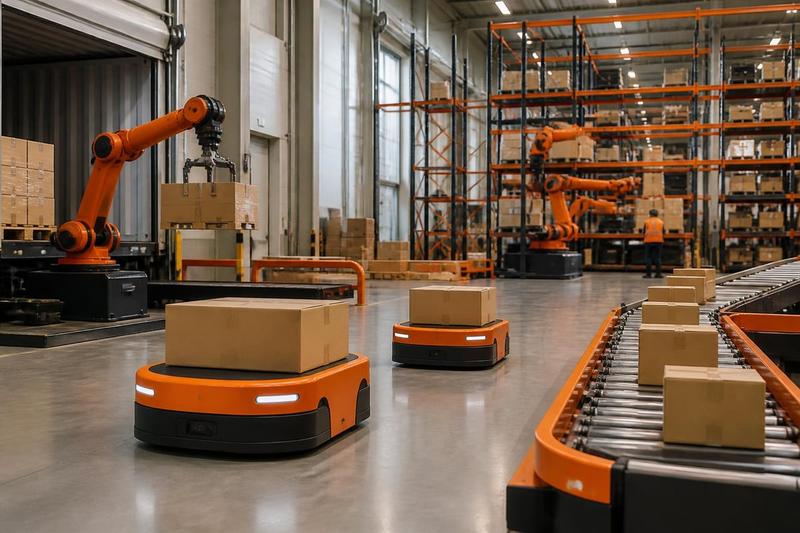
Implementing production robots requires more than simply purchasing equipment. Successful deployments demand careful planning, system integration, and organisational change management.
Technical Integration Considerations
Warehouse management systems (WMS) must communicate seamlessly with robotic control systems to coordinate activities effectively. This integration enables:
- Real-time task allocation matching available robots with pending work based on priority and efficiency algorithms
- Inventory synchronisation ensuring the WMS accurately reflects robotic movements and transactions
- Performance monitoring tracking key metrics like units processed, error rates, and system utilisation
- Exception handling routing problematic items or situations to human supervisors when robots encounter unexpected scenarios
Industrial system integration expertise proves essential for creating cohesive automation ecosystems where production robots work alongside conveyor systems, automated storage solutions, and manual processes.
Workforce Adaptation
Introducing production robots doesn't eliminate the human workforce but transforms it. Successful implementations invest in comprehensive training programmes that help warehouse staff transition from physical labour roles to robot supervision, maintenance, and quality control positions.
Change management strategies should emphasise:
- Enhanced job quality through elimination of repetitive, physically demanding tasks
- Skills development opportunities in robotics operation, troubleshooting, and system optimisation
- Clear communication about implementation timelines, role changes, and career pathways
- Collaborative workflows where humans and robots complement each other's strengths
The collaborative approach to robotics and manufacturing principles translate directly to warehouse environments, fostering acceptance and maximising the combined productivity of human-robot teams.
Performance Metrics and Business Impact
Quantifying the impact of production robots requires tracking metrics beyond simple productivity increases. Comprehensive performance measurement captures the full value these systems deliver.
Operational Efficiency Gains
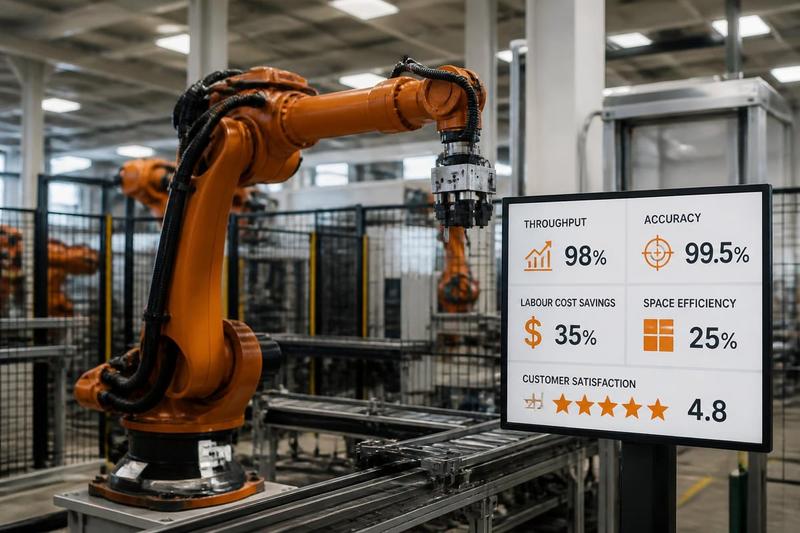
Production robots typically deliver measurable improvements across multiple dimensions:
- Throughput increases ranging from 150% to 300% depending on application and previous baseline performance
- Accuracy improvements achieving 99.5% to 99.9% order accuracy compared to 95% to 98% for manual operations
- Labour cost reduction of 30% to 50% whilst simultaneously increasing processing capacity
- Space utilisation improvements through denser storage configurations and optimised workflow paths
- Energy efficiency gains as newer robotic systems consume less power than legacy automation equipment
Quality and Customer Service Benefits
Beyond direct operational metrics, production robots enhance service quality in ways that strengthen customer relationships and support business growth. Consistent handling reduces product damage, faster processing enables shorter delivery windows, and improved accuracy minimises costly returns and exchanges.
Pharmaceutical distributors particularly value the audit trail capabilities of robotic systems. Every movement, pick, and handoff creates timestamped data that supports regulatory compliance and quality assurance programmes. Food and beverage operations similarly benefit from traceability features that facilitate rapid recalls when necessary.
Scalability and Future-Proofing
One compelling advantage of modern production robots lies in their scalability. Unlike fixed automation systems requiring substantial upfront investment for full capacity, many robotic solutions support incremental deployment strategies.
Modular Growth Approaches
The Automate-X Goods-to-person Starter Grid exemplifies how businesses can begin their automation journey with manageable initial investment whilst maintaining clear pathways for expansion. Starting with a core system addressing the highest-value workflows, operations can add capacity as volumes grow or expand into adjacent processes once initial systems prove their value.
This phased approach offers several strategic advantages:
- Reduced financial risk through smaller initial capital commitments and faster payback periods
- Operational learning allowing teams to develop expertise before scaling
- Technology refresh opportunities enabling adoption of newer capabilities as systems expand
- Flexibility to adjust automation strategy based on evolving business requirements
Emerging Capabilities
The trajectory of production robot development points toward even greater sophistication. Research into Industry 6.0 concepts envisions fully autonomous production systems where swarms of heterogeneous robots coordinate activities through generative AI without human intervention. Whilst these visions represent long-term possibilities, incremental steps toward greater autonomy are already appearing in commercial systems.
Current development priorities include:
- Enhanced manipulation capabilities enabling robots to handle increasingly complex products
- Improved human-robot collaboration through better safety systems and intuitive interfaces
- Advanced decision-making allowing robots to optimise their own workflows dynamically
- Cross-platform interoperability standardising communication protocols between different manufacturers' equipment
Geographic and Sector-Specific Adoption Patterns
Production robot adoption varies significantly across regions and industry sectors, influenced by labour costs, regulatory environments, and competitive pressures. Studies examining robot adoption in U.S. manufacturing reveal concentration in specific geographic "Robot Hubs" where supporting ecosystems of integrators, maintenance providers, and skilled technicians enable more rapid deployment.
Australia and New Zealand Market Dynamics
The Australasian logistics sector faces unique challenges driving production robot adoption. Geographic dispersion increases distribution costs, whilst relatively high labour rates improve automation business cases. E-commerce growth has intensified fulfilment demands, particularly for same-day and next-day delivery services that require exceptional operational efficiency.
Cold-storage operations serving export markets in both countries have been early adopters, recognising how production robots address labour shortages whilst maintaining the precise inventory control required for perishable goods. Examining warehouse automation across New Zealand logistics operations reveals increasing interest from 3PL providers seeking competitive differentiation through technology leadership.
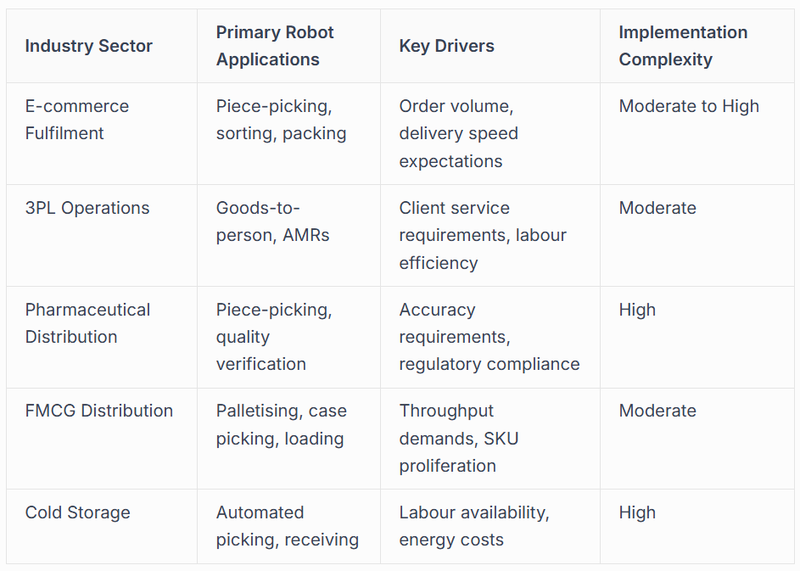
Sector-Specific Implementation Patterns
Real-World Implementation Examples
Examining case studies of industrial robots running production lines provides valuable insights into successful deployment strategies and common pitfalls. Whilst manufacturing examples differ from warehouse applications, fundamental principles around integration planning, workforce preparation, and performance optimisation translate across contexts.
Calculating Return on Investment
Production robot investments require rigorous financial analysis comparing total costs against quantifiable benefits. Comprehensive ROI calculations should include:
Cost factors:
- Equipment purchase or lease payments
- Installation and integration expenses
- Facility modifications (power, networking, floor preparation)
- Software licences and WMS upgrades
- Training programmes for operational and maintenance staff
- Ongoing maintenance contracts and parts inventory
- Energy consumption
Benefit factors:
- Labour cost savings (direct and indirect)
- Throughput increases enabling revenue growth
- Accuracy improvements reducing returns and rework costs
- Safety improvements lowering workers' compensation claims
- Space efficiency gains deferring facility expansion needs
- Customer satisfaction improvements supporting retention and growth
Most warehouse production robot implementations achieve payback within 18 to 36 months, with ongoing operational benefits continuing for equipment lifespans of seven to ten years. The specific timeline depends heavily on labour rates, operational volumes, and system utilisation levels.
Maintenance and Operational Sustainability
Sustaining production robot performance over multi-year periods requires proactive maintenance strategies and continuous optimisation efforts.
Preventive Maintenance Programmes
Modern production robots incorporate predictive maintenance capabilities that monitor component wear and performance degradation. These systems alert maintenance teams to potential failures before they occur, enabling scheduled interventions during planned downtime rather than disruptive emergency repairs.
Effective maintenance programmes establish:
- Regular inspection schedules for mechanical components, sensors, and safety systems
- Performance benchmarking to identify gradual degradation requiring adjustment or replacement
- Spare parts inventory for critical components to minimise repair downtime
- Vendor relationships ensuring rapid technical support when complex issues arise
- Staff training developing internal expertise for routine troubleshooting and minor repairs
Continuous Improvement Processes
Production robots generate extensive operational data that supports ongoing optimisation. Analysing patterns in task completion times, error rates, and resource utilisation reveals opportunities for workflow refinement, parameter adjustment, and capacity rebalancing. Leveraging AI in warehouse management extends these optimisation capabilities through machine learning algorithms that automatically tune robotic behaviours based on historical performance data.
Regular performance reviews should examine whether current automation configurations still align with evolving business requirements. Seasonal volume fluctuations, changing product mixes, new customer service commitments, and competitive pressures may necessitate adjustments to how production robots are deployed and programmed.
Selecting the Right Production Robot Solution
With numerous vendors offering various production robot technologies, selecting the optimal solution for specific operational requirements demands careful evaluation.
Assessment Framework
Systematic selection processes typically follow these steps:
- Document current-state workflows capturing detailed process maps, volume data, accuracy metrics, and cost structures
- Identify automation objectives prioritising goals like throughput increase, accuracy improvement, labour reduction, or capacity expansion
- Define technical requirements specifying payload capacities, speed requirements, integration needs, and environmental constraints
- Evaluate vendor solutions comparing capabilities, track records, support services, and total cost of ownership
- Conduct pilot programmes testing shortlisted systems in actual operational conditions before full-scale commitment
Engaging experienced automation businesses as implementation partners often accelerates successful deployments by leveraging their cross-industry experience and technical expertise.
Build Versus Buy Considerations
Some large-scale operations consider developing proprietary robotic solutions rather than purchasing commercial systems. Whilst this approach offers maximum customisation potential, it requires substantial engineering resources, longer development timelines, and ongoing maintenance responsibility. Most warehouse operators find greater value in commercial production robots that benefit from continuous vendor development and widespread user communities sharing best practices.
Production robots have become foundational infrastructure for competitive warehouse operations, delivering measurable improvements in productivity, accuracy, and scalability across diverse logistics environments. As these technologies continue advancing whilst simultaneously becoming more accessible to organisations of all sizes, the question shifts from whether to automate to how best to implement solutions aligned with specific operational requirements. Automate-X brings deep expertise in warehouse automation, combining advanced robotics, intelligent software, and comprehensive system integration to help logistics operations across Australia and New Zealand achieve their automation objectives efficiently and sustainably.