


Software Automation in Warehouse Operations
Share on
The modern warehouse operates at unprecedented speeds, managing thousands of stock-keeping units, processing hundreds of orders daily, and coordinating complex supply chains across multiple channels. Software automation has emerged as the critical enabler of this transformation, bridging the gap between physical operations and intelligent decision-making systems. For logistics providers, third-party logistics operators, and distribution centres, the ability to automate software-driven processes determines competitive advantage, operational efficiency, and the capacity to scale operations without proportional increases in overhead costs.
Understanding Software Automation in Warehouse Environments
Software automation refers to the use of technology to execute repetitive tasks, workflows, and decision-making processes with minimal human intervention. Within warehouse contexts, this encompasses everything from inventory management and order routing to picking optimization and shipping documentation. The distinction between simple automation and intelligent software automation lies in the system's ability to adapt, learn, and optimize based on changing conditions and data patterns.
Traditional warehouse management relied heavily on manual data entry, paper-based processes, and human judgment for critical decisions. Software automation fundamentally restructures these operations by creating digital workflows that execute consistently, accurately, and at machine speed. According to research on AI-assisted test automation, automated systems can significantly reduce error rates whilst maintaining operational continuity even during peak demand periods.

Core Components of Automated Warehouse Software
Modern warehouse automation solutions comprise several interconnected software layers that work in concert to manage operations. The warehouse management system (WMS) serves as the central nervous system, orchestrating inventory tracking, order fulfillment, and resource allocation. This foundation integrates with enterprise resource planning (ERP) systems, transportation management systems (TMS), and increasingly, with robotics control software that manages automated guided vehicles (AGVs) and autonomous mobile robots.
The middleware layer handles communication between disparate systems, translating data formats and ensuring seamless information flow. This integration capability proves essential when connecting legacy systems with modern automation technologies. Software automation in this context eliminates manual data synchronization, reducing discrepancies and enabling real-time visibility across the supply chain.
Key software components include:
- Inventory management modules that track stock levels, locations, and movement history
- Order management systems that prioritize, batch, and route picking tasks
- Labor management software that assigns tasks and monitors productivity
- Quality control systems that flag exceptions and compliance issues
- Analytics platforms that generate insights from operational data
Business Benefits of Software Automation Implementation
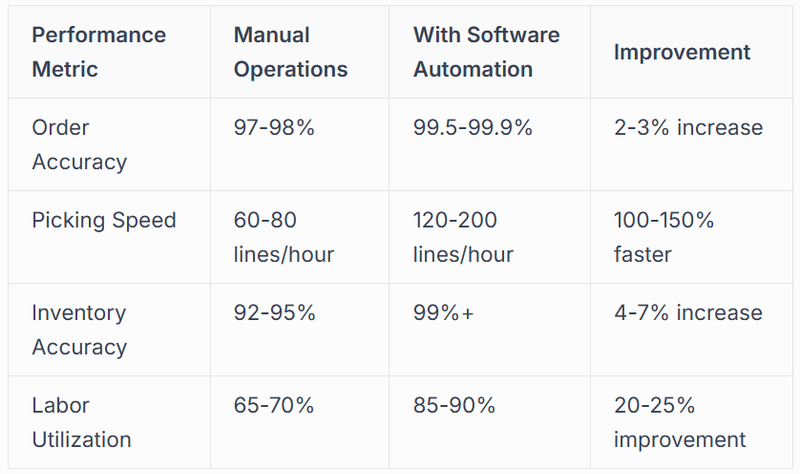
The financial implications of software automation extend beyond simple labor cost reduction. Logistics operations implementing comprehensive automation report improvements across multiple performance indicators, from order accuracy rates exceeding 99.9% to throughput increases of 40-60% within the same physical footprint. These gains translate directly to improved customer satisfaction, reduced returns processing, and enhanced capacity to handle seasonal demand spikes.
Operational visibility represents another critical advantage. Software automation generates granular data about every transaction, movement, and process within the warehouse environment. This information enables predictive analytics, allowing operations managers to anticipate bottlenecks, optimize staffing levels, and make data-driven decisions about facility layout and resource allocation. The International Society of Automation publishes extensive research demonstrating measurable returns on automation investments across various industrial contexts.
Scalability and Growth Enablement
Software automation creates infrastructure that scales efficiently as business volumes grow. Unlike manual processes that require proportional increases in headcount, automated systems handle increased throughput through optimized algorithms and workflow management. This scalability proves particularly valuable for e-commerce fulfillment operations experiencing rapid growth or seasonal fluctuations.
The ability to integrate new technologies and capabilities without disrupting existing operations represents another scaling advantage. As warehouse automation evolves, software platforms designed with open architectures and standard communication protocols facilitate the addition of new robotic systems, material handling equipment, or analytics capabilities. This modular approach protects initial investments whilst enabling continuous improvement.

Implementation Strategies for Warehouse Operations
Successful software automation deployment requires careful planning, stakeholder alignment, and phased implementation approaches. Organizations achieving the highest returns typically begin with detailed process mapping, identifying workflows where automation delivers immediate value whilst building toward comprehensive transformation. This methodology reduces implementation risk and demonstrates tangible benefits that sustain organizational commitment through longer-term initiatives.
The Automate-X GTP Starter Grid offers an accessible entry point for small and medium businesses seeking to implement goods-to-person automation without overwhelming capital expenditure. This approach allows operations to validate automation benefits in controlled environments before expanding to full facility deployment.
Phased Deployment Framework
- Assessment and baseline establishment - Document current processes, performance metrics, and pain points
- Prioritization of automation opportunities - Identify high-impact, low-complexity workflows for initial automation
- Pilot implementation - Deploy software automation in controlled environment with defined success criteria
- Optimization and refinement - Adjust configurations based on real-world performance data
- Scaled deployment - Extend automation across additional processes and facility areas
- Continuous improvement - Leverage analytics to identify further optimization opportunities
Change management constitutes a critical success factor often underestimated in automation projects. Staff members must understand how automation enhances their roles rather than threatens employment. Effective implementations position software automation as a tool that eliminates tedious tasks, allowing team members to focus on problem-solving, exception handling, and continuous improvement activities that require human judgment and creativity.
Integration with Robotics and Material Handling Systems
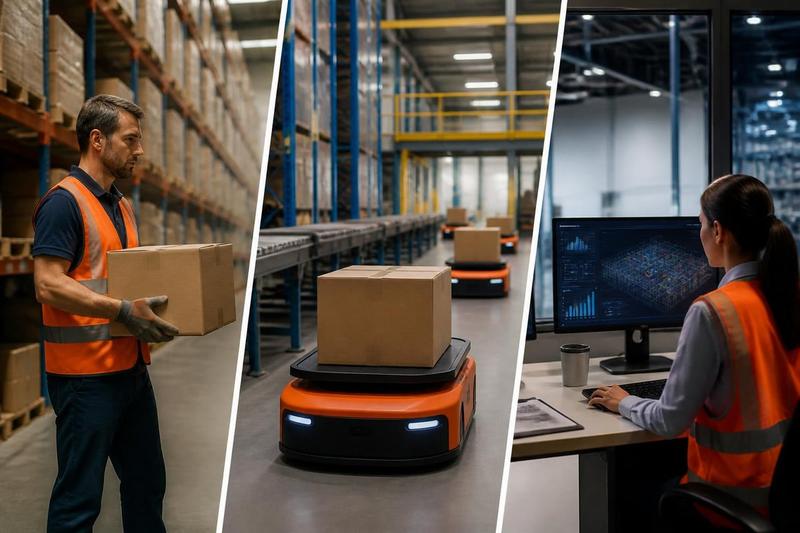
Software automation reaches its full potential when integrated with physical automation technologies. Warehouse control systems (WCS) serve as the bridge between warehouse management software and robotics platforms, translating high-level fulfillment instructions into specific machine commands. This integration enables coordinated operation of diverse automation technologies, from conveyor systems and sortation equipment to autonomous mobile robots and automated storage and retrieval systems.
The communication protocols governing these integrations have evolved significantly. Modern implementations leverage REST APIs, message queuing systems, and real-time data synchronization to ensure responsive coordination between software and hardware components. Standards such as those available through OPCconnect facilitate interoperability between equipment from different manufacturers, reducing vendor lock-in and enabling best-of-breed system configurations.
Real-Time Decision Making and Adaptive Operations
Advanced software automation platforms employ algorithms that continuously optimize operations based on current conditions. These systems analyze order profiles, inventory locations, equipment availability, and staffing levels to dynamically adjust picking strategies, routing decisions, and resource allocation. This adaptive capability proves essential in managing the complexity of modern omnichannel fulfillment, where order composition and volume patterns shift rapidly.
Machine learning applications within warehouse software automation are expanding, with systems learning from historical performance to predict optimal configurations. Research on knowledge-based multi-agent frameworks demonstrates how automated agents can simulate decision-making processes traditionally requiring human expertise, opening possibilities for increasingly autonomous warehouse operations.
Data Management and System Reliability
The effectiveness of software automation depends fundamentally on data quality and system reliability. Establishing a single source of truth for inventory, order, and operational data prevents the discrepancies that undermine automated workflows. This principle applies both within warehouse operations and across integrated supply chain systems. TechTarget emphasizes the importance of building a source of truth into automation strategies to ensure consistent, reliable automated operations.
Data governance frameworks define how information is captured, validated, and synchronized across systems. These frameworks address critical questions about data ownership, update permissions, and conflict resolution when discrepancies arise. Warehouse operations implementing robust data governance report significantly higher automation reliability and reduced exception handling requirements.
System Architecture and Redundancy
Warehouse automation software must maintain operational continuity even during system failures or network disruptions. Architectural approaches include:
- Redundant server configurations with automated failover capabilities
- Local caching of critical data to enable continued operation during connectivity loss
- Graceful degradation modes that maintain core functionality when advanced features are unavailable
- Comprehensive backup and disaster recovery procedures
- Regular testing of failure scenarios and recovery protocols
The trend toward cloud-based warehouse management systems introduces additional considerations around latency, data sovereignty, and internet connectivity reliability. Hybrid architectures combining cloud-based analytics and configuration management with edge computing for time-critical operations represent an emerging best practice balancing flexibility with operational reliability.
Emerging Trends and Future Developments
Software automation continues evolving rapidly, with artificial intelligence and machine learning expanding the scope of tasks amenable to automation. Natural language processing enables voice-directed picking and conversational interfaces for system interaction. Computer vision integrates with software platforms to automate quality control, dimensional scanning, and inventory verification tasks previously requiring manual inspection.
Digital twin technology creates virtual replicas of physical warehouse operations, allowing software automation to simulate different scenarios, test configuration changes, and optimize operations without disrupting live fulfillment. These capabilities accelerate continuous improvement whilst reducing the risk associated with operational changes. Current automation trends highlight the growing sophistication of these simulation and optimization capabilities.
Integration of Sustainability Metrics
Modern warehouse software automation increasingly incorporates environmental performance metrics alongside traditional operational KPIs. Systems optimize routing to minimize energy consumption, consolidate shipments to reduce packaging waste, and provide visibility into carbon footprint calculations. This integration reflects growing customer and regulatory emphasis on sustainable supply chain practices, with automation enabling measurement and optimization that would be impractical through manual approaches.
The partnership between technology providers and standards organizations, such as Wiley and ISA's collaboration, expands access to technical knowledge supporting these advanced implementations. As automation becomes more sophisticated, ongoing education and best practice sharing become essential for organizations seeking to maintain competitive advantage through technology leadership.
Testing and Validation in Automated Environments
Implementing software automation introduces new requirements for testing and validation. Automated systems must be verified not only for functional correctness but also for performance under varying load conditions, exception handling capabilities, and integration stability. Research on machine learning frameworks for automated testing demonstrates approaches that maintain test effectiveness as systems evolve, addressing the challenge of keeping test suites synchronized with rapidly changing automation platforms.
Comprehensive testing strategies include unit testing of individual software components, integration testing of system interfaces, performance testing under simulated peak loads, and user acceptance testing with actual warehouse staff. Automated testing frameworks enable continuous validation as software updates are deployed, catching regressions before they impact live operations.
Workforce Transformation and Skills Development
Software automation fundamentally changes the skill requirements for warehouse operations. Traditional material handling expertise remains valuable but must be complemented by technical literacy, data interpretation capabilities, and problem-solving skills. Organizations investing in comprehensive training programs report smoother automation transitions and higher return on technology investments.
The role transformation includes:
- Traditional pickers evolving to exception handlers and quality assurance specialists
- Supervisors becoming data analysts and continuous improvement coordinators
- Warehouse managers focusing on strategic optimization and technology integration
- Maintenance staff requiring software troubleshooting alongside mechanical repair skills
This evolution creates opportunities for workforce development and career progression whilst requiring proactive change management and training investment. Organizations that neglect the human dimensions of automation frequently encounter resistance, underutilization of capabilities, and suboptimal performance outcomes.
Security Considerations in Warehouse Automation
Software automation expands the attack surface for cyber security threats, with warehouse systems increasingly connected to enterprise networks and external partners. Security frameworks must address authentication and access control, data encryption both in transit and at rest, network segmentation to isolate critical systems, and monitoring for anomalous activity that might indicate security breaches.
The integration of operational technology (OT) with information technology (IT) systems requires specialized security expertise. Traditional IT security approaches must be adapted to account for the real-time requirements and specialized protocols of warehouse automation equipment. Regular security assessments, penetration testing, and incident response planning form essential components of comprehensive security programs.
Software automation represents a fundamental transformation in warehouse operations, enabling unprecedented levels of efficiency, accuracy, and scalability across logistics and supply chain environments. From integrated warehouse management systems to AI-driven optimization algorithms, automated software platforms deliver measurable business value whilst creating infrastructure for continued innovation and growth. Automate-X combines advanced robotics, intelligent software, and expert system integration to help logistics providers, e-commerce operations, and distribution centres implement automation solutions tailored to their specific operational requirements and growth objectives.